Skid Steer for Construction: Complete Site Guide
Skid Steer for Construction: Complete Site Guide
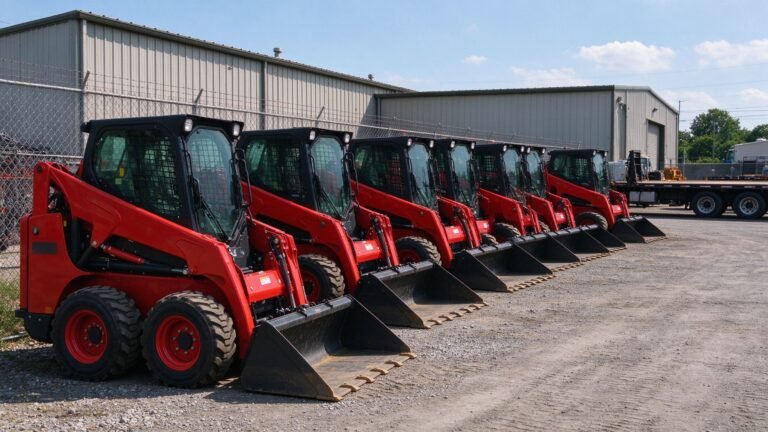
A skid steer for construction is the Swiss Army knife of the job site. It grades, digs, hauls, breaks concrete, and moves material inside spaces where an excavator or wheel loader cannot fit. For residential and light-commercial contractors, a skid steer for construction is often the single most profitable machine in the fleet.
What a Skid Steer Does on Site
Why Construction Crews Depend on It
Construction sites are tight, messy, and constantly changing. The OSHA construction equipment standards set the safety baseline every operator must follow. A skid steer turns within its own length, drives through a 1 m gate, and swaps attachments in minutes. Instead of hauling a different machine for every task, one operator runs the whole job. The skid-steer mechanism — independent left/right wheel drive — is what makes that possible. If you are new to the platform, start with what a skid steer is.
Core Construction Tasks
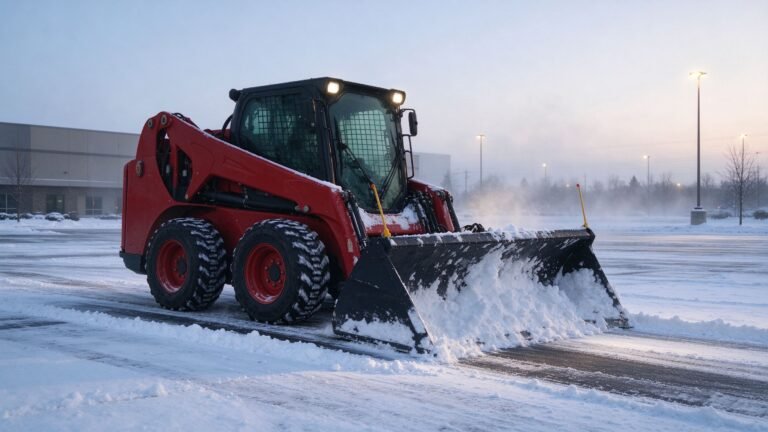
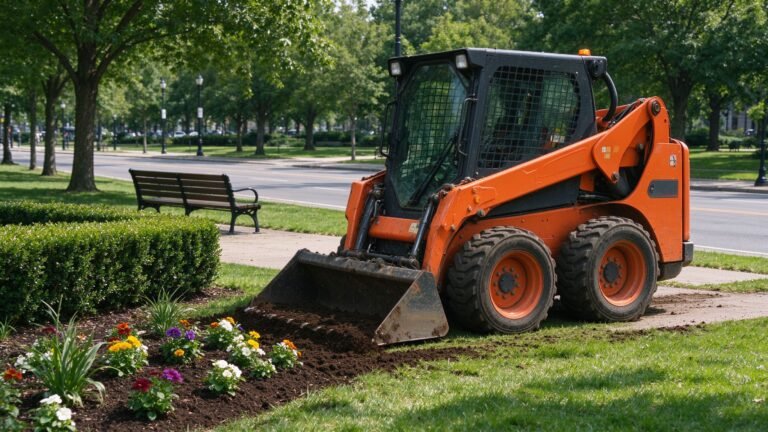
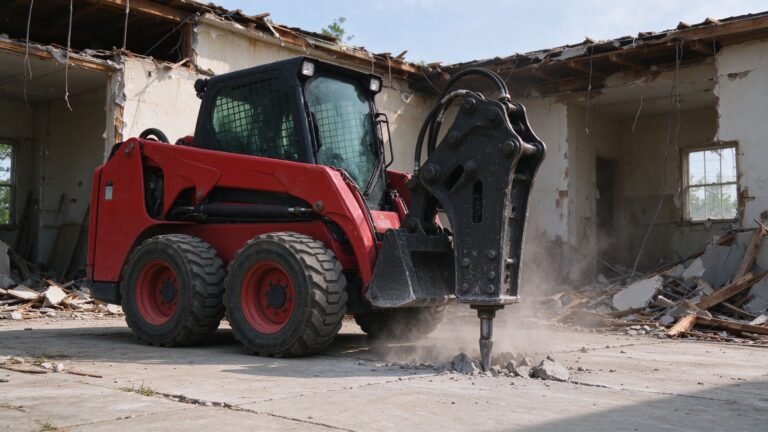
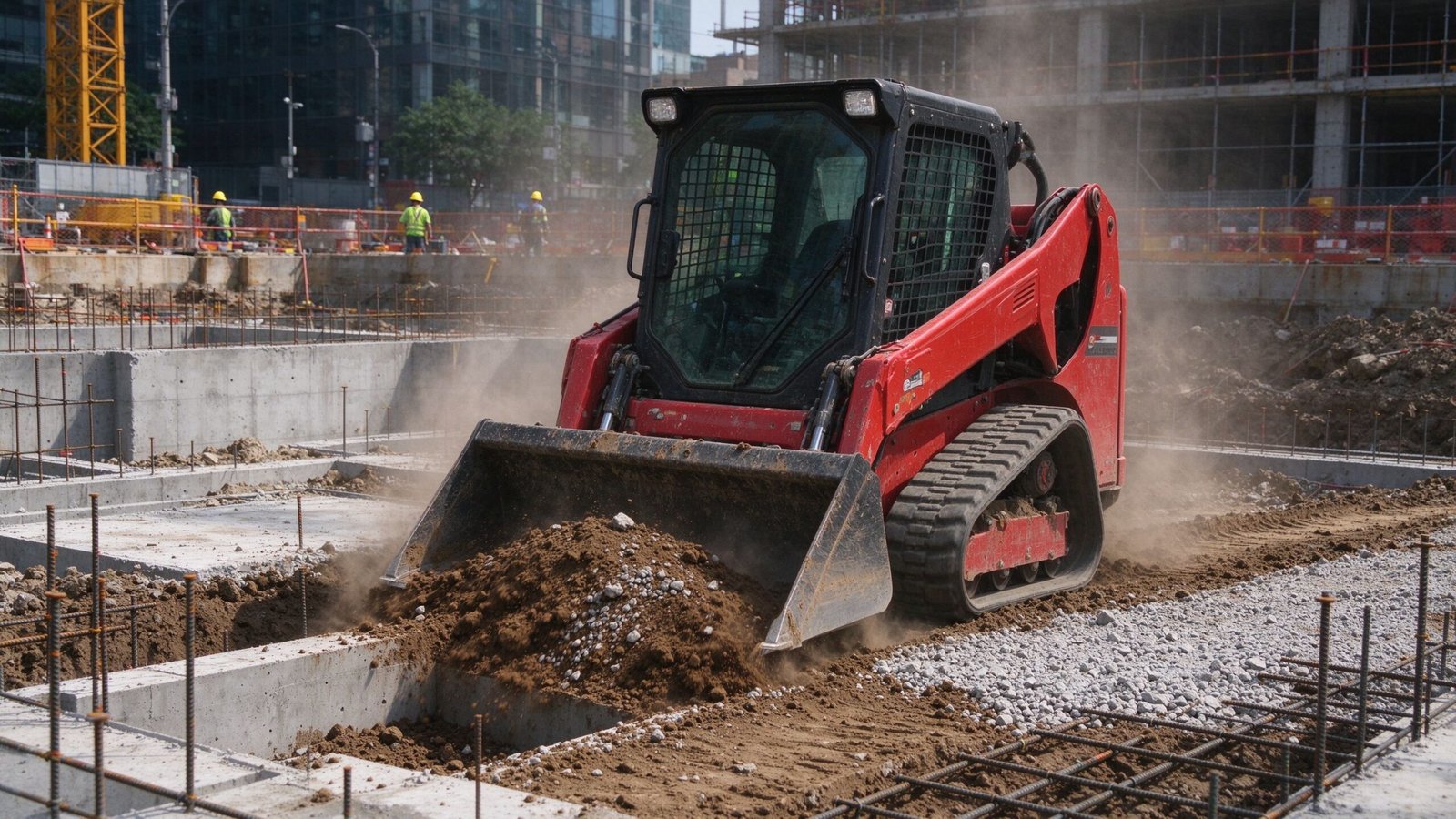
Site prep and grading: the skid steer removes topsoil, spreads gravel, and fine-grades the building pad; a laser-guided box rake takes it from rough cut to finish grade. Material handling: pallet forks carry block, brick, bagged cement, and rebar cages; buckets move soil, gravel, and sand — see skid steer for material handling. Excavation: backfill trenches, dig footings, and clean around foundations with a trencher or auger; for deeper digging, many crews pair the skid steer with a mini excavator — compare in skid steer vs mini excavator. Demolition and concrete: a hydraulic breaker chops old concrete; a grapple hauls debris away. Indoor retrofit and basement jobs are now possible with electric compact models that produce zero exhaust — see skid steer for demolition and zero emission skid steers. Cleanup: a broom sweeps the site at day’s end; a snow pusher keeps the job open in winter — see snow removal guide.
Attachments, Sizing and Productivity
Top Construction Attachments
| Attachment | Primary Construction Use |
|---|---|
| General-purpose / 4-in-1 bucket | Digging, grading, loading |
| Pallet forks | Block, brick, material delivery |
| Hydraulic breaker | Concrete, rock removal |
| Auger | Footings, fence posts, sign holes — see auger guide |
| Grapple | Debris, scrap, forms — see grapple guide |
| Grading beam / box rake | Finish grade and base prep |
| Broom / sweeper | Site cleanup |
If you are building an attachment kit, the full catalog is in the attachments guide.
Choosing the Right Size
Construction work rewards match between machine and task. For residential and basement work on tight lots, choose the compact class (200–400 kg ROC): the Xinfa X360 (300 kg ROC, 900 kg weight, 980 mm wide) and X390 fit through standard doorways. For light commercial and slab prep, the X460 (8 kW electric or 15–19.2 kW diesel) and R490 balance power and access. For heavier site work, the R750 (400 kg ROC, 0.15 m³ bucket) handles bigger aggregates. Need help picking a class? Read skid steer sizes.
Electric Skid Steers on the Modern Site
Construction is where electric compact skid steers shine. Indoor fit-outs, basement dig-outs, and urban infill sites often ban diesel exhaust. A 72V electric Xinfa model runs quiet and fume-free inside the building shell, while diesel crews wait outside for ventilation. This is one of the fastest-growing segments — learn more in electric skid steer benefits.
Productivity Tips
Plan attachment swaps by grouping work: dig all footings first, then switch to forks for material, then breaker. Keep the site level — skid steers tip easily on uneven ground, so respect ROC, carry loads low, and never drive across a slope heavier than down it. Follow the daily safety walkaround: tire pressure, leak checks, ROPS integrity, and seatbelt every shift. See skid steer safety tips.
What Size Skid Steer Do Construction Crews Buy?
Most residential contractors start with a 300–400 kg ROC compact machine. It fits through gates, tows behind a standard pickup, and runs every attachment from buckets to breakers. Larger commercial fleets add medium-frame machines for high-flow work.
Can a Skid Steer Replace an Excavator?
For shallow digging, backfilling, and material handling, yes. For deep trenching or precision digging, pair the skid steer with a mini excavator — the two machines complement each other on most sites.
How Much Does a Skid Steer for Construction Cost?
Compact machines start well under larger construction equipment, and factory-direct pricing from exporters like Xinfa narrows the gap further. Factor in attachments, transport, and operator training when budgeting. A well-equipped skid steer for construction often replaces a $100k+ mini excavator for basic site prep work.
Is a Skid Steer for Construction Profitable for a One-Person Crew?
Yes. A compact skid steer for construction lets one person handle grading, material handling, and cleanup that would otherwise need a two- or three-person crew. Many solo contractors recoup the machine within a season on residential and light-commercial jobs.
What Attachments Does Every Skid Steer for Construction Need?
Start with a general-purpose bucket, pallet forks, and a grapple. Add a hydraulic breaker and an auger once you have recurring concrete and footing work. A broom and snow pusher extend the season into winter. Building a skid steer for construction attachment kit one tool at a time spreads the cost while you earn.
Build a Construction-Ready Fleet With Xinfa
Whether you run one compact skid steer for construction on residential jobs or a fleet of skid steers for construction across multiple sites, Shandong Xinfa Machinery Co., Ltd. has a construction-ready model. The range spans X360, X390, X460, R480, R490, and R750, with electric 72V options and diesel 7.5–18.4 kW engines, all CE/EPA/EURO5/ISO certified. Explore specs and factory-direct pricing at Xinfa, or start with the buying guide. A Xinfa skid steer loader is built to keep your construction crew moving from first cut to final cleanup.