Skid Steer for Demolition: Complete Operator Guide
Skid Steer for Demolition: The Complete Operator Guide
Using a skid steer for demolition lets you break concrete, strip interiors, and clear debris in spaces no excavator can enter. In basements, old buildings, and retrofitted warehouses, compact loaders with breakers and grapples do the work of much larger machines. This guide covers attachments, workflow, and safety for profitable demolition work.
Why Demolition Crews Choose Compact Loaders
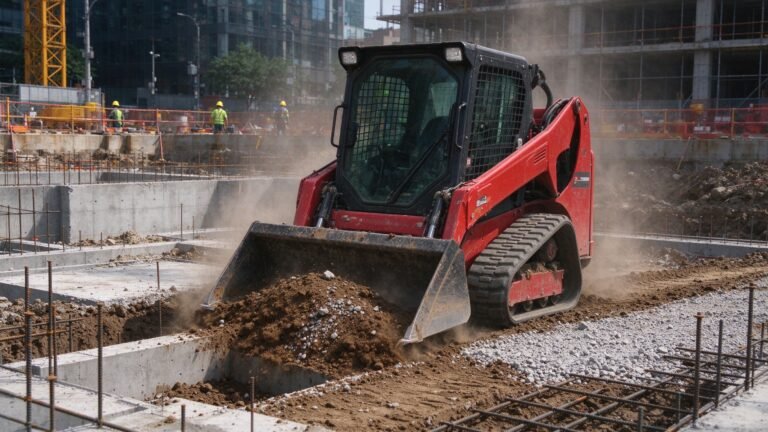
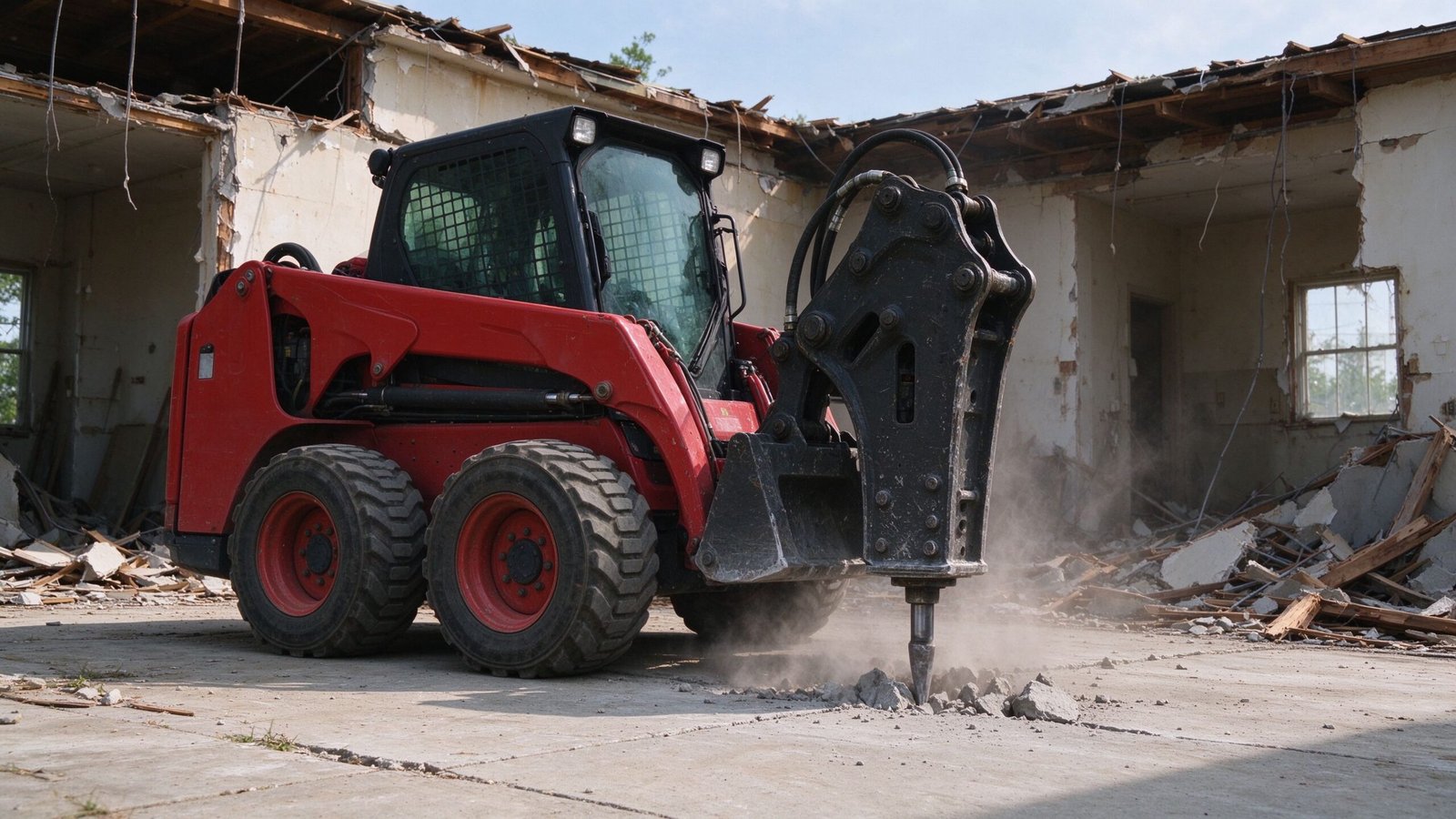
A skid steer for demolition shines where access is limited. Doorways, narrow hallways, upper floors, and interior courtyards all exclude tracked excavators. A compact loader fits through a standard door, breaks slabs, loads debris, and exits the same opening without costly structural protection.
For interior and selective demolition, that access advantage is decisive. Learn the broader picture in skid steer loader uses.
The Core Demolition Attachments
Hydraulic breaker. The primary tool for breaking concrete, pavement, and masonry. It runs off auxiliary hydraulics and needs adequate flow and pressure to deliver impact energy.
Grapple. Once material is broken, a grapple picks up rubble, timber, and scrap and loads it into a dumpster. A solid grapple saves hours of hand-loading debris. Compare types in our skid steer grapple attachment guide.
4-in-1 bucket. Sweeps and piles debris, grabs irregular pieces, and grades the sub-base after demolition.
Forks and thumbs. Useful for dismantling framing and loading salvageable materials that you can resell rather than haul to landfill.
Matching the Breaker to Your Loader
Breakers come sized to hydraulic flow and machine weight. An oversized breaker strains the pump; an undersized one wastes time. Match the breaker’s recommended flow range to your loader’s auxiliary output, and confirm the coupler fits before the job starts.
Xinfa compact loaders cover a range of power classes, from the 6 kW electric X360 up to the 18.4 kW R480. Choose the machine whose hydraulics match your breaker size. Browse specs across the range on the Xinfa site.
Using a Skid Steer for Demolition Safely
Start from the top and work down. Remove hazards, disconnect utilities, and survey for asbestos or lead before swinging a breaker. Wet the work area to control dust, especially indoors.
Break slabs in controlled passes rather than cracking wildly. Keep debris away from the machine’s tires, and do not walk under lifted arms. For the full safety framework, read skid steer safety tips.
Dust, Noise, and Indoor Work
Interior demolition means dust and exhaust matter. A diesel machine inside a sealed building requires ventilation or fume extraction. An electric compact loader solves the exhaust problem entirely, running zero-emission indoors with quiet operation, which is why it is the preferred choice for occupied-building and basement work.
Hydraulics Care Under Heavy Work
Breaking is punishing on hydraulics. Keep filters and fluid fresh, check couplers for leaks, and let the breaker cool between sessions. A neglected hydraulic system fails mid-job, which costs you a dumpster rental and a delayed contract. Watch for overheating on long breaking sessions and let the machine rest.
Planning a Demolition Job for Profit
Profitable demo work starts before the breaker touches concrete. Survey the structure, locate utilities, and confirm what must be kept versus removed. Price debris removal separately from breaking, because hauling wreckage often costs more than the demolition itself. Have dumpsters staged before you start so debris does not pile up around the machine.
Also plan dust and noise. Wet the slab as you break, schedule noisy work within local hours, and protect finished surfaces the client wants kept. A clean, controlled demolition wins repeat commercial contracts; a messy one does not. For interior jobs, an electric compact loader removes the exhaust problem entirely, letting you work in sealed basements and occupied buildings without fume extraction.
Common Demolition Mistakes to Avoid
One mistake is breaking too wide too fast. Start with a controlled cut, let the breaker find the joint, and work in sections rather than attacking the whole slab at once. Another is letting debris build up around the tires; clear it often so the machine can maneuver. A third is ignoring structural load after you remove a wall, so always know what is supporting what before you swing the breaker.
Keep the machine clean during the job. Dust and concrete powder clog radiators and wear pins, so blow out the cooling pack at lunch and at day’s end. Grease the breaker and linkage after heavy sessions. A well-cared-for demolition machine lasts years; a neglected one breaks mid-contract.
Whether you are gutting a single room or stripping a small slab, the formula stays the same: survey first, stage debris early, match the breaker to your hydraulic flow, and protect the parts of the building the client wants kept. Run that playbook consistently and demolition becomes a profitable, repeatable line of work rather than a one-off headache.
Add a grapple and a 4-in-1 bucket to the breaker, and one compact machine covers breaking, picking, loading, and cleanup. That single-machine efficiency is why small crews choose a compact loader over hauling in a full excavator for interior demo, and why it pays to spec the machine’s hydraulics around the breaker first. Add dust suppression and a dumpster schedule to the plan, and the job runs clean and on budget.
Frequently Asked Questions on a Skid Steer for Demolition
Can a skid steer for demolition replace an excavator indoors? In basements, hallways, and upper floors, yes; a skid steer for demolition fits through doorways where a tracked excavator cannot, which is why interior crews prefer it. Once a skid steer for demolition is proven inside, many crews add it to structural jobs where access is the real limit.
What safety rules matter most when using a skid steer for demolition? Survey for utilities, control dust, keep bystanders clear, and follow demolition safety guidance from OSHA. A skid steer for demolition throws flying debris, so wear eye protection and barricade the zone. Because a skid steer for demolition runs breakers and grapples in tight spaces, plan debris removal before the first swing, spec the machine around breaker flow first, and never leave a raised arm unattended.
Ready to demo with confidence? Visit Xinfa to spec a demolition-ready compact loader. Every Xinfa skid steer loader accepts standard breaker and grapple attachments and ships factory-direct with CE, EPA, EURO 5, and ISO certification, ready for your next interior or structural demolition job.