How to Choose a Skid Steer Loader: Practical Steps
How to Choose a Skid Steer Loader: Practical Steps
Once you have decided to buy, the next question is narrower: how to choose a skid steer loader that fits your exact business. Follow this eight-step framework in order. Skipping ahead usually means buying the wrong size or the wrong power type.
Step 1: Define Your Primary Use
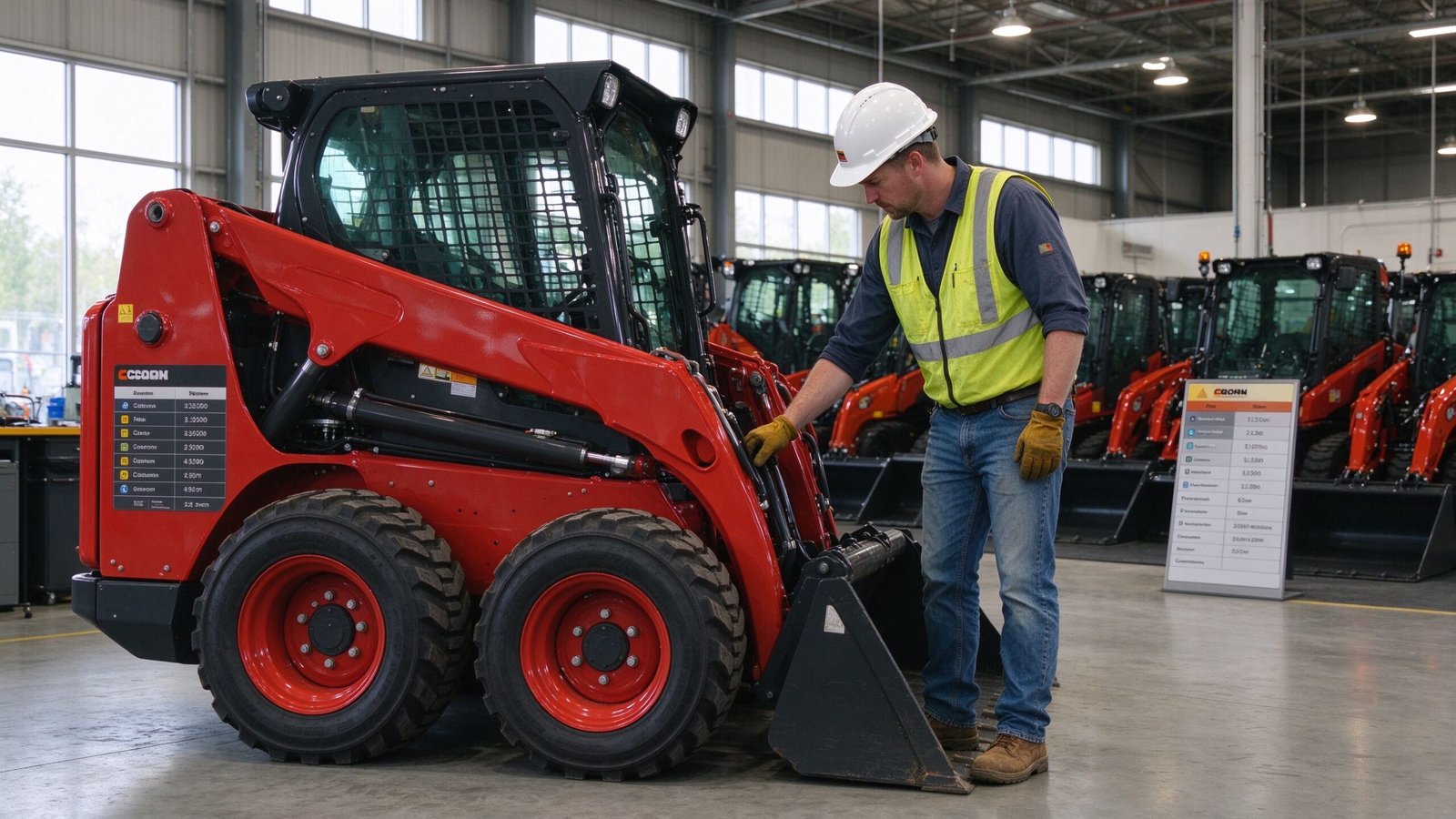
Write down the top three tasks the machine will perform 80% of the time. Is it loading material, grading, lifting pallets, breaking concrete, or cleaning a barn? Be specific. A landscaper and a demolition contractor need very different machines even though both “use a skid steer.” If you are not sure what is possible, skim the list of skid steer loader uses.
Step 2: Size the Rated Operating Capacity
List the heaviest attachment-plus-load combination you expect to lift. Then choose a machine whose rated operating capacity sits comfortably above that number. A 300 kg ROC machine is not the right choice if your loaded pallet weighs 350 kg. Xinfa’s compact range spans roughly 200 kg (X390), 300 kg (X360, X460), 350 kg (R480), and 400 kg (R750). For the safety logic behind ROC, read about rated operating capacity.
Step 3: Decide the Physical Size
Measure the tightest doorway, gate, or trailer you will use. Width matters more than most buyers expect. The Xinfa X360 is about 980 mm wide, which lets it pass through standard garden gates and tight barn aisles. If you will work indoors or in narrow alleys, a compact or mini frame is a must; the mini skid steer loader for sale category is worth a look. Size classes are explained in skid steer loader sizes.
Step 4: Pick Lift Style
Vertical lift wins for truck loading and high stacking. Radial lift wins for digging, grading, and where visibility over the bucket matters. When in doubt, ask the manufacturer which lift path your planned attachments favor.
Step 5: Choose Diesel or Electric
Ask one question: will the machine ever work inside a building, a basement, a barn, or an urban site with emission limits? If yes, lean electric. An electric skid steer loader is quiet, fume-free, and delivers instant torque. If your days are long outdoor shifts on open sites, diesel still makes sense. Compare totals in electric vs diesel skid steer.
Step 6: Match Hydraulics to Your Attachments
List every driven attachment you will run — auger, breaker, broom, snow blower. Note each one’s required auxiliary hydraulic flow and pressure. Then confirm the machine’s auxiliary output covers the most demanding tool. This is the step most often missed. If you are building out your tool set, browse the attachments guide for flow expectations.
Step 7: Set a Realistic Budget
Budget for the machine, the two or three attachments you need first, tires, transport, and the first year of maintenance. A bare-bones purchase always grows once attachments are added. Get a clear picture of 2026 numbers in the skid steer loader price guide. Factory-direct buyers often save significantly versus dealer pricing — see factory direct skid steer loader.
Step 8: Check Support and Parts
Before you pay, confirm the manufacturer can export to your country, ship spare parts quickly, and provide English documentation and certification. Ask specifically about CE, EPA, and EURO 5 compliance for your market. A cheap machine with no parts support is an expensive paperweight. Read about sourcing standards in choosing a China skid steer manufacturer.
Step 9: Plan for Transport and Storage
One often-overlooked decision is how the machine gets to work. Check trailer capacity and pickup height; a 900 kg compact loader fits on a small trailer, but the larger 400 kg-class machines may need a heavier tow vehicle. Also consider where you will store it: a locked yard or shed protects the battery and cab glass and deters theft. If you plan to work indoors or on sensitive lawns, factor in turf tires or track options at purchase time rather than retrofitting later. The transport choice also affects which size class makes sense — see the notes on size classes.
Write It All Down Before You Order
Buyers who skip the written shortlist usually come back to say they wish they had chosen one size up. Spend an hour listing every attachment you expect to run over the next three years, note each one’s weight and hydraulic needs, and add them up. That single document keeps the conversation honest when a dealer or sales rep recommends a bigger, pricier machine. It also makes comparing quotes from different suppliers far easier, because everyone prices the same spec.
A Quick Decision Example
Say you run a small landscaping company and mostly grade soil, drill tree holes, and load 1–2 t dump trucks on residential lots. Your heaviest planned load is around 250 kg. You work partly inside renovated basements. The eight steps point you to a 300 kg-class compact machine, vertical lift for truck loading, and either a 72V electric or small diesel depending on how often you go indoors. The Xinfa X360 (300 kg ROC, 980 mm wide, available in 72V electric) is a realistic fit; the X460 adds a larger 72V 200Ah battery option if runtime matters.
Frequently Asked Questions: How to Choose a Skid Steer Loader
What is the first step in how to choose a skid steer loader?
The first step in how to choose a skid steer loader is listing your real jobs, not reading specs. Once you know the heaviest load, how to choose a skid steer loader becomes a matter of matching ROC and hydraulic flow.
How to choose a skid steer loader for indoor work?
If you are unsure how to choose a skid steer loader for interiors, lean electric. Knowing how to choose a skid steer loader for tight gates means measuring width before anything else.
How to choose a skid steer loader on a budget?
How to choose a skid steer loader without overspending? Buy one size up in capacity but skip options you will never use. For buyer safety standards, see ISO.
Need a Second Opinion? Ask the Factory
Once you have worked through the eight steps above, the fastest way to confirm the spec is to ask the people who build the machine. Shandong Xinfa Machinery Co., Ltd. exports compact wheeled and electric skid steers worldwide with CE, EPA, EURO 5, and ISO certification, and the sales team will map your job list to the right model rather than pushing the most expensive one. If you want the broader framework behind these eight steps, start with the full skid steer loader buying guide. Then visit Xinfa skid steer loaders at xinfaloader.com, share your three main tasks, and get a direct factory recommendation.