Ultimate Electric Skid Steer Loader: Benefits & Costs
Ultimate Electric Skid Steer Loader: Benefits & Costs
The compact equipment world is going electric, and this category is leading the shift. Zero exhaust, near-silent operation, and instant torque are no longer niche benefits — they are becoming requirements on urban, indoor, and eco-regulated job sites. Here is what buyers need to know in 2026.
What Is an Electric Skid Steer Loader?
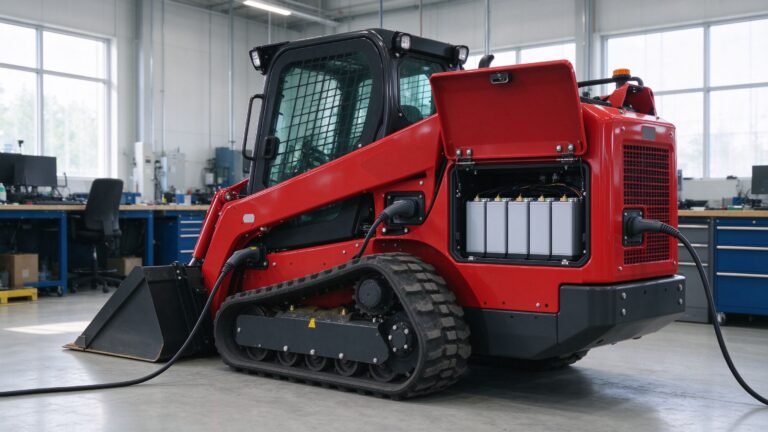
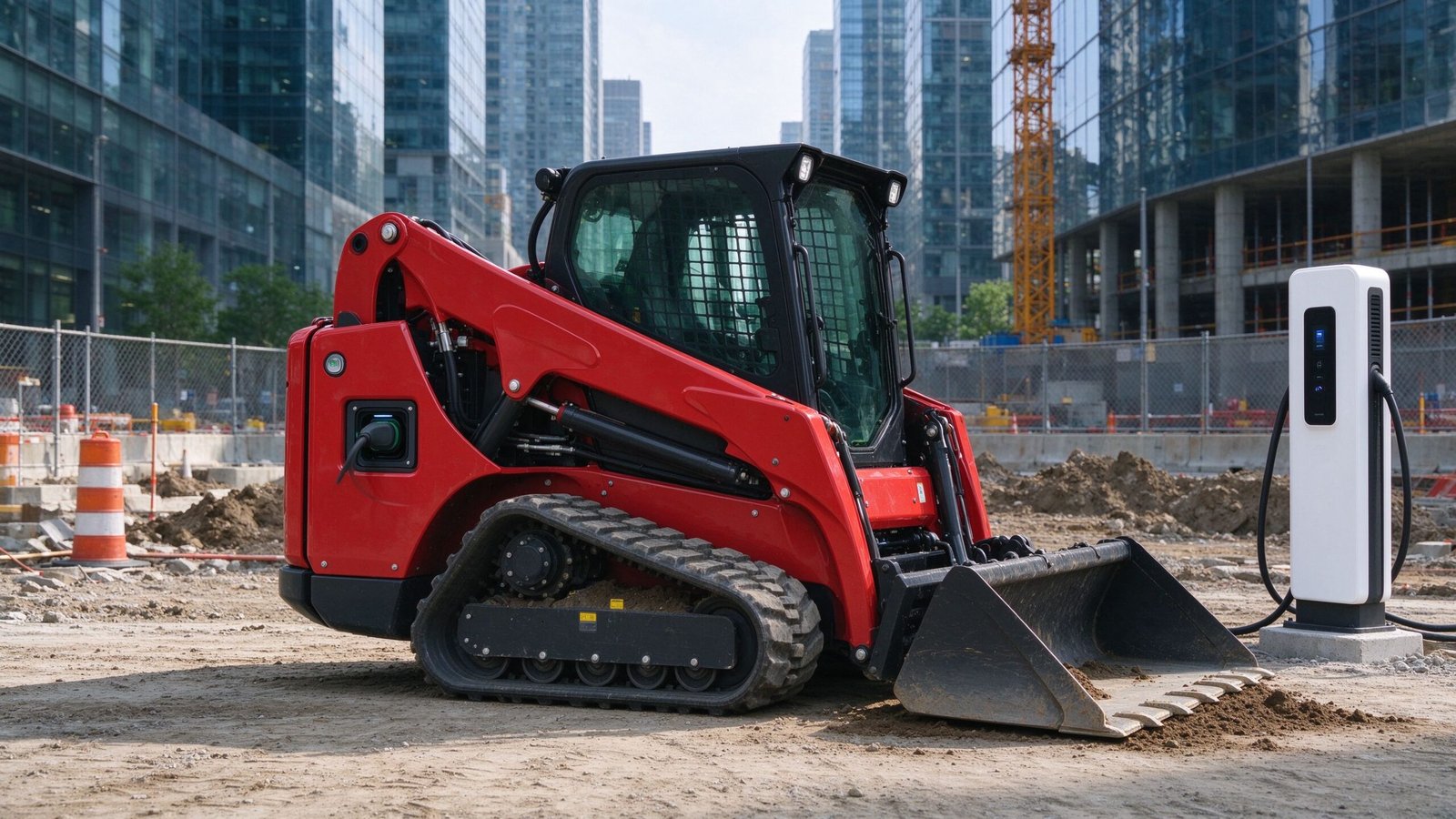
An electric skid steer keeps the same skid-steer steering, hydraulic lift arms, and quick-coupler system as a diesel machine, but replaces the diesel engine with a large lithium-ion battery pack and one or more electric motors driving the hydraulic pump. The operator experience is nearly identical; the noise, fumes, and fuel stops disappear.
Why the Shift Is Happening Now
Emission rules
Cities and contractors increasingly forbid diesel exhaust inside occupied buildings, basements, and enclosed yards. A zero-emission machine simply gets the work that a diesel cannot.
Noise restrictions
Residential neighborhoods, school zones, and early-morning commercial jobs limit noise. Electric machines run at a fraction of the noise level, letting crews start earlier and work longer.
Operating cost
Electricity is cheaper than diesel per hour, and electric powertrains have fewer wearing parts. The payback story is detailed in compact electric loader cost and ROI.
Instant torque
Electric motors deliver full torque from zero RPM, which feels especially useful for breakout force and plugging through piles.
Real Specs from the Xinfa Electric Range
Numbers help make the switch feel concrete. Across the Xinfa electric compact lineup:
X360 electric
6 kW motor, 72V 125Ah battery, 300 kg rated operating capacity, 0.12 m³ bucket, about 900 kg operating weight, roughly 980 mm wide.
X460 and R490 electric
8 kW motor, 72V 200Ah battery, 300 kg and 250 kg rated capacity respectively, 0.12 m³ bucket.
R750 electric
8 kW motor, 72V 200Ah battery, 400 kg rated operating capacity, 0.15 m³ bucket — the heaviest-lifting electric compact in the range.
If you want the smallest footprint for interiors, the electric mini skid steer loader article breaks that class down.
Runtime and Charging: The Practical Questions
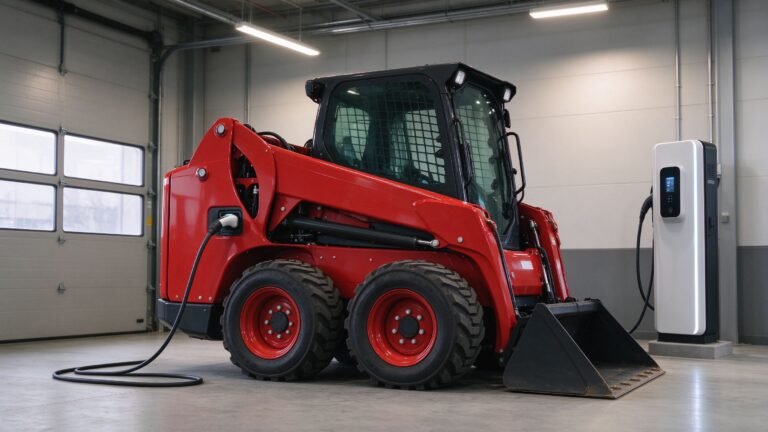
Buyers always ask: how long does a charge last? Real-world runtime depends on the work cycle — light brooming and grading stretches runtime; heavy digging shortens it. Plan around a typical workday and use opportunity charging during breaks. Larger 200Ah packs (X460, R490, R750) obviously outlast the 125Ah pack in the X360. For deeper battery voltage and amp-hour math, read the battery powered skid steer loader guide. If your site has solar or off-grid power, charging logistics are worth planning in advance.
Who Should Switch in 2026?
Indoor and basement contractors
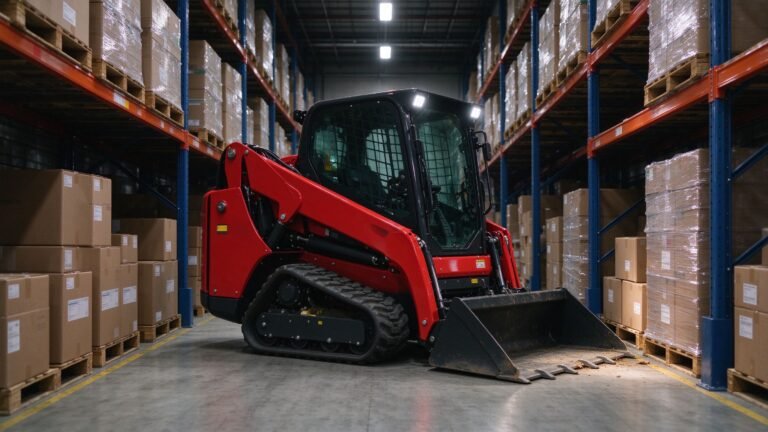
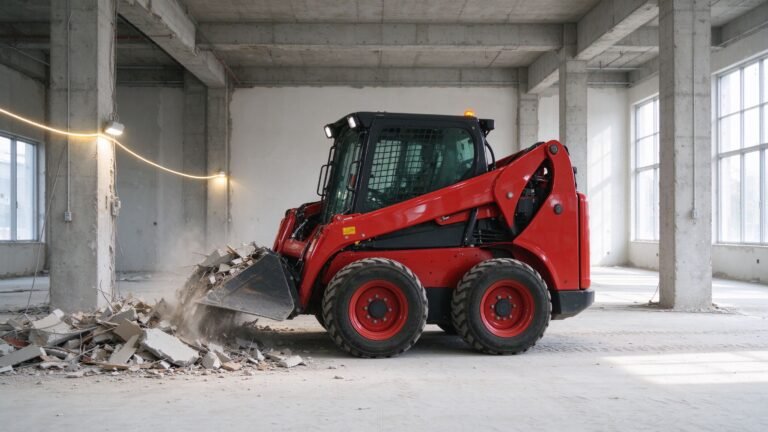
Demolition, fit-out, and warehouse work where diesel fumes are banned — this is electric’s home turf.
Urban and municipal crews
Noise and emission limits around offices, hospitals, and parks make electric the polite choice.
Farms and greenhouses
Animals and crops are sensitive to exhaust and noise. A compact electric loader cleans barns and moves feed without stressing livestock.
Rental fleets
Customers increasingly ask for electric options. Adding one to the fleet wins jobs a diesel cannot bid on.
Electric vs Diesel: The Honest Trade-Off
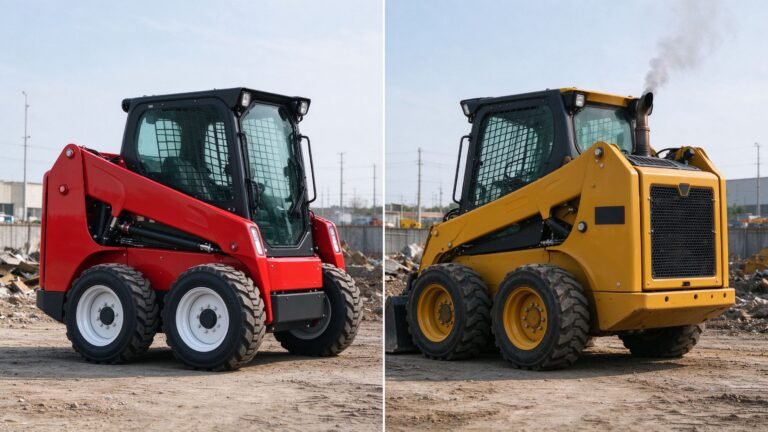
Electric wins on noise, emissions, torque, and hourly running cost. Diesel still wins on all-day runtime without charging infrastructure and on the lowest upfront price. For most buyers, the right move is matching powertrain to use case rather than picking a winner. The side-by-side analysis is in electric vs diesel skid steer, and the full benefit list is in benefits of electric skid steer loaders.
What About Battery Lifespan?
Lithium-ion packs lose a little capacity each year, but on a compact loader used a few hours a day, owners typically get many years of service before capacity becomes a limitation. Treat the pack like any other wear item: avoid fully draining it every shift, store it above freezing if the machine sits all winter, and keep connections clean. The payoff is that an electric machine has no engine oil, no diesel filter, no glow plugs, and no exhaust aftertreatment to service — the maintenance bill drops sharply even though the hydraulic system still needs routine care. For the service routine, see maintenance tips.
Resale and Residual Value
The used electric compact market is young, so residual values are still settling. Early signs are positive: contractors who already run electric fleets are willing to pay for known-good machines, and demand for indoor-capable tools keeps growing. If you plan to resell within three years, keep detailed charge-cycle records and service logs — they matter more on an electric machine than a diesel one.
Many buyers also ask about charging infrastructure. A standard 220–240V outlet handles overnight charging for most compact packs; faster chargers are optional for operations that need midday top-ups. Plan where the machine will charge at your yard before it arrives, and confirm the plug type matches your local supply. For most small contractors, a dedicated outdoor outlet near storage is enough to get started.
Frequently Asked Questions About the Electric Skid Steer Loader
Is an electric skid steer loader worth it?
For indoor and urban work, an electric skid steer loader is often worth it immediately because diesel is banned onsite. On open outdoor days, the electric skid steer loader still wins on noise and running cost.
How long does an electric skid steer loader run?
Runtime depends on the battery pack and work cycle. An electric skid steer loader with a 200Ah pack outlasts a 125Ah pack through a busy shift, so size the electric skid steer loader to your day.
Do emission rules push buyers toward an electric skid steer loader?
Yes. Regulators increasingly restrict diesel indoors. The U.S. EPA and city air-quality rules are why many contractors now specify an electric skid steer loader.
Buy an Electric Skid Steer Direct from Xinfa
Shandong Xinfa Machinery Co., Ltd. builds both 72V electric and diesel compact skid steers on the same proven hydraulic and lift-arm platform, so operators feel at home whichever powertrain they choose. Every machine is exported factory-direct with CE, EPA, EURO 5, and ISO certifications depending on model, and the team can spec the right battery size for your daily runtime. If your work takes you indoors, into city centers, or onto emission-sensitive sites, an Xinfa electric skid steer loader is ready to work. Explore the X360, X460, R490, and R750 electric models at xinfaloader.com and ask the factory team for a runtime estimate based on your typical jobs.