Battery Powered Skid Steer Loader: Complete Guide
Battery Powered Skid Steer Loader: Complete Guide
A battery powered skid steer loader swaps the diesel engine for a lithium-ion pack. Choosing a battery powered skid steer loader means picking voltage, amp-hours, and runtime. and electric drive motors. The EPA recognizes zero-emission compact equipment as a key lever for urban air quality. The result is zero exhaust, near-silent operation, and instant torque — but buyers rightly ask two questions: how long does a charge last, and how do you recharge it? This guide breaks down a battery powered skid steer loader in plain numbers: voltage, amp-hours, runtime, and charging.
How the Battery System Works
From Diesel Engine to Electric Drivetrain
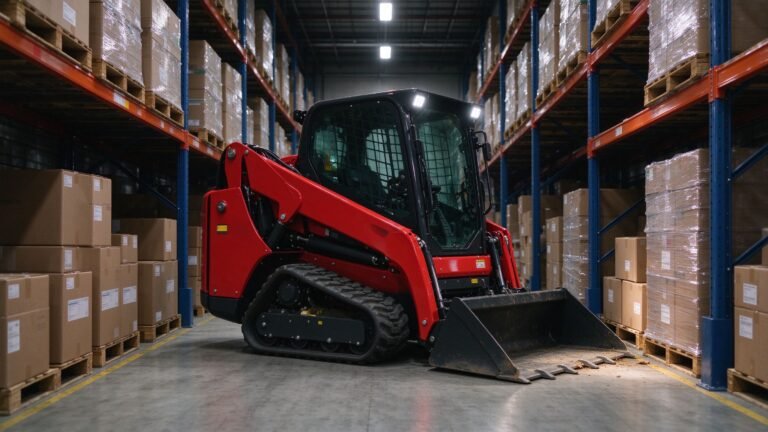
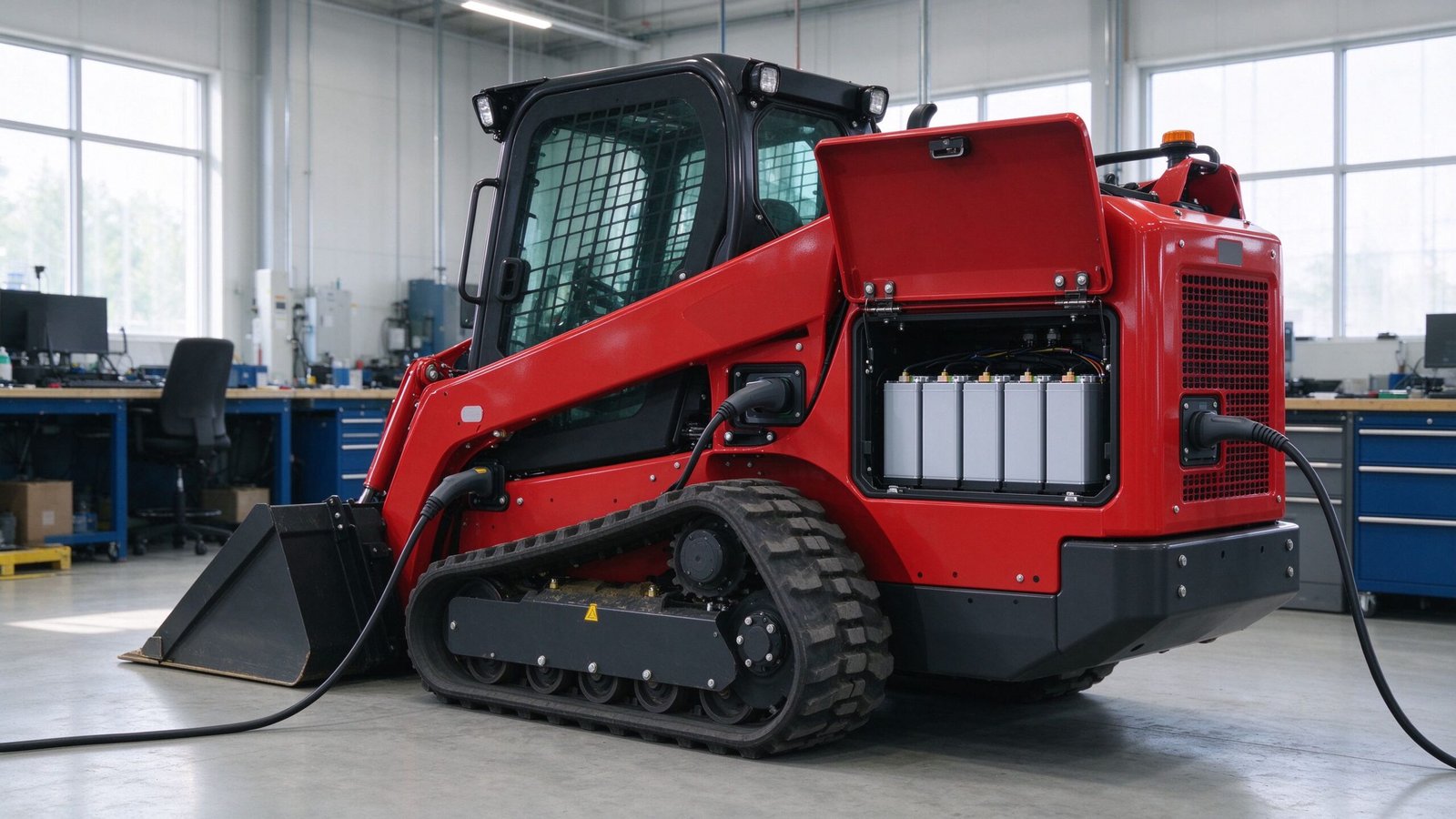
Instead of an engine, fuel tank, and radiator, an electric skid steer carries a traction battery, motor controller, and one or more electric motors that drive the hydraulic pump and wheels. The operator does not feel a difference at the joysticks — arms lift, bucket tilts, and the machine turns exactly like a diesel counterpart. What changes is the sound level and the fuel bill. Xinfa’s electric compact line uses proven 72V lithium-ion systems:
- X360 electric: 6 kW motor, 72V 125Ah battery, 300 kg ROC, 900 kg operating weight.
- X460 electric: 8 kW motor, 72V 200Ah battery, 300 kg ROC.
- R490 electric: 8 kW motor, 72V 200Ah battery, 250 kg ROC.
- R750 electric: 8 kW motor, 72V 200Ah battery, 400 kg ROC, 0.15 m³ bucket.
Reading Volts and Amp-Hours
Voltage determines how much power the motor can deliver. 72V is the industry standard for compact loaders — high enough for strong hydraulics, low enough to stay safe to service. Amp-hours (Ah) tells you the battery’s energy capacity. Multiply volts × amp-hours to get watt-hours (Wh): 72V × 125Ah = 9 kWh on the X360 electric; 72V × 200Ah = 14.4 kWh on the X460, R490 and R750. More Wh means longer runtime, all else equal.
Runtime, Charging and Operating Cost
Real-World Runtime Per Charge
A battery powered skid steer loader does not drain linearly. Idling with the arms raised sips power; driving full tilt with a loaded bucket drains it fast. Expect roughly 6–8 hours on a 9 kWh pack for light work, 4–5 hours for mixed landscaping and farm tasks, and 2.5–3.5 hours of heavy continuous digging. On a 14.4 kWh pack, stretch those numbers to 9–12, 6–8, and 4–5 hours respectively. For most compact jobs, a single charge covers a normal workday.
Charging Options and Times
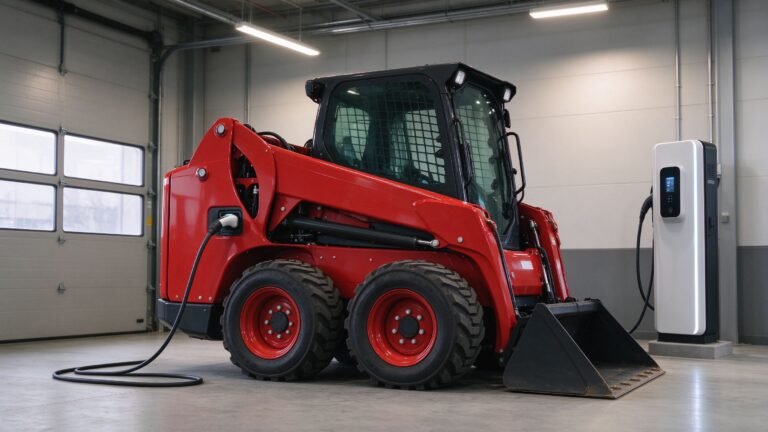
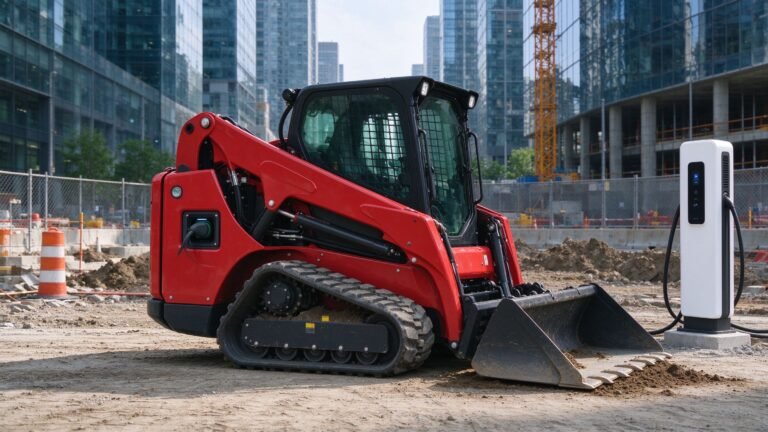
Most electric compact skids charge from a regular 220V / 16A shop outlet. A full charge on a 9 kWh pack takes roughly 6–8 hours; on a 14.4 kWh pack, 8–10 hours. Overnight charging is the normal routine. Optional fast chargers can push 30–40 km range-equivalent per hour, so a lunch-hour top-up adds 1–2 hours of runtime. Modern lithium-ion packs are rated for 2,000–3,000 full charge cycles before dropping to 80% capacity — at one cycle per day, that is 5–8 years of service.
Operating Cost: Electricity vs Diesel
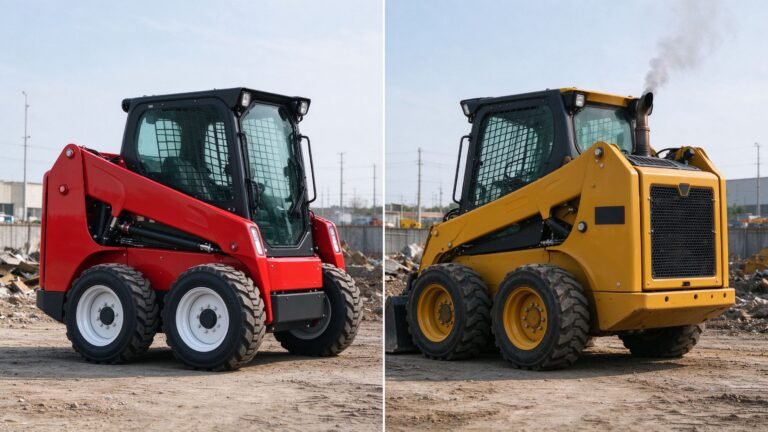
Electricity costs a fraction of diesel per hour. A diesel compact skid steer burns 3–5 L/hour — at $1.20/L, that is $3.60–$6.00/hour in fuel alone. An electric equivalent draws 4–6 kWh/hour — at $0.15/kWh industrial rate, that is $0.60–$0.90/hour. You also skip oil changes, fuel filters, DPF service, and engine coolant. Read the full math in our compact electric loader cost and ROI analysis.
When Battery Electric Makes Sense
A battery powered skid steer loader is the right tool when:
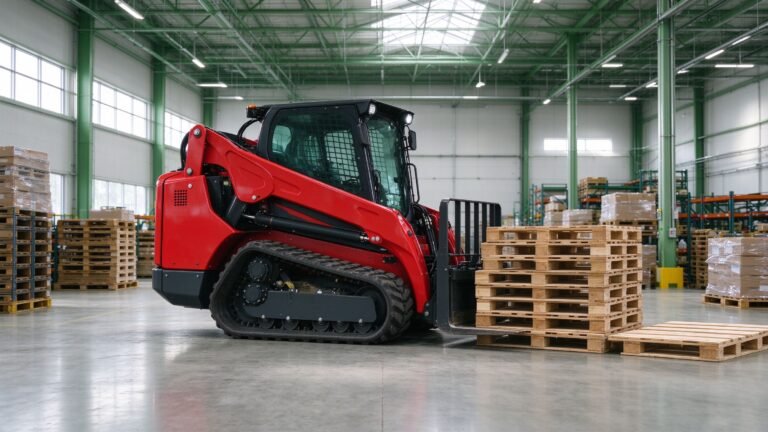
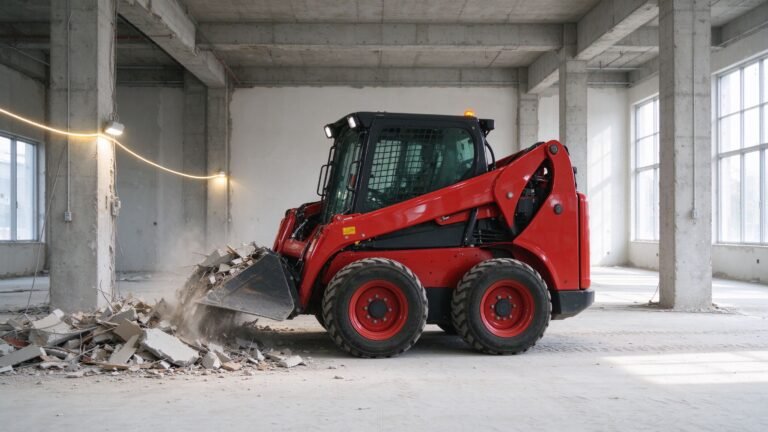
- Indoor work: basements, warehouses, demolition where exhaust is banned. See zero emission skid steers.
- Urban noise restrictions: early-morning residential work where diesel noise triggers complaints.
- Green-building projects: LEED or sustainability tenders that require low-emission equipment.
- Small contractors: low maintenance hours mean more billable time.
If you are still weighing diesel, compare the two paths in electric vs diesel skid steers.
How Long Does the Battery Last Before Replacement?
Modern lithium-ion packs are rated for 2,000–3,000 charge cycles. At one cycle per day, that is 5–8 years. Capacity degrades gradually, not suddenly — you will notice runtime shortening over months before a replacement is needed.
Can I Charge From a Regular Wall Outlet?
Yes — most compact electric skids charge from a standard 220V / 16V industrial outlet. A 110V household outlet will charge but very slowly. Install a dedicated 220V circuit at your yard for routine overnight charging.
Can I Use a Battery Powered Skid Steer Loader Outdoors in Winter?
Yes, but cold weather reduces lithium range by 20–40%. Keep the machine plugged in when not in use so the battery stays conditioned. Xinfa’s 72V systems handle typical winter farm and construction work with an expected range drop.
How Does the Cost Compare to Diesel Over 5 Years?
Even at higher upfront price, a battery powered skid steer loader usually wins on total cost thanks to lower fuel and maintenance. Run the numbers for your hourly usage before deciding.
Choose Xinfa Electric for Battery Confidence
A battery powered skid steer loader only pays off when the battery, motor, and controls are engineered as one system. Any battery powered skid steer loader worth buying lists voltage, amp-hours, and runtime per charge openly. Shandong Xinfa Machinery Co., Ltd. builds its electric compact line — X360, X460, R490, R750 — around proven 72V lithium packs, with diesel variants available for operators who still need long all-day runtime. All models carry CE, EPA, EURO5 and ISO certification for export. Explore runtime, charging, and specs at Xinfa, or compare the 7 key benefits of electric skid steers. Every Xinfa electric skid steer loader ships with the charger, documentation, and factory support to keep you working.