Essential Skid Steer Maintenance Tips: Checklist
Essential Skid Steer Maintenance Tips: Checklist
A skid steer is a tough machine, but it is not invincible. Hours of skidding, heavy lifting, and dusty sites add up fast. These skid steer maintenance tips turn ad-hoc repairs into a predictable routine, protect your warranty, and add years to the machine’s service life. Work through the 12-point checklist below.
Why Maintenance Matters on a Skid Steer
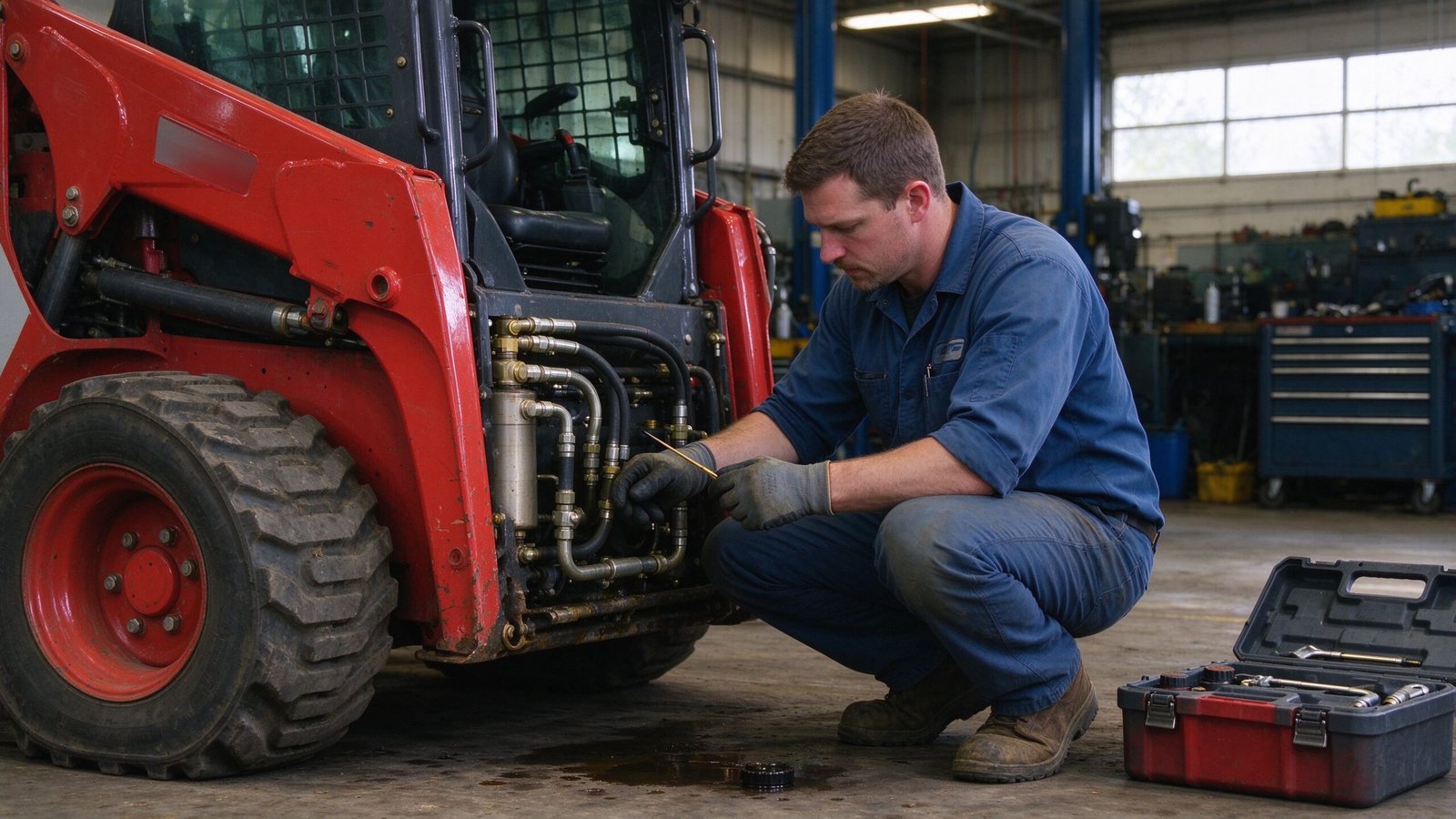
Almost everything on a skid steer is hydraulic, and hydraulic systems hate contamination and neglect. A single neglected oil change or a loose coupler can idle the machine for days. The good news: most failures are predictable and preventable. If you are new to the machine, first understand the systems in how a skid steer works and the components in skid steer parts.
The Daily Pre-Shift Checklist
1. Walk around and look for leaks
Check under the machine and along the lift arms for fresh hydraulic oil, coolant, or fuel. Early leaks are cheap; ignored leaks leave you stranded.
2. Check engine oil and coolant
For diesel machines, check the dipstick and coolant level every morning. For electric machines, inspect battery terminals and pack coolant if fitted.
3. Check hydraulic fluid level
Hydraulic oil is the lifeblood. Use the sight gauge or dipstick with the arms down and the bucket flat. Top up with the manufacturer-specified fluid.
4. Inspect tires or tracks
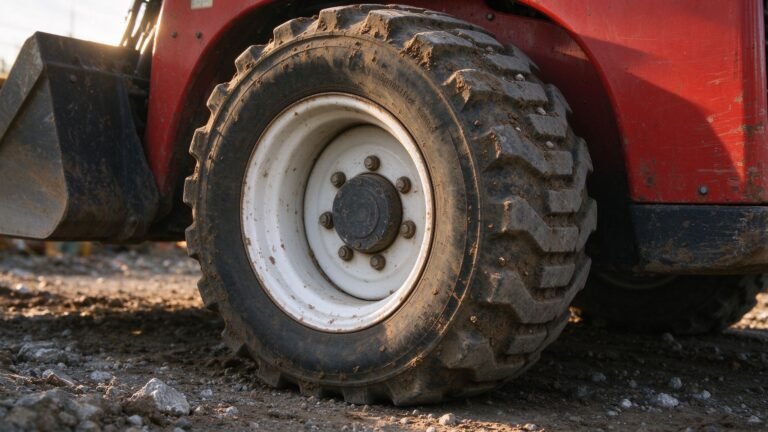
Look for cuts, embedded debris, and uneven wear. Skid steer tires wear on the sides from turning; monitor pressure weekly. Tire care is detailed in skid steer tire care.
5. Grease the pivot points
Lift-arm pivots, bucket linkage, and cylinder ends need fresh grease. A short greasing routine after each shift prevents expensive bushing wear.
Weekly and Hourly Maintenance
6. Clean the air filter and cooling pack
Dusty sites clog radiators and air filters fast. Blow out the cooling fins weekly. A blocked cooler overheats the hydraulics and engine in summer.
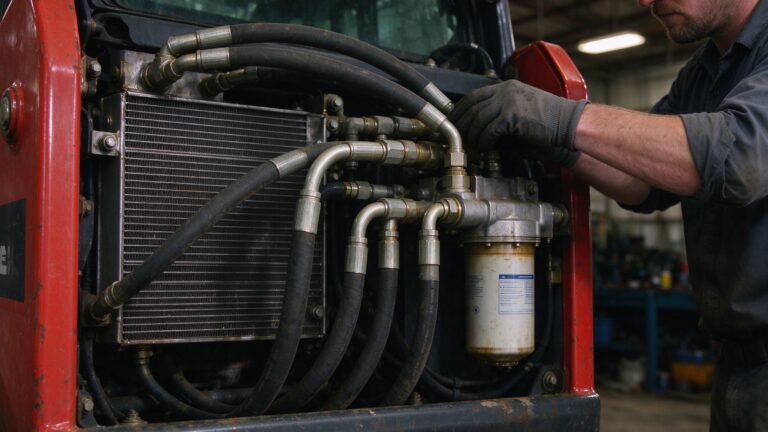
7. Inspect the quick coupler and auxiliary lines
Check coupler seals for grit and damage. Dirty auxiliary connections contaminate the hydraulic system every time you swap an attachment. For more on hydraulics, see hydraulic system care.
8. Test seatbelt, ROPS, and controls
The seat-bar interlock, seatbelt, and ROPS structure are safety systems, not optional extras. Test them every week. Safe operation is covered in skid steer safety tips.
Periodic Services
9. Change engine oil and filters on schedule
Follow the interval in your operator’s manual — usually every 250–500 hours depending on duty. Skipping oil changes is the top cause of early engine failure.
10. Change hydraulic fluid and return filters
Hydraulic fluid lasts longer than engine oil but must be changed eventually, along with suction and return filters. Contaminated oil wears pumps and valves. Electric machines skip engine oil but still need this service.
11. Inspect brake and drive components
Skid steers do not have conventional brakes — drive and steering depend on the hydraulic motors and chains. Listen for unusual noises when turning.
12. Document everything
Log every service hour, fluid change, and repair. A clean service history protects resale value and makes warranty claims straightforward. This matters a lot when you compare new vs used machines later.
Electric-Machine Maintenance Notes
An electric skid steer loader removes engine oil, fuel filters, and coolant from the routine, but the hydraulics, tires, grease points, and electrical connectors still need care. Keep battery terminals clean, inspect charge cables for damage, and follow the battery supplier’s storage guidance if the machine sits idle. Runtime and charging best practices are in the battery powered skid steer loader guide.
Common Mistakes That Shorten Machine Life
Ignoring small leaks
A slow leak becomes a pump failure when air and dirt get into the system.
Overlooking coupler cleanliness
Dirty hydraulic connections are the number-one source of contamination.
Greasing only when something squeaks
By then, metal-on-metal wear has already started.
Running on underinflated tires
Low pressure accelerates sidewall wear and wastes power.
Winter and Long-Storage Tips
If the machine sits unused for weeks, a few prep steps save grief. For diesel units, run the fuel tank nearly full to reduce condensation, and consider a fuel stabilizer if storage is over a month. For electric units, store the battery at roughly half charge in a dry, frost-free space and top it up every few weeks. Either way, clean the machine before storage so hidden leaks are visible when you return. Grease pivots one last time, lower the arms to the ground, and disengage any electrical accessories. A machine stored properly starts on the first pull next season; one left neglected may need a service call.
When to Call a Professional
Daily checks and filter changes are owner work. Hydraulic pump faults, electrical diagnostic trouble codes, and engine internal noises are not. Attempting deep repairs without the tools often turns a small fix into a big one. Keep your local technician’s number saved, and ask your manufacturer what remote support they offer for export buyers — a quick photo or video chat often diagnoses the issue faster than a guess.
Frequently Asked Questions: Skid Steer Maintenance Tips
How often should these skid steer maintenance tips be followed?
These skid steer maintenance tips work best as a daily habit, not a yearly chore. Skid steer maintenance tips like daily leak checks prevent the costliest breakdowns.
What do skid steer maintenance tips emphasize most?
Hydraulic care tops every list of skid steer maintenance tips. Among skid steer maintenance tips, keeping couplers clean is the one owners forget most.
Where can I find more skid steer maintenance tips?
Your operator manual is the first source. For workplace safety behind these skid steer maintenance tips, see OSHA and NIOSH.
Build a Maintenance Routine with Xinfa
Good maintenance starts with a well-built machine and clear documentation. Shandong Xinfa Machinery Co., Ltd. ships compact wheeled and electric skid steers with English operator manuals, a standard service schedule, and readily available export spare parts — all factory-direct with CE, EPA, EURO 5, and ISO certifications depending on model. Pair your Xinfa skid steer loader with this 12-point checklist, and it will reward you with longer uptime and stronger resale value. For the broader purchase plan, start with the buying guide, then explore the X360, R750, and electric range at Xinfa skid steer loaders, xinfaloader.com.