Skid Steer Hydraulic System Care: Essential Guide
Skid Steer Hydraulic System Care: The Essential Maintenance Guide
The skid steer hydraulic system is what turns lift arms, steer wheels, and every attachment into motion. When it is healthy, the machine feels crisp and responsive. When it is neglected, you get slow cycles, overheating, mysterious leaks, and premature pump failure. This guide to skid steer hydraulic system care covers fluid, filters, leak checks, and the most common problems owners troubleshoot in the yard.
Understand the Basics Before You Service
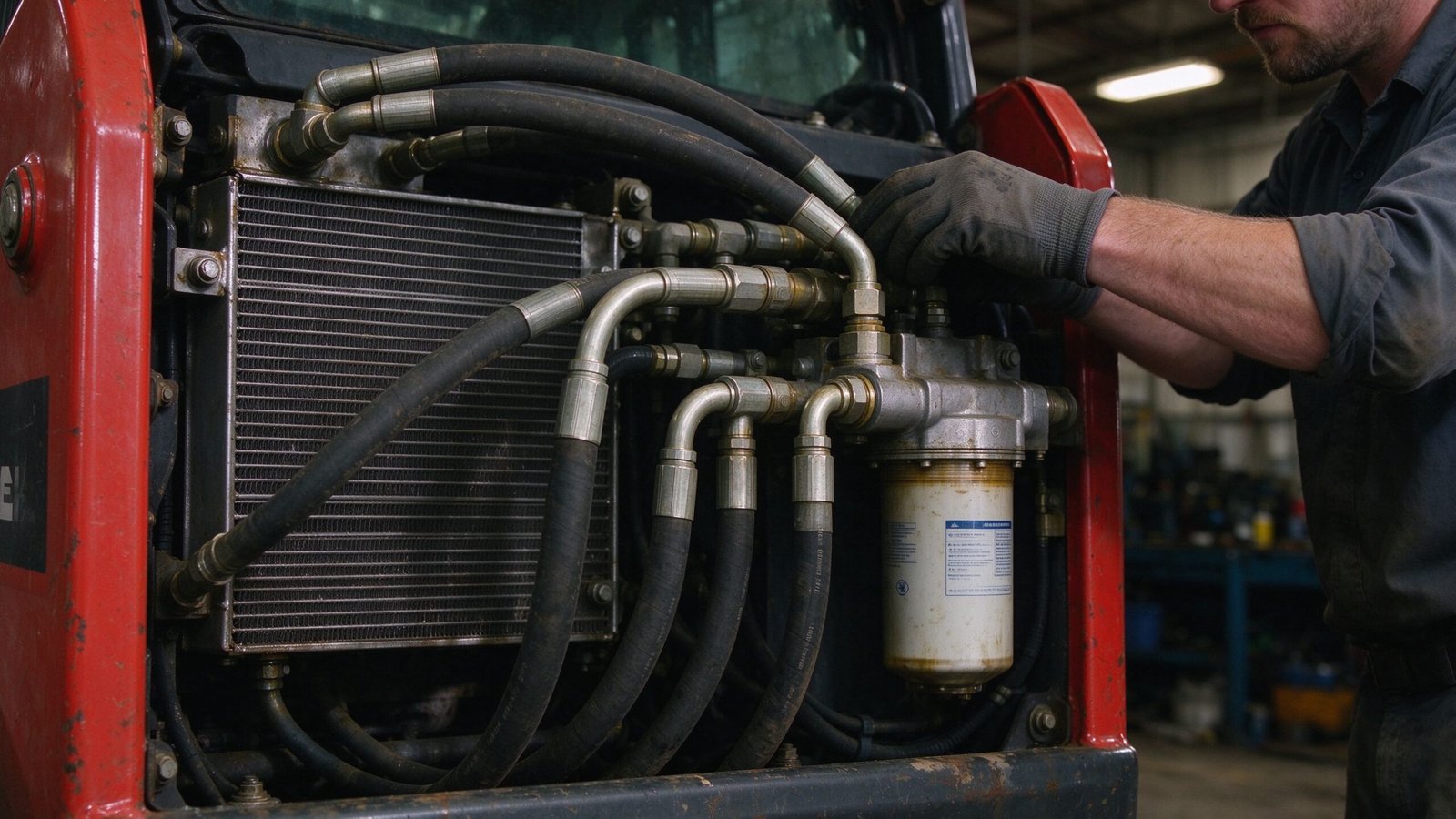
A skid steer hydraulic circuit has a pump, control valves, hydraulic motors for drive and attachment work, cylinders for lift and tilt, and a reservoir with filter and cooling. Fluid under pressure transmits power, and every component depends on clean, correctly rated oil. The system also powers your auxiliary attachments, so any weakness here slows down augers, breakers, and brooms at the same time.
If you are still learning the machine itself, our anatomy guide to skid steer loader parts names every component before you open the hood. This article assumes you can identify the pump, reservoir, and return filter on your own machine.
Fluid and Filter Intervals
The single most important habit is changing fluid and filters on schedule, not when a problem appears. Dirt and heat are the two enemies of hydraulic oil. Follow the machine manual, but typical compact-loader practice looks like this:
- First fluid change after the initial break-in hours, as specified by the factory
- Regular hydraulic oil change at the manufacturer’s hour-based interval, often annually or every 1,000 to 2,000 hours depending on duty
- Return and suction filters replaced on the same service schedule
- Use the correct hydraulic oil grade for your climate; never mix brands blindly
If you need a broader service routine, our 12-point skid steer maintenance checklist puts hydraulic care in context with the rest of the machine.
Watch the Reservoir Sight Glass
Fluid level changes as the lift arms cycle. Check it with the arms down and the bucket flat on the ground. Brown, milky, or smelly oil is a red flag: milky usually means water contamination, and burnt smell means the system has been running too hot. Either condition needs a fluid change and a hunt for the source before further damage.
Detecting and Stopping Leaks
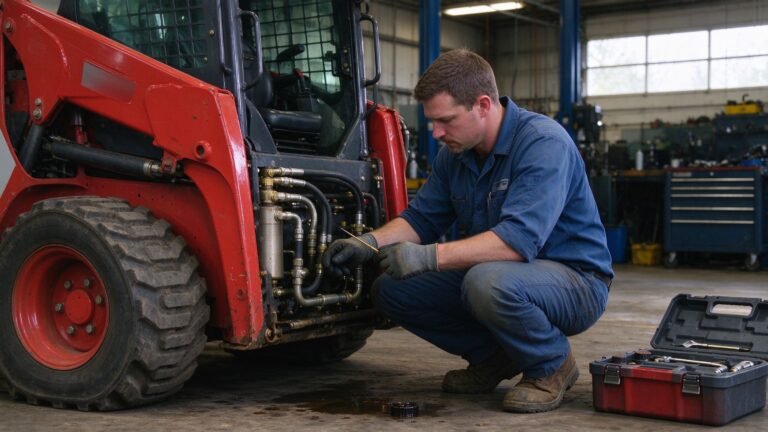
Hydraulic leaks rarely announce themselves loudly; they show up as damp hoses, oily droplets under the machine, or a slowly dropping reservoir level. Check at every service:
- Wipe down hoses and fittings after washing, then run the machine and watch for fresh oil
- Look for chafing where hoses rub against the frame or lift arms
- Inspect cylinder rod seals for weeping; a slight film is normal, drips are not
- Tighten fittings only to spec — over-tightening ruins seal faces
Never run a machine with a known pressure-side leak. High-pressure hydraulic fluid can inject into skin, and a line that sprays under pressure is both a safety hazard and a fast way to empty the reservoir on a remote job. OSHA guidance warns that high-pressure injection injuries are serious and require immediate medical attention, so treat any weeping hose as a stop-work item.
Common Troubleshooting Scenarios
Slow or Weak Attachment Performance
Slow auxiliary hydraulics usually trace to one of three causes: low fluid level, a clogged return filter, or a worn pump. Start with the cheap checks — level and filter — before assuming pump failure. Also confirm the coupler is fully seated; a half-connected flat-face fitting bleeds flow and feels weak.
Overheating Fluid
If the oil gets hot and the machine goes into derate, clean the oil cooler fins. Cooling cores plug with dust and chaff, especially in summer landscaping work. Also check that the system is not overfilled or underfilled, and that the fan drive works.
Noisy Pump or Whine
A whining pump often means the pump is pulling air, usually through a clogged suction strainer or a low fluid level. Fix the source before the pump cavitates itself to death.
Operating Habits That Extend Hydraulic Life
Warm the oil for a few minutes in winter before demanding full flow. Avoid holding a loader valve against a dead end for long periods; that spikes pressure and heat. Keep couplers clean when swapping attachments, because grit driven into a valve is expensive. And for wheels and tires, pair this work with our skid steer tire care guide so the whole drivetrain stays healthy. If you train operators, the beginner operating guide includes habits that avoid hydraulic abuse.
Seasonal Skid Steer Hydraulic System Care Checklist
Put the routine on paper. At the start of every season, check fluid level and condition, swap the return filter, inspect every hose for chafing, and flush the cooler fins of dust and chaff. In winter, let the machine warm up before demanding full hydraulic flow, because cold oil moves slowly and thick oil strains the pump. In summer, watch the cooler for blockage, because overheating is the fastest way to shorten hydraulic seal life. Ten minutes of this inspection per season prevents the hundred-hour breakdowns that ruin a rental schedule. Keep a small stock of common seals, o-rings, and hoses on the shelf, because waiting on a part from across the country is how one slow leak becomes a week of downtime.
Frequently Asked Questions
How often does skid steer hydraulic system care need fluid changes?
Routine skid steer hydraulic system care starts with the factory hour schedule, usually an oil change every 1,000 to 2,000 hours. Solid skid steer hydraulic system care means never stretching that interval, because dirty oil is the top cause of pump failure.
Why is skid steer hydraulic system care so important?
Skid steer hydraulic system care protects the pump, valves, and cylinders that power both lift arms and attachments. Skip skid steer hydraulic system care and you face slow cycles, overheating, and expensive seal replacements.
Can I do skid steer hydraulic system care myself?
Many owners handle basic skid steer hydraulic system care themselves: checking level, swapping filters, and spotting leaks. Deeper skid steer hydraulic system care, such as pump diagnosis, goes to a technician, but daily skid steer hydraulic system care takes only minutes.
At Shandong Xinfa Machinery Co., Ltd., we engineer our skid steer loaders with accessible hydraulic service points and common parts, so routine care stays simple. A Xinfa skid steer loader is built to be maintained in the field, far from a dealership. Browse current models and export support at Xinfa skid steer loader.