Skid Steer Tire Care Guide: Essential Tips
Skid Steer Tire Care Guide: Essential Tips to Extend Tire Life
Tires are one of the fastest-wearing and most expensive consumables on a wheeled compact loader. Because skid steers steer by skidding, every turn scuffs rubber against the pavement. A disciplined skid steer tire care guide can double the life of a set and save real money over a year. This article covers inflation, wear patterns, rotations, and the foam-filled versus solid tire question.
Why Skid Steer Tires Wear So Fast
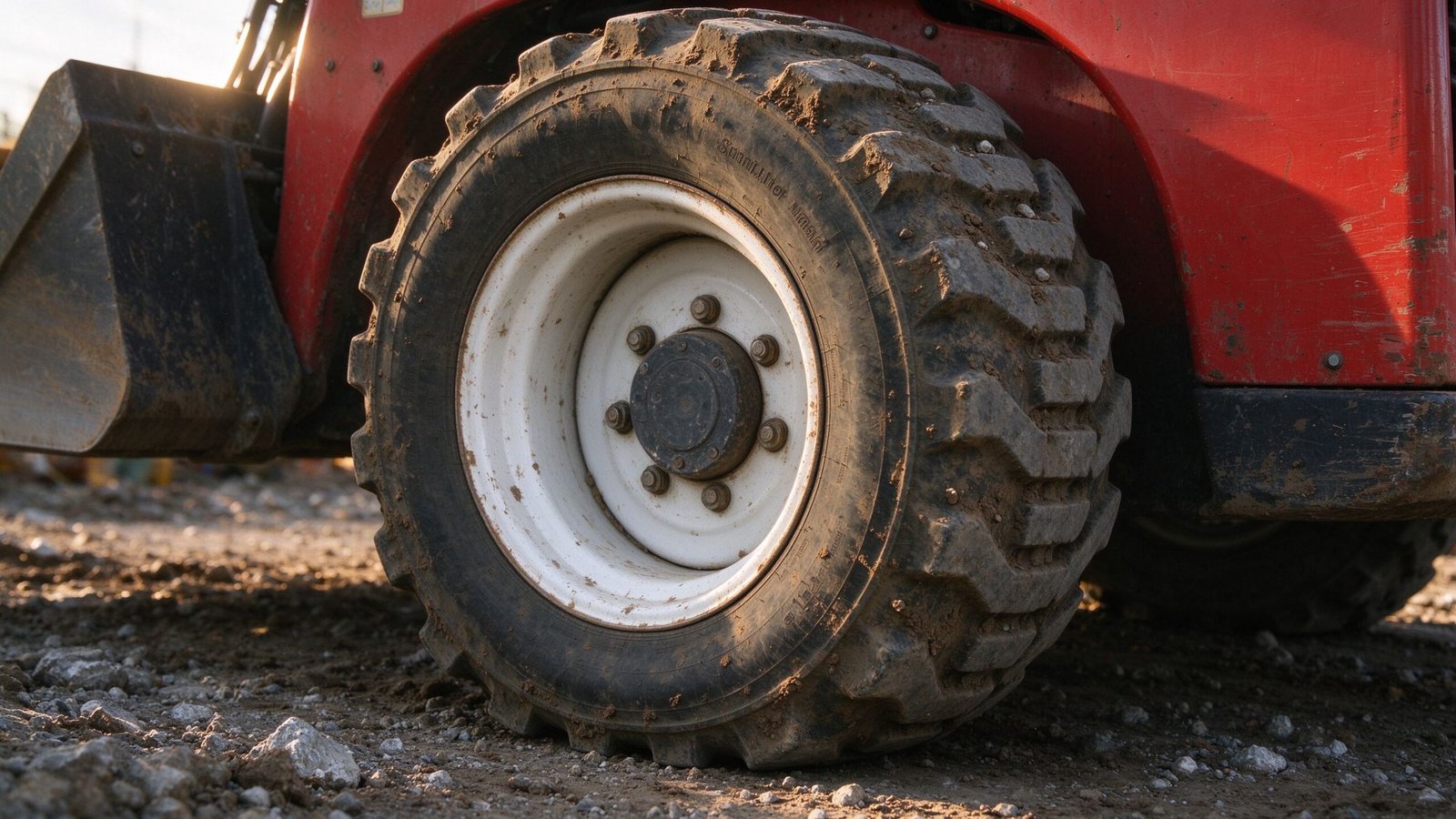
A normal road car rolls through corners. A skid steer pivots by braking one side and driving the other, scrubbing rubber sideways every single turn. That design gives unbeatable maneuverability but treats tires as a consumable. Owners who accept that fact and plan for it — instead of being surprised at every replacement — keep budgets under control.
If you are new to the machine, the steering principle is explained in how a skid steer loader works. Once you understand why tires scrub, the care advice below makes sense.
Inflation Pressure: The Cheapest Way to Extend Tire Life
Under-inflated tires bulge on the sidewalls, flex too much, and wear the shoulder edges. Over-inflated tires ride on the center of the tread and wear a smooth bald strip down the middle. Both conditions are visible, and both are avoidable.
- Check pressure cold, before a shift, with a reliable gauge
- Follow the manufacturer’s recommended PSI for your load and surface
- Check both sides — inner tires are easy to forget
- Adjust pressure for heavier attachment loads when the manual allows
One cheap gauge and five minutes a week beats a set of tires a season early. Pair this habit with the rest of the routine in our skid steer maintenance checklist.
Reading Tread Wear Patterns
What the tread looks like tells you what the machine has been doing:
Cupped or Scalloped Wear
Even, scooped dips around the tread mean the tire has been running at wrong pressure, out of balance, or on worn wheel bearings. Inspect the hubs and re-check pressure before fitting new rubber.
Shoulder Wear
Worn outer edges almost always point to chronic under-inflation or carrying overloads that flex the tire too far.
Center Wear
A smooth strip down the middle means over-inflation. Lower to spec and the next set will wear more evenly.
One-Side Heel-Toe Wear
Skid steer tires often scrub more on one side depending on how the operator turns. Periodically swap left and right tires to even the wear, the same way you rotate a car. This small habit can add hundreds of hours to a set.
Pneumatic, Foam-Filled, or Solid?
This is the biggest tire decision owners face.
- Pneumatic air tires ride best and cost least, but they puncture. Ideal for finish grading, lawns, and clean yard work.
- Foam-filled tires cannot go flat, because the cavity is filled with urethane foam. They ride stiffer and cost more upfront, but they nearly eliminate flat repairs on demolition and scrap sites.
- Solid rubber tires are the longest-wearing option for rocky, rebar-strewn, or scrap yards. They ride hardest and offer least traction on ice.
Choose based on your typical surface. A landscaping machine running on grass wants pneumatic; a demolition rig on concrete wants solids. If you are choosing a base machine and wondering about ground pressure and size class, our skid steer loader sizes article covers classes. And because tires and hydraulics both wear on the same machine, pair this guide with hydraulic system care for a complete maintenance routine.
Operating Habits That Save Tires
Driving on the road between sites is unavoidable, but minimize skidding on pavement. Turn smoothly rather than yanking the controls. Avoid spinning the wheels in mud; spin digs holes and chews tread. Keep loads low and centered. Safe compact-loader operating practices from OSHA also cover seatbelt and seat-engagement habits that protect operators. Train new operators with our beginner’s operation guide so they do not learn on your tires.
When to Replace
Replace tires when the tread blocks wear down to the point where traction on wet or sloped ground becomes unreliable, when cords show through, or when sidewalls crack. Do not wait for a blowout on a busy site. Keep a spare set mounted on wheels if uptime matters, so swaps take minutes rather than hours.
Skid Steer Tire Care Guide: A Weekly Walkaround That Pays
This skid steer tire care guide does not require a fancy shop. Once a week, walk around the machine with a gauge and a flashlight: check four pressures, look for cuts in the sidewalls, clear debris wedged in the tread, and note any tire that is slowly deflating. A slow leak found on Monday is a five-minute fix; the same leak found on a Friday afternoon on a remote site is a lost rental day. This ten-minute walkaround is the single highest-return maintenance habit you can build.
Train operators to report flats immediately rather than driving on a ruined tire. A tire run flat for even a few minutes destroys the casing and turns a $20 tube repair into a $300 replacement. Keep a tire pressure chart posted in the service bay so new hires do not guess. Over a year, that discipline cuts tire budget by a third on most fleets.
Frequently Asked Questions
What does a skid steer tire care guide actually cover?
A good skid steer tire care guide covers inflation pressure, tread wear patterns, rotation, and choosing pneumatic versus solid tires. This skid steer tire care guide focuses on the weekly habits that prevent flats and premature wear.
How often should I follow a skid steer tire care guide?
Use this skid steer tire care guide weekly: check pressure, inspect sidewalls, and clear tread debris. A skid steer tire care guide that you follow every week doubles tire life versus one you only read once.
Are foam-filled tires worth it in this skid steer tire care guide?
For scrap and demolition yards, yes. This skid steer tire care guide recommends foam-filled tires on rocky sites, because flats stop being a recurring cost. On clean lawn work, pneumatic tires ride better and cost less.
At Shandong Xinfa Machinery Co., Ltd., we ship compact skid steer loaders with sturdy wheel ends and common tire sizes, so replacements are easy to source anywhere you operate. A Xinfa skid steer loader is built to run long hours in demanding yards, and the right tire choice keeps it working for years. See the current compact lineup at Xinfa skid steer loader.