Skid Steer Tiller Attachment: Practical Soil Prep Guide
Skid Steer Tiller Attachment: The Practical Soil Preparation Guide
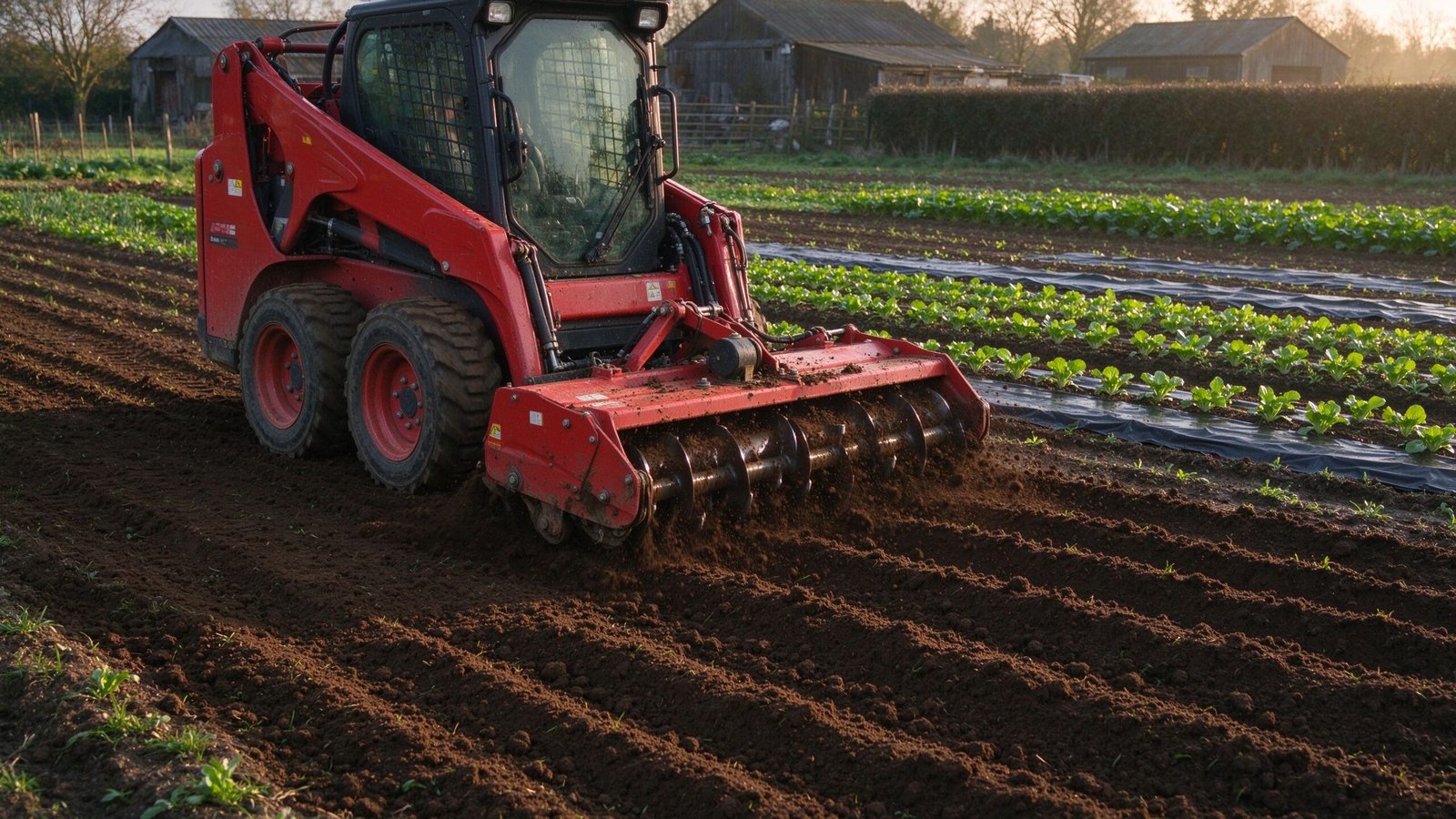
A skid steer tiller attachment is a rear- or front-mounted rotary harrow that churns, crumbles, and mixes soil in a single pass. Instead of dragging a disc harrow behind a tractor, landscapers and farmers mount the tiller on a compact loader and prepare seedbeds, garden plots, and food plots with precision. This guide explains working width, tilling depth, hydraulic requirements, and the jobs where this attachment shines.
What a Skid Steer Tiller Attachment Actually Does
The tiller contains a horizontal rotor lined with steel tines. Driven by auxiliary hydraulics, the rotor spins and the tines chop through sod, break up clods, and mix in compost or fertilizer. As the skid steer crawls forward, the rear depth skid controls how deep the tines bite. The result is a loose, uniform seedbed in one pass, ready for drilling or hand seeding.
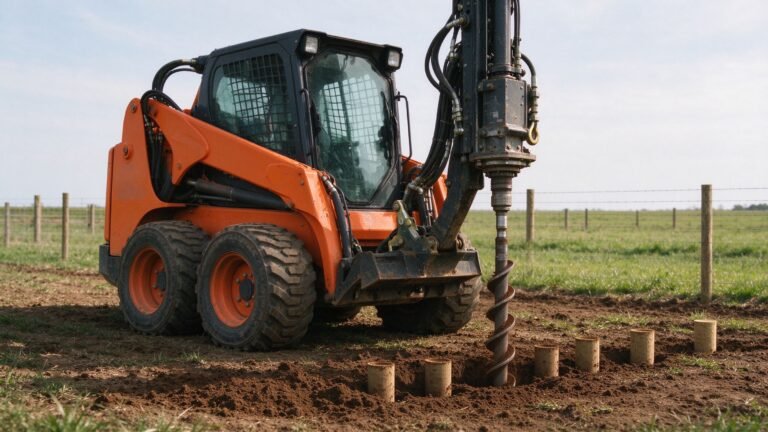
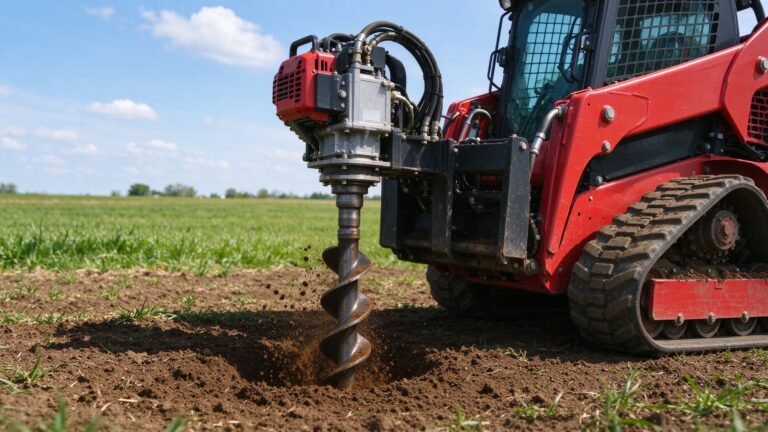
Unlike a box blade that simply levels dirt, a tiller actively mixes the soil profile. That makes it the go-to tool for lawn renovation, garden installation, food plots, and turf repair. For the wider world of front-end tools, browse our skid steer attachments guide. If you also drill posts on the same property, pair the tiller with a skid steer post hole digger to finish fencing and ground prep in one trip.
Working Width and Tilling Depth
Tillers are sold by cutting width and by how deep they can reach. Most compact-loader tillers fall into a practical range:
- 48 to 60 inch working width for tight residential lots and garden beds
- 6 to 8 inches of tilling depth in average loam, depending on soil moisture
- Side-shift capability so you can line up under fences or along beds
Wider tillers cover ground faster, but they demand more hydraulic flow and more machine weight to hold them down. Match the width to your loader’s auxiliary circuit and rated operating capacity. A compact machine such as the Xinfa X360 (300 kg rated load, 0.12 m3 bucket) handles narrow tillers on residential and small-farm jobs comfortably; larger farm plots benefit from a bigger platform.
Soil Moisture Makes the Difference
The same tiller behaves wildly differently depending on when you run it. Soil that is slightly damp breaks up cleanly and crumbles into a perfect seedbed. Bone-dry dirt bounces the tines and leaves dust. Wet, claggy soil wraps around the rotor in heavy clumps and plugs the tines. The sweet spot is often a few days after a rain, when the surface has dried but the subsoil still holds moisture.
Best Uses for a Skid Steer Tiller
Landscapers reach for this attachment when the job calls for finished soil rather than rough grading. Typical projects include:
- Preparing a new lawn before sodding or seeding
- Renovating compacted sports fields and park turf
- Mixing compost, sand, or topdressing into existing soil
- Prepping garden rows and food plots for planting
- Breaking up old sod before hardscape installation
These tasks sit at the heart of landscaping work and farm and agriculture routines, which is why tillers sell so well to mixed-use contractors. The USDA publishes guidance on soil health and seedbed practices that pairs well with this kind of mechanical prep. Unlike buckets or forks, a tiller turns the skid steer into a soil-improvement tool rather than just a mover of material.
Operating Tips for a Clean Pass
Set the depth skid before you start, then lower the tiller while the rotor is already spinning. Drive slowly, at roughly walking pace; rushing buries the tines unevenly and leaves unprocessed strips. Make overlapping passes of about one third of the working width to avoid gaps. After the initial pass, raise the tines slightly and run a finishing pass perpendicular to break up any remaining clods.
Watch the tines for rocks or buried wire. A tiller rotor flings debris with real force, so keep bystanders clear and never open the side shield while the rotor turns. Routine grease on the rotor bearings and a quick hose-down after muddy days keep the attachment ready season after season.
Buying Considerations
Before ordering, confirm three things. First, your auxiliary hydraulic flow in liters per minute, because the tiller’s motor is rated for a specific range. Second, whether you want a standard or a reverse-rotation rotor, the latter useful in heavy sod. Third, whether a side-shift kit matters for your typical sites. If you are still choosing the base machine, our step-by-step buying guide covers capacity and power.
When Not to Tiller
A tiller is not the right tool for every ground job. If you are stripping heavy sod or moving large volumes of soil, a bulldozer blade or a 4-in-1 bucket is more efficient. If the goal is a rough grade rather than a finished seedbed, a box blade saves time. And if the site is wet enough to stick to the tines, waiting two days beats fighting a clogged rotor. Match the tool to the finish you need, not just to the soil you see. Over a season, choosing the right attachment for each pass saves more time than buying the fastest machine on the lot.
Rental vs Owned: Who Benefits Most
If you only prepare beds a few weekends a year, renting a tiller for the week is cheaper than buying one outright. But if you run a landscaping crew, a farm stand, or a municipal grounds team, owning the attachment quickly wins out because you use it across dozens of small jobs every month. Factor in storage, grease, and tooth wear when you compare the two, and the ownership math usually favors regular users.
Frequently Asked Questions
What is a skid steer tiller attachment?
A skid steer tiller attachment is a hydraulically driven rotary harrow that mounts on the front quick-coupler. A skid steer tiller attachment chops sod, crumbles clods, and mixes compost into a loose seedbed in a single pass.
How deep does a skid steer tiller attachment dig?
A typical skid steer tiller attachment reaches 6 to 8 inches into average loam, adjusted by the rear depth skid. In softer, damp soil the same skid steer tiller attachment will bite a little deeper, while packed dry ground limits depth no matter how much down pressure you apply.
What hydraulic flow do I need for a skid steer tiller attachment?
Most compact skid steer tiller attachments run on standard auxiliary hydraulics, but match your machine’s flow rating to the attachment spec before buying. A skid steer tiller attachment starved for flow turns slowly and leaves uneven beds, so confirm the numbers on both nameplates.
At Shandong Xinfa Machinery Co., Ltd., we build compact skid steer loaders that pair cleanly with tillers, augers, buckets, and forks. A Xinfa skid steer loader gives landscapers and small farmers the quick-coupler compatibility and hydraulic flow to turn rough dirt into a finished seedbed fast. Explore the range at Xinfa skid steer loader and talk with the factory about export options.