Ultimate Skid Steer Terminology: 40+ Key Terms
Ultimate Skid Steer Terminology: 40+ Key Terms
Buying or operating a skid steer for the first time means learning a new vocabulary. This guide collects the skid steer terminology every buyer should know. This skid steer terminology glossary cuts through the jargon — ROC, tipping load, radial lift, auxiliary flow — so you can spec, compare, and run these machines with confidence. Mastering skid steer terminology also lets you talk specs with dealers and exporters without guessing. This skid steer terminology glossary is the fastest way to get fluent.
Performance, Lift and Hydraulic Terms
ROC (Rated Operating Capacity)
The maximum load a machine can safely lift, defined as 50% of its tipping load. If a machine tips at 600 kg, its ROC is 300 kg. See the ROC guide for details.
Tipping Load
The load at which the machine actually becomes unstable and tips forward. ROC is always half of this number.
Operating Weight
The machine’s curb weight with fluids, a standard bucket, and a 75 kg operator. Xinfa’s X360, for example, has an operating weight of about 900 kg.
Breakout Force
The digging force the bucket cylinder can exert at the cutting edge. Higher breakout means better penetration into hard soil.
Net Horsepower / kW
Engine power delivered at the flywheel, after accessories. Xinfa compact models range from 6 kW electric to 18.4 kW diesel.
Lift Height to Bucket Pin
How high the hinge pin on the quick coupler reaches. This determines whether you can load a dump truck or stack pallets.
Radial Lift vs Vertical Lift
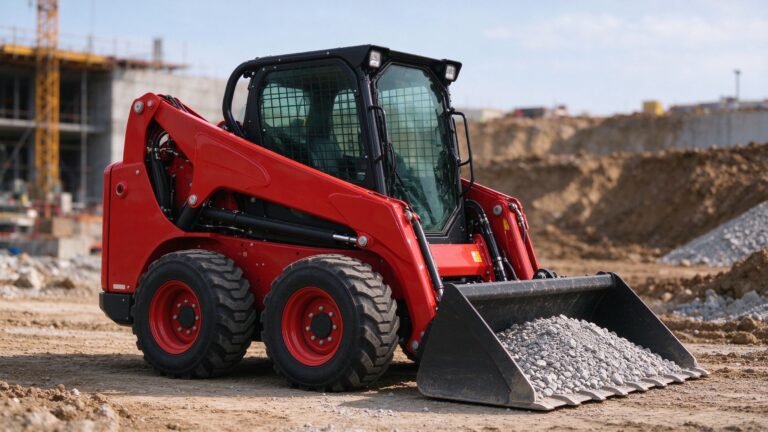
Radial lift arms arc outward as they rise (best for digging); vertical lift arms rise nearly straight up (best for truck loading).
Auxiliary Hydraulics
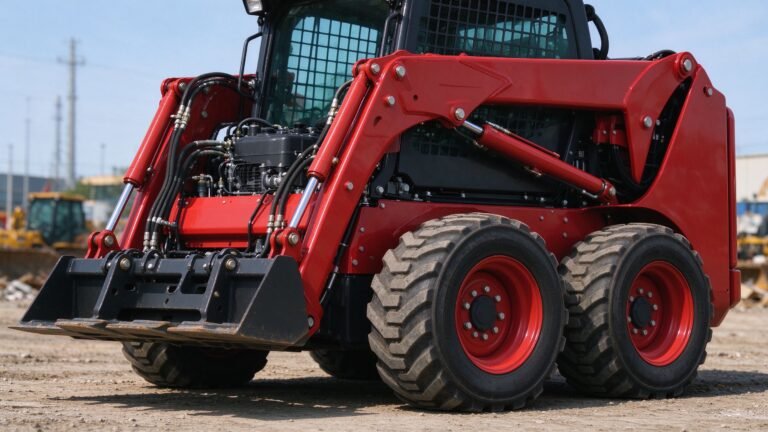
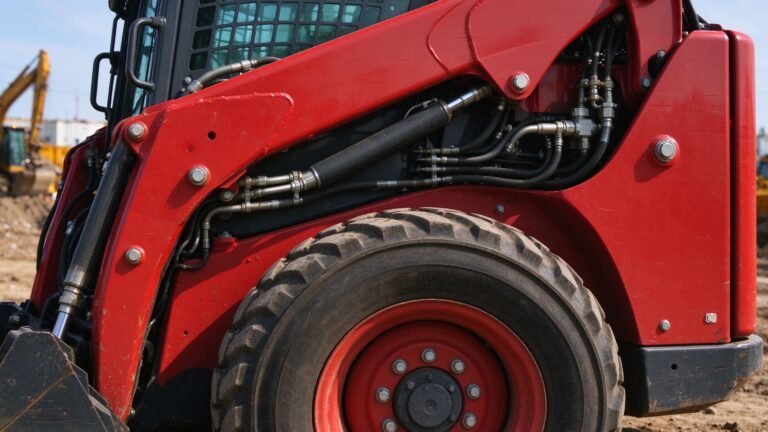
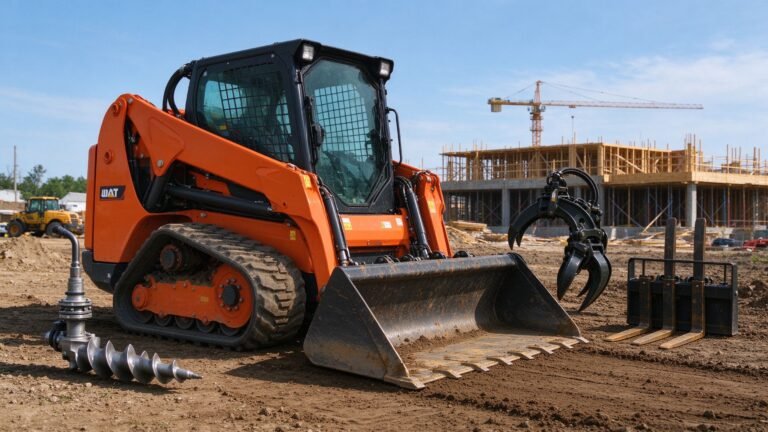
Extra hydraulic circuits routed to the quick coupler to power attachments like augers and breakers.
Standard Flow vs High Flow
Standard flow (around 60–85 L/min) runs buckets and augers. High flow (90–140 L/min) runs planers, snow blowers, and brush cutters.
Quick Coupler / Quick Attach
The universal mounting plate that lets one operator swap attachments in under a minute. More in the skid steer parts guide.
Flat-Face Couplers
Dry-break hydraulic connectors that minimize oil spills when hooking up powered attachments.
Chassis, Undercarriage and Safety Terms
Wheeled Skid Steer vs Compact Track Loader (CTL)
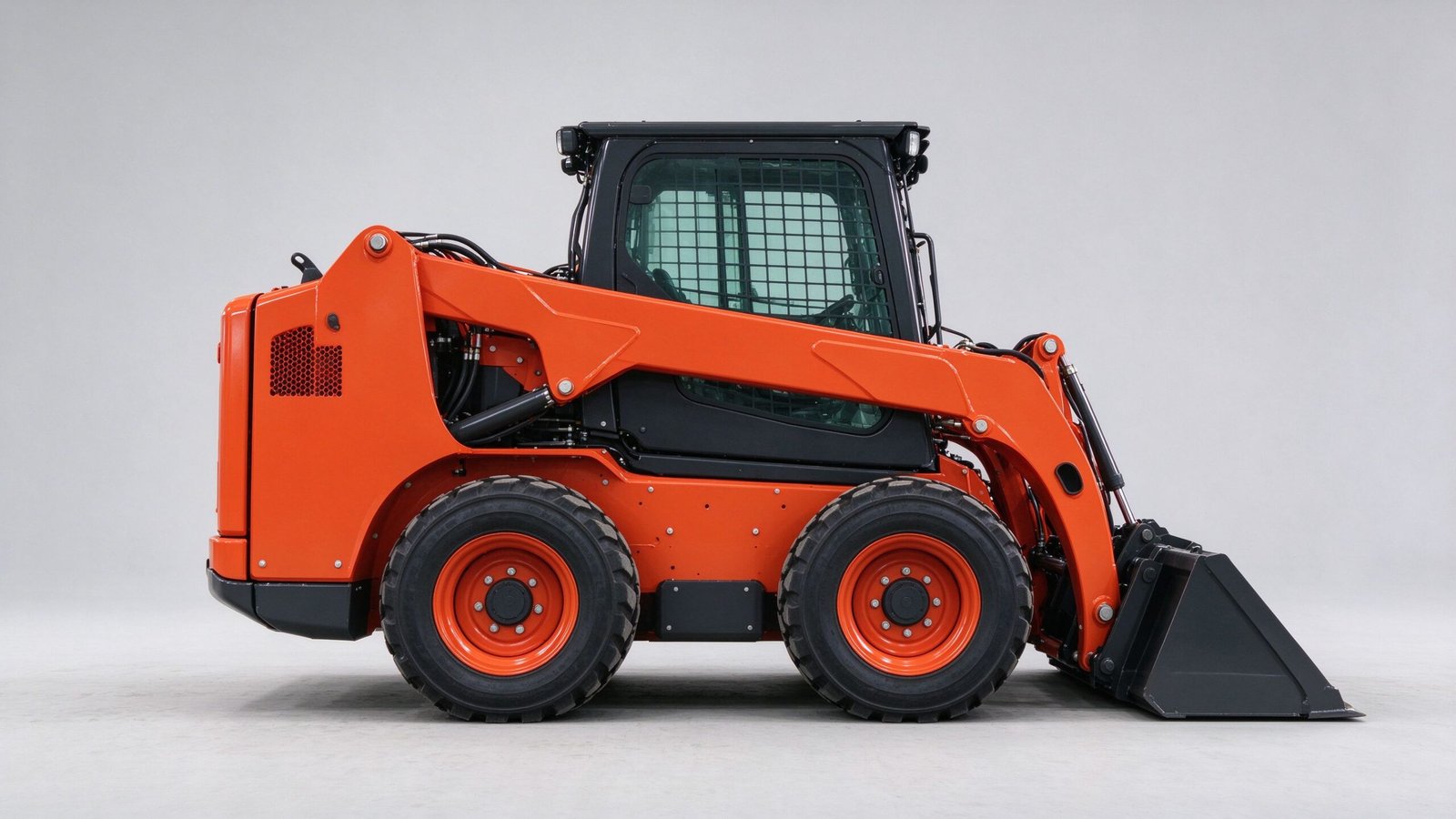
The classic four-wheel design; the CTL substitutes rubber tracks for better flotation. Compare in skid steer vs compact track loader.
Skid Steer (Turning Method)
Turning method: the wheels skid sideways because left and right sides spin at different speeds.
Pneumatic, Foam-Filled and Solid Tires
Pneumatic = cushioned but flats; foam-filled = flat-proof, harsher ride; solid = for demolition and rebar-heavy sites.
Narrow-Frame / Wide-Frame
Narrow-frame machines (under ~1 m wide, like the 980 mm Xinfa X360) fit through doorways and gate openings. Wide-frame machines carry more ROC.
Wheelbase and Track Length
The distance between front and rear axles. Longer wheelbases = smoother ride and better stability.
ROPS
Roll-Over Protective Structure. The reinforced cabin cage that protects the operator if the machine tips.
FOPS
Falling Object Protective Structure. A reinforced top guard against rocks and debris.
Seat Bar / Lap Bar
A padded arm that must be lowered to enable hydraulics; a safety interlock.
Joystick Controls
H-pattern or hand-foot controls; ISO-pattern joysticks are the modern standard.
Interlock System
Safety logic that locks drive and hydraulics unless the seat bar is down and the operator is seated.
Ground Pressure
Weight divided by footprint. Trackers have lower ground pressure than wheeled skids.
Float Position
A hydraulic mode that lets the bucket follow the ground contour for grading.
Creeper Speed
Low-speed mode for planers and trenchers that need precise control.
Attachment and Ownership Terms
General-Purpose Bucket
The default 4-in-1 or GP bucket for loose material. Compare options in skid steer bucket types.
Auger
Hydraulic drill for fence posts and tree planting. See skid steer auger attachment.
Grapple
A clamshell claw for logs, rocks, and scrap. See skid steer grapple attachment.
Pallet Forks
Tines for moving pallets and crates.
Hydraulic Breaker
A jackhammer attachment for concrete and rock.
Mulcher / Brush Cutter
High-flow attachment that shreds vegetation.
Snow Pusher / Blower / Plow
Winter attachments covered in snow removal guide.
Tiller / Power Rake
Soil-prep attachments for landscaping.
Hours Meter
The engine-hour counter; used for servicing and resale valuation.
Total Cost of Ownership (TCO)
Purchase price plus fuel/electricity, maintenance, tires, and financing over the machine’s life.
Resale Value
What a used machine fetches at trade-in. Brand reputation and hours drive it.
Battery Voltage / Ah (Electric Models)
72V systems with 125–200Ah battery packs are common on modern electric compact skids. Learn more about battery powered skid steer loaders.
CE / EPA / EURO5 / ISO Certification
Regulatory approvals required to sell into the EU, US, and global markets. Xinfa machines carry all four, including ISO standards for safety and emissions.
What Is the Difference Between ROC and Tipping Load?
Tipping load is the weight at which the machine tips forward. ROC (rated operating capacity) is 50% of that number — the safe working limit. Always size attachments and loads to ROC, not tipping load.
What Does H-Pattern Mean?
H-pattern describes older mechanical control levers arranged in an H shape. Most modern machines use ISO-pattern joysticks, where the left stick controls drive and the right stick controls lift and bucket.
What Does ROC Stand For?
ROC stands for Rated Operating Capacity — the maximum safe load a skid steer can lift, defined as 50% of tipping load. It is the single most important number when comparing skid steer terminology specs.
What Is the Difference Between Wheeled and Tracked?
Wheeled skid steers run on rubber tires for speed on hard surfaces; compact track loaders run on rubber tracks for flotation in mud and turf. Both share the same skid steer terminology and attachment system, so learning one set of skid steer terminology covers both platforms.
Get the Right Machine With Xinfa
Once you know the skid steer terminology, comparing machines becomes straightforward: this glossary of skid steer terminology gives you the vocabulary to read spec sheets, talk to dealers, and compare quotes. Mastering skid steer terminology means you never again confuse ROC with tipping load. In short, match ROC to your heaviest lift, choose lift geometry by your main task, and pick hydraulic flow for the attachments you will actually run. Shandong Xinfa Machinery Co., Ltd. builds compact skid steers from the 300 kg ROC X360 up to the 400 kg R750, in both electric and diesel, with full CE/EPA/EURO5/ISO documentation. Explore the range at Xinfa, or start with the buying guide. Every Xinfa skid steer loader is sold factory-direct with export-ready specs and parts support.