Skid Steer Snow Blower Attachment: Expert Guide
Skid Steer Snow Blower Attachment: The Expert Guide
A skid steer snow blower attachment turns your compact loader into a professional snow-clearing machine. Instead of pushing piles around, you blast snow off driveways, parking lots, and walkways in one controlled pass. This guide covers how snow blower attachments work, what to compare, and how to run them profitably through a full winter season.
How a Snow Blower Attachment Works
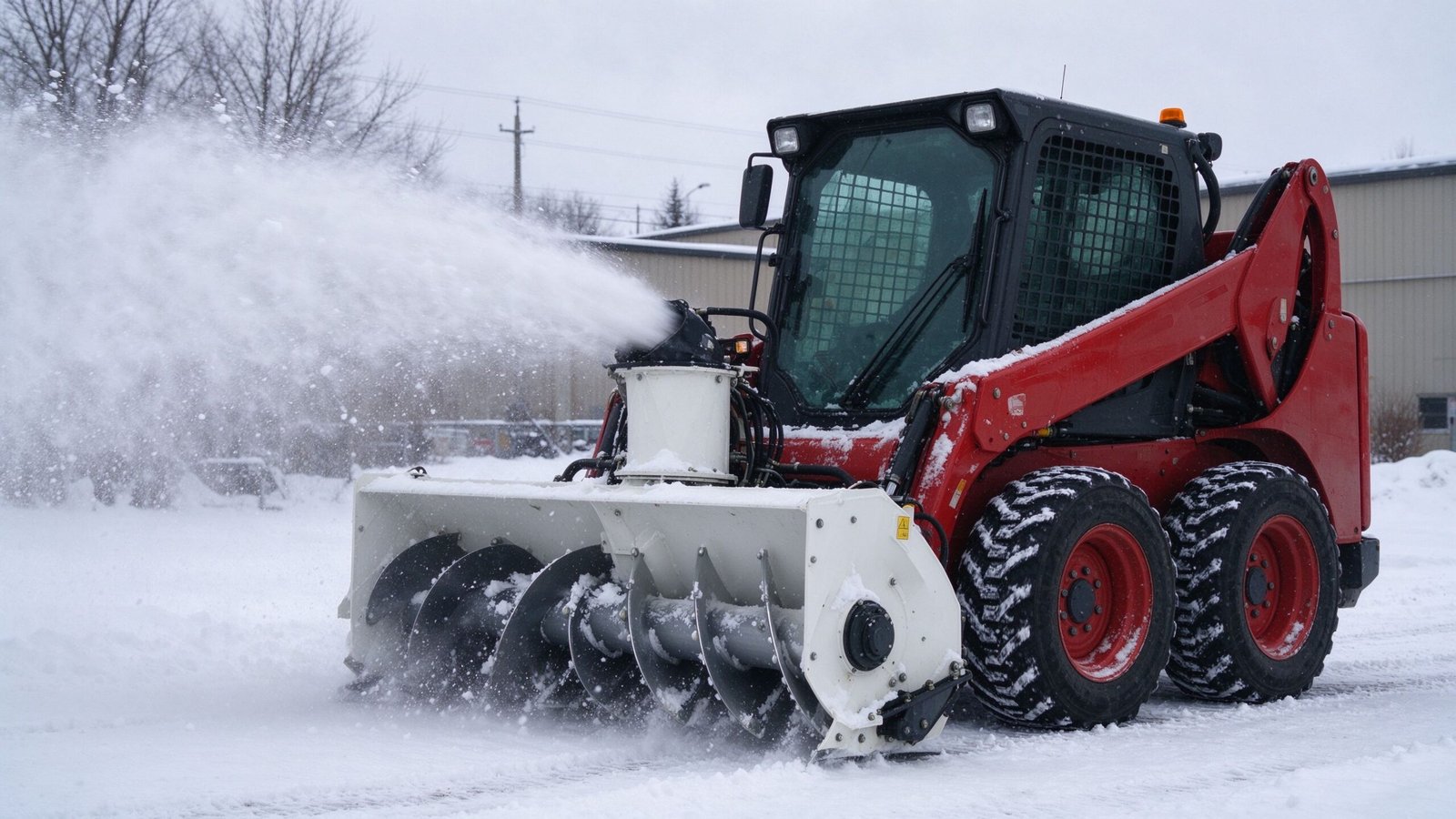
A typical skid steer snow blower attachment mounts to your quick-coupler and runs off the auxiliary hydraulics. An auger pulls snow into a housing, an impeller accelerates it, and a directional chute throws it clear of the cleared surface. Hydraulic rotation lets you aim the chute left, right, or up without leaving the cab.
Unlike a simple pusher, a blower moves snow off the lot entirely. That matters on commercial contracts where clients cannot have snow piled on landscaping, sidewalks, or loading docks.
Picking the Right Skid Steer Snow Blower Attachment
When you compare options, compare these four numbers side by side.
Cutting width. Wider covers more ground per pass but demands more hydraulic flow and a larger machine. Match width to your loader’s size and your typical lot sizes. A small compact loader needs a narrower blower it can actually drive.
Throwing distance. Blowers commonly throw snow several meters. Verify the spec matches where you need snow discharged, especially on tight urban sites where you cannot pile it just anywhere.
Hydraulic flow requirement. This is the critical number. A blower needs adequate auxiliary flow to spin the impeller at speed. Under-sized flow leaves you bogging down in deep snow. Check your loader’s auxiliary hydraulic rating before ordering.
Chute control. Manual vs hydraulic chute rotation changes how fast you work. Hydraulic chute control saves time on long commercial runs where you swing the discharge side to side constantly.
Matching the Attachment to Your Loader
Compact Xinfa loaders handle light-to-moderate snow work well. The Xinfa R750 at 400 kg rated load and 18.6 kW-class power provides the hydraulic capacity for a mid-sized blower, while narrower models like the X360 at 980 mm wide navigate tight residential driveways.
Before you buy, confirm your machine’s auxiliary hydraulics and coupler match the blower you choose. Read more about the tool ecosystem in the skid steer attachments guide.
Best Jobs for a Snow Blower
Skid steer snow blower attachments excel on paved commercial lots, hospital and school entrances, parking garages, and long driveways where piling snow is not allowed. Wet, heavy snow and packed snow demand more power than light powder, so size the blower to your local conditions.
For broader winter business planning, read our guide to skid steer for snow removal and learn how to price commercial snow contracts.
Pusher vs Blower vs Plow
Not every winter job needs a blower. A snow pusher is cheaper and fine when snow can be piled at the lot edge. A blade plow works for quick passes on open areas. A blower wins when snow must be ejected away from the site. Many profitable winter crews own all three and switch by job.
Getting the Most From a Blower Season
Before winter, test the blower on dry ground to confirm the impeller spins freely and the chute rotates. Grease the grease fittings, check hydraulic couplers for leaks, and carry spare shear bolts if your blower uses them. On site, clear the outlet chute of ice buildup between storms; a blocked chute throws snow straight up and wastes the machine’s power.
Price blower jobs correctly. Blower work is slower than pushing, so quote it as a premium service, especially for commercial clients who cannot have snow piled on their landscaping. A blower attachment pays for itself in one heavy winter on the right contracts.
Operating Tips and Safety
Run the blower at a steady ground speed so the auger can bite. Avoid forcing the machine into drifts that stall the impeller. Keep bystanders well clear of the chute, because thrown ice and snow are dangerous. Never point the chute at people, vehicles, or glass.
Winter visibility is poor. Clear windows, use lights, and slow down. For the broader safety rules every operator should follow, review skid steer safety tips. Remember that a blower on a compact loader works best on wet and moderate snow; very deep powder needs slower passes and patience rather than speed.
Store the blower indoors over summer, grease the shear pins, and cover the hydraulic couplers. A well-stored blower starts clean next November and avoids the seized-fitting headaches that delay the first storm of the year.
Match the blower to your typical snowfall. If your area gets light powder, a mid-sized unit is plenty. If wet, heavy lake-effect snow is the norm, size up both the cutting width and the hydraulic flow so the impeller never boggs down. The right-sized blower clears faster and lasts longer.
Pair the blower with a light plow for mixed conditions. Push the heavy slush first, then blow the lighter accumulation where it needs to land. That combination handles storms a single attachment cannot, and it keeps you moving on long commercial lots.
Frequently Asked Questions on a Skid Steer Snow Blower Attachment
What hydraulic flow does a skid steer snow blower attachment need? Enough to spin the impeller at rated speed; check the blower spec against your auxiliary hydraulics, because an under-flowed skid steer snow blower attachment bogs down in wet snow.
Is a skid steer snow blower attachment safe on a commercial lot? It is when you keep bystanders clear of the chute and follow winter worksite safety guidance from OSHA; never point the chute at people, glass, or vehicles. Once matched to flow and width, the skid steer snow blower attachment clears commercial lots faster than a pusher, and storing the skid steer snow blower attachment indoors over summer protects it for the next storm.
Ready to gear up? Visit Xinfa to pair a compact loader with your winter attachments. Every Xinfa skid steer loader mounts industry-standard quick-attach tools and ships factory-direct with CE, EPA, EURO 5, and ISO certification, so your skid steer snow blower attachment is ready when the first storm hits.