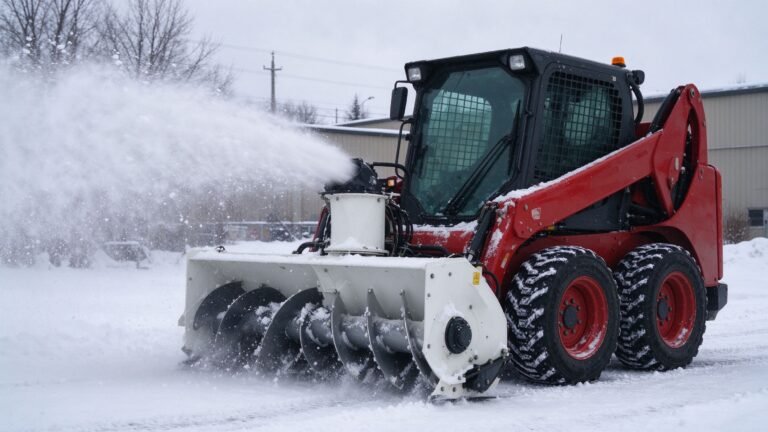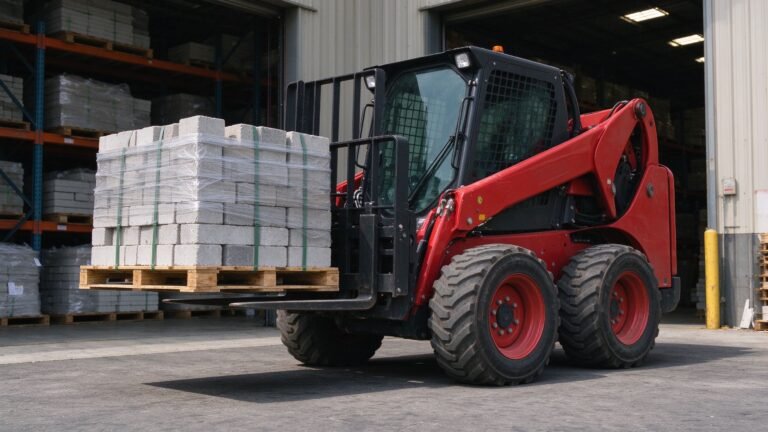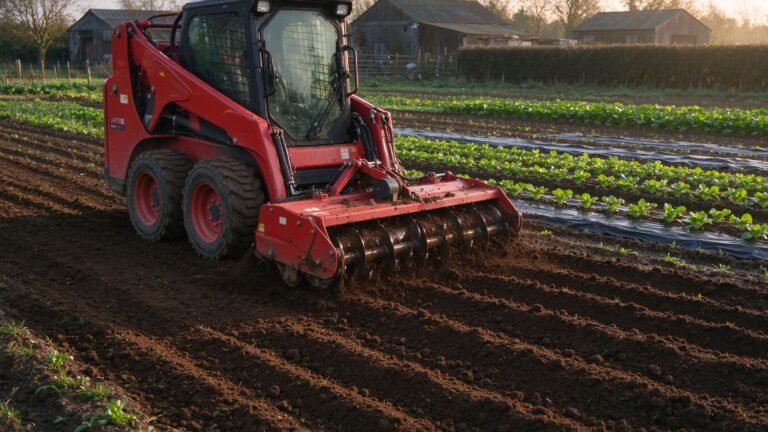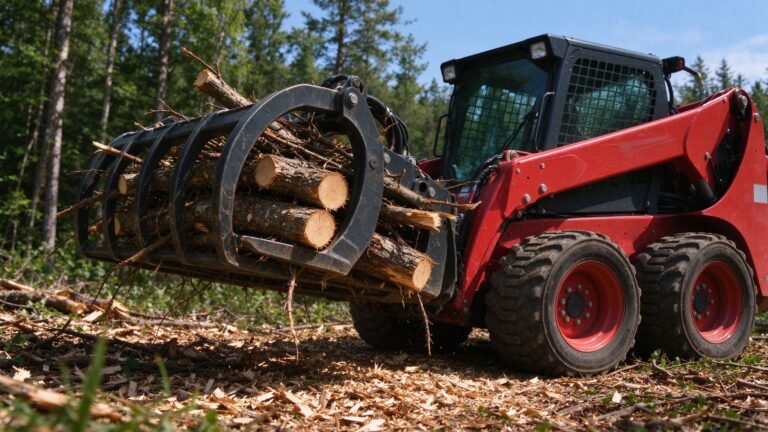
Skid Steer Post Hole Digger: Essential Drilling Guide
Skid Steer Post Hole Digger: The Essential Fence & Deck Drilling Guide
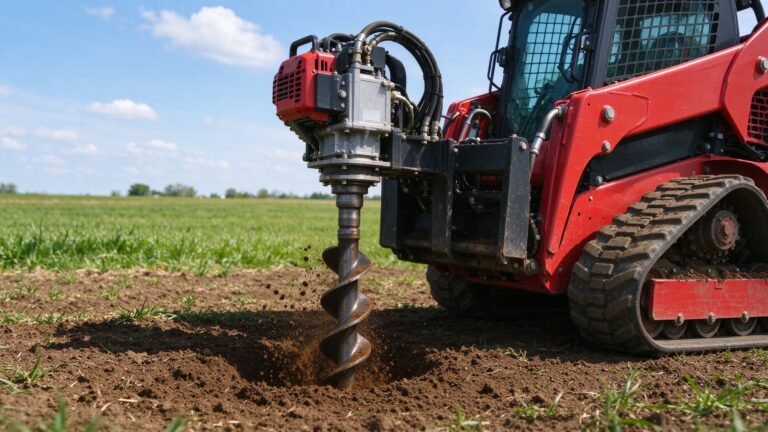
A skid steer post hole digger is a hydraulic auger attachment that turns a compact loader into a one-pass drilling machine. Instead of hand-augering dozens of holes for a fence, deck, or signpost crew, you drive a steel bit into the soil and pull out a clean cylinder of earth. This guide covers how the attachment works, which bit sizes to choose, and how to keep holes straight and fast on any terrain.
How a Skid Steer Post Hole Digger Works
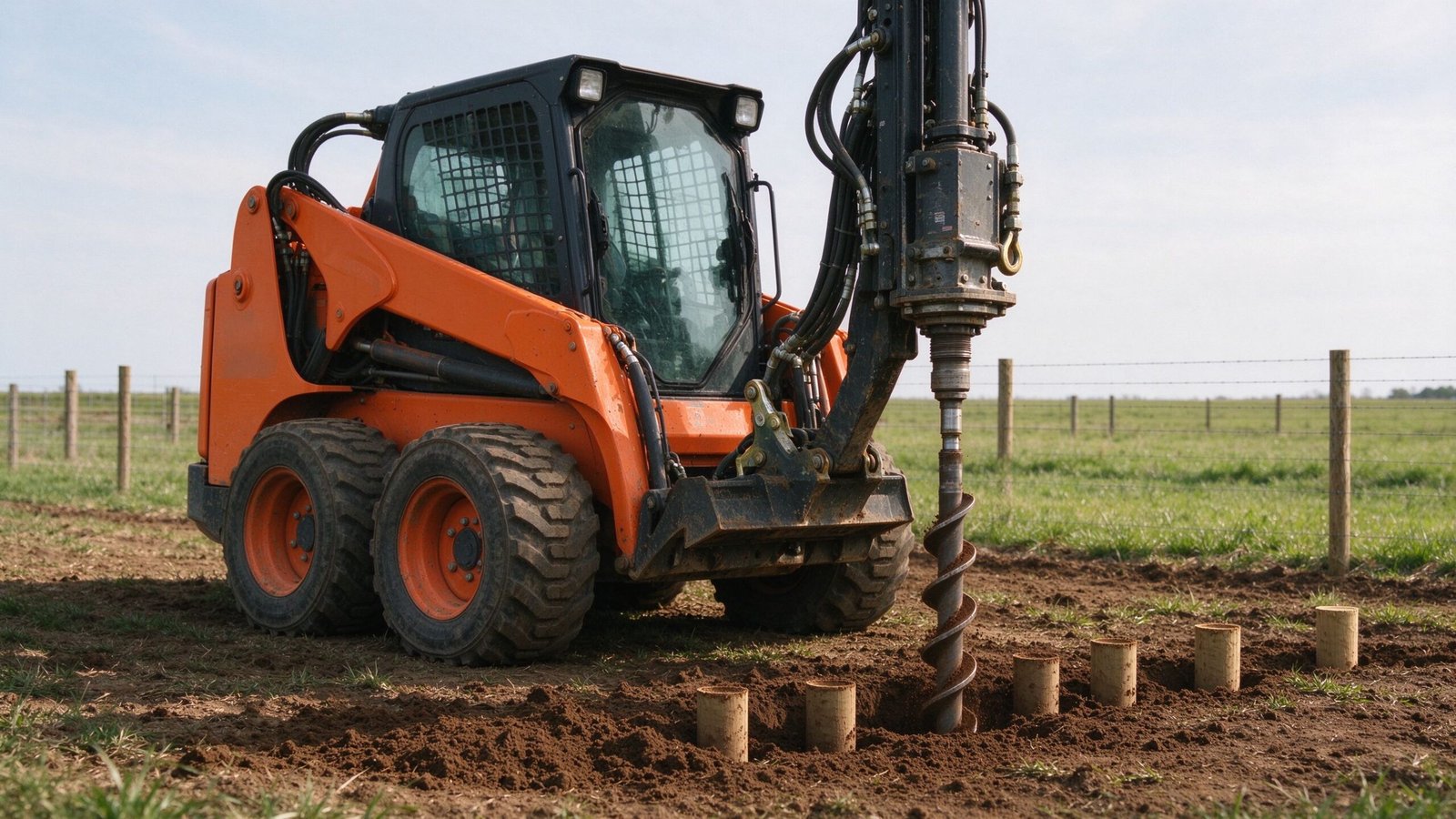
The attachment bolts onto the front quick-coupler of your skid steer. A hydraulic motor drives a rotating steel flight, and the machine’s down pressure pushes the bit into the ground. The operator controls rotation and depth from the seat, using the lift arms to raise and lower the auger. Because the skid steer moves on its own wheels, the whole drilling unit can travel from hole to hole without a separate tractor or crew.
The system relies on auxiliary hydraulics to power the motor. Before you buy, confirm your machine’s auxiliary flow matches the auger’s requirements; undersized flow slows drilling and strains the pump. For the broader attachment ecosystem, see our skid steer attachments guide. This post hole digger is closely related to the wider drilling topic we cover in detail under the skid steer auger attachment.
Choosing the Right Auger Bit Size
Bit diameter determines what you can build. Pick too large and you waste time moving extra dirt; pick too small and the post will not have the footing you need.
- 4 to 6 inch bits for small tree stakes, signs, and shallow planting holes
- 9 inch bits for standard residential fence posts
- 12 inch bits for deck footings and heavier fence lines
- 18 inch and larger bits for privacy wall posts and commercial footings
Depth matters as much as width. In most climates, fence posts must sit below the frost line, which commonly runs 36 to 48 inches. Match your bit length to that depth, and remember that deeper holes need more down pressure and a machine with enough rated operating capacity to handle the loaded attachment. If ROC is new to you, our rated operating capacity guide explains the 50% tipping-load rule.
Dealing with Rock and Hardpan
Standard flight bits bog down in packed clay, caliche, or fractured rock. For these conditions, add a rock tip or a carbide cutting tooth. In really stony ground, some crews switch to a pilot bit that breaks loose stones before the main flight cuts the hole. Drilling in wet soil is slower too; the bit pulls mud rather than loose earth, so expect lower productivity and more cleaning between holes.
Drilling Straight, Clean Holes
Straight holes come from technique, not luck. Start by marking every post location with paint or a stake before you arrive on site. Keep the skid steer as level as possible, and drill a shallow pilot dimple first to center the point. Let the auger’s own weight and the machine’s down pressure do the work; forcing the arm down too hard just stalls the motor or bends the flight.
Pause every few inches and lift slightly to let dirt clear from the hole. When you reach target depth, raise the auger while it is still spinning to clean out the bottom. This matters most for agriculture and farm fence lines, where crooked posts mean gates that will not close. Extension advice for tree planting and field shelter posts is available from the USDA. The same discipline applies to deck crews working on landscaping and hardscape projects.
Productivity by the Numbers
With a well-matched machine and a 9 inch bit, crews routinely drill 20 to 40 fence holes per hour in average loam. That number drops in rock and rises in loose, sandy soil. Compare that with hand digging, which rarely exceeds 5 to 8 holes per hour for a single worker. The attachment pays for itself quickly on any project with more than a few dozen posts.
Matching the Attachment to Your Machine
Not every skid steer handles a big auger the same way. A compact machine like the Xinfa X360, with a rated operating capacity of 300 kg and a 0.12 m3 bucket, is well suited to fence and deck work on tight residential lots. Fitting a skid steer post hole digger to that size class is straightforward, because the attachment itself is light and the flow requirements are modest. Larger jobs call for more capacity, and the right machine depends on your typical hole depth and soil. If you are still sizing your first loader, our 8-step guide to choosing a skid steer loader walks through capacity and power choices.
Simple Maintenance That Extends Bit Life
Flush the flight with water after muddy days and grease the drive collar on schedule. Check teeth and pilots for wear at the start of each season, because a dull bit slows drilling far more than operators realize. Storing the attachment indoors protects the hydraulic seals from UV damage.
Safety on the Drill Site
Drilling looks slow and harmless, but an auger can catch on a buried rock and jerk the whole machine. Keep the seatbelt on, keep the boom within safe reach, and never step over the flight while it spins. Call your local utility locator before digging on unfamiliar land; striking a gas or electric line turns a routine fence job into an emergency. Most drill crews mark the whole line with paint before the machine ever leaves the trailer.
Frequently Asked Questions
What size skid steer post hole digger do I need?
Most fence and deck crews choose a skid steer post hole digger with a 9 to 12 inch bit. The right skid steer post hole digger depends on your post size: 6 inch bits for signs, 9 inch for residential fences, and 12 inch for decks and heavier privacy walls.
How deep can a skid steer post hole digger drill?
A skid steer post hole digger can reach 36 to 48 inches with standard flight extensions, which matches most frost-line requirements. Deeper holes need longer flights, more down pressure, and a machine with enough rated operating capacity to handle the loaded auger.
Can a skid steer post hole digger drill through rock?
A standard skid steer post hole digger struggles in fractured rock. Fit a carbide rock tooth or pilot bit, and the same skid steer post hole digger will cut through hardpan and light stone. In solid ledge, switch to a drilling contractor rather than forcing the auger.
At Shandong Xinfa Machinery Co., Ltd., we build compact skid steer loaders that work happily with standard post hole diggers and other common attachments. Whether you run a fence crew, a landscaping business, or a small farm, a Xinfa skid steer loader gives you the hydraulic flow and quick-coupler compatibility to drill fast and move on. Visit Xinfa loader to see current compact models built for export worldwide.