Skid Steer vs Wheel Loader: Expert Comparison Guide
Skid Steer vs Wheel Loader: The Expert Comparison for Buyers
The choice between a skid steer vs wheel loader trips up more first-time buyers than any other. Both have wheels, both lift a bucket, and both move material. But they are built for different worlds: one is a narrow, attachment-craving agility tool; the other is a higher, more stable production loader. This comparison walks through size, power, uses, and cost so you can pick on purpose.
The Core Difference in One Sentence
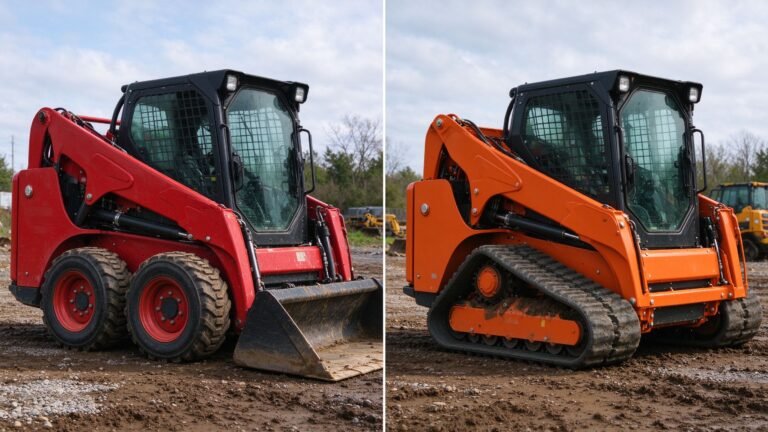
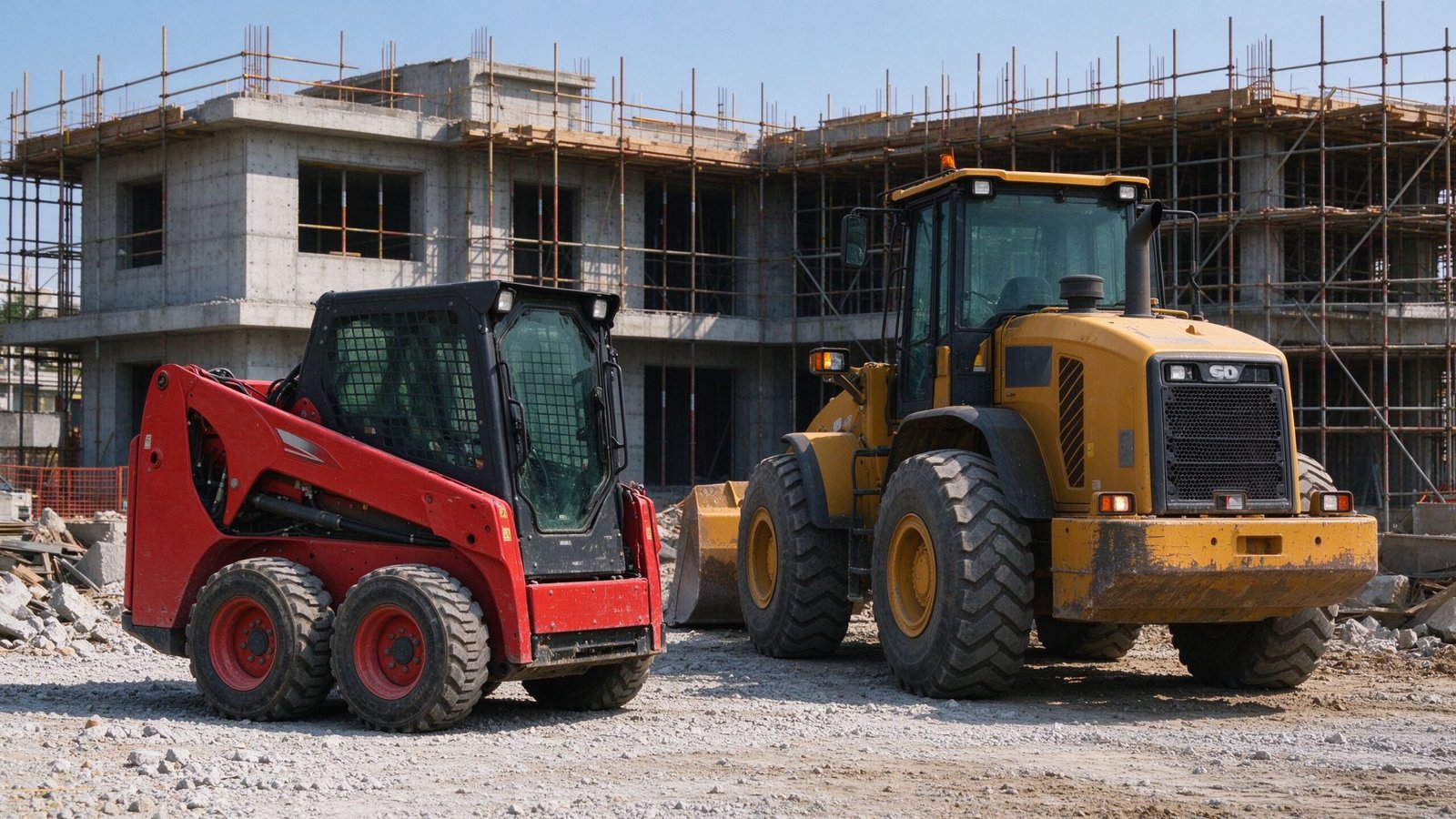
A skid steer steers by skidding its wheels — left and right sides spin at different speeds — which lets it turn in its own length. A wheel loader steers through an articulated hinge in the middle of the chassis. That single design choice changes turning radius, stability, visibility, and the kinds of work each machine does best.
If you want the underlying mechanism explained first, our piece on how a skid steer loader works covers the steering and hydraulics. Once you grasp that, the rest of this comparison falls into place.
Size and Access
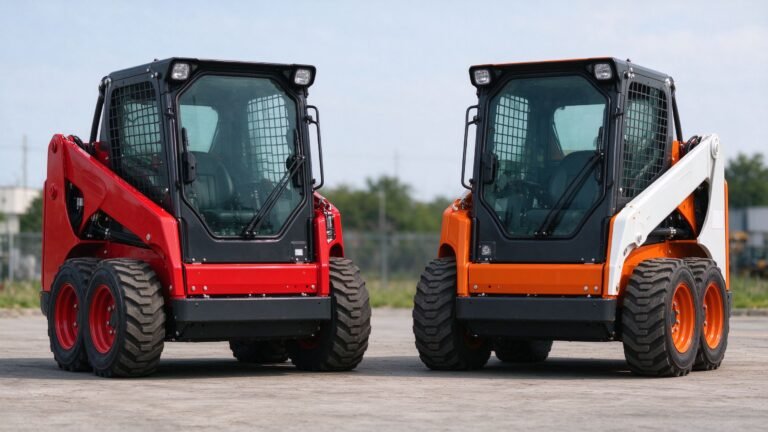
Skid steers win on compactness. A small wheeled skid steer like the Xinfa X360 is about 980 mm wide, short, and low, so it slips through gate openings, doorways, and tight urban lots. Even mid-sized skid steers fit on a standard trailer without permits.
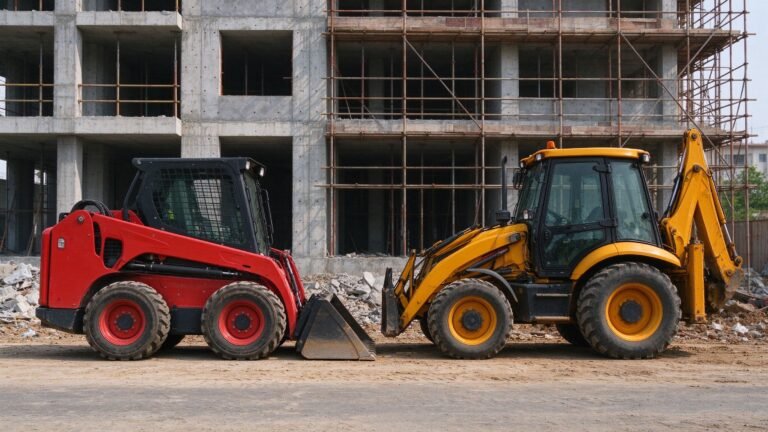
Wheel loaders come in many sizes, but the compact ones still sit wider and longer than a comparable skid steer. They need more room to swing and park. If your jobs are inside buildings, behind houses, or on crowded downtown sites, the skid steer usually wins on access.
Lift Capacity and Bucket Size
This is where wheel loaders push back. A compact wheel loader typically offers a higher rated operating capacity and a bigger bucket than a skid steer of similar engine power, because the articulated chassis spreads the load more stably. If your day is dominated by loading trucks with sand, gravel, or aggregate at a yard, the wheel loader moves more tons per hour.
Skid steers, on the other hand, are sold by the hundreds of attachment configurations. If you only ever run a bucket, the wheel loader may be the better production tool. If you swap between buckets, forks, augers, brooms, breakers, and grapples, the skid steer’s quick-coupler ecosystem is unmatched. For the tool ecosystem, see our attachments guide; for size class context, the skid steer loader sizes article lays out the capacity ranges.
Ride, Visibility, and Operator Comfort
Articulated wheel loaders ride smoother over rough ground because the hinge absorbs bumps. Operators who spend eight hours a day in the seat often prefer them. Skid steers, by contrast, transmit every bump through the chassis because the wheels lock and skid; the trade-off is sharper, zero-radius maneuvering.
Visibility favors the wheel loader on the front, where the engine is usually mounted behind or beside the cab. Skid steers put the engine on the rear, which can block rearward sight lines. Modern cabs on both classes have narrowed this gap, but it is worth test-driving both before you commit.
Total Cost of Ownership
Upfront, compact wheel loaders often cost a bit more than similarly sized skid steers. They also wear tires faster on hard surfaces, because the articulated chassis has its own maintenance needs. Skid steer tires scrub on every turn, so tire cost is a known budget line for skid steer owners; our tire care guide explains how to extend tire life. Fuel consumption on a typical day depends on duty cycle, not just label horsepower.
If you are still comparing adjacent classes, we also break down skid steers vs compact track loaders and skid steers vs backhoes, and the overall decision framework lives in the buying guide. For broader compact-equipment industry context, the Associated Equipment Manufacturers tracks market trends across these machine classes.
Quick Verdict by Job Type
- Choose a skid steer for tight access, attachment variety, trailer mobility, and indoor or urban work.
- Choose a wheel loader for stockpiling, truck loading, and longer runs across a yard where a smoother ride and bigger bucket matter.
Skid Steer vs Wheel Loader: Ownership Costs Over Five Years
When you weigh skid steer vs wheel loader, the purchase price is only the first year. Over five years, tire wear, fuel, attachment swaps, and transport costs decide the real winner. Skid steers scrub tires on every turn, so budget for tire replacement more often; wheel loaders burn a little more fuel per hour because they are bigger and heavier, but they roll more smoothly on pavement. If most of your work is inside a fence or on a trailer route, the skid steer’s compact size saves you transport headaches every week.
Resale matters too. Skid steers are a deep, liquid market because so many contractors and rental houses buy them. Compact wheel loaders sell, but to a narrower buyer pool. That means your used skid steer is usually easier to move when you upgrade. Run the ownership math over a five-year horizon rather than on the invoice, and the choice often becomes clearer than it looks in the showroom.
Can You Just Rent Both Before You Buy?
If you are genuinely torn, the cheapest way to decide is to rent each machine for a week of your real work. Put a skid steer on your busiest residential site, then run a compact wheel loader on the yard-trucking week, and compare what each one lets you finish. The difference in time, frustration, and attachment swaps will be obvious after a few days. Only then commit to the purchase. That rental test costs a fraction of a wrong machine.
Frequently Asked Questions
Which is better, a skid steer vs wheel loader?
There is no universal winner in the skid steer vs wheel loader debate. Pick a skid steer vs wheel loader based on access and attachment variety; pick a wheel loader for truck loading and stockpiling. The skid steer vs wheel loader choice comes down to your typical job site, not a spec sheet.
Is a skid steer vs wheel loader cheaper to own?
Over five years, the skid steer vs wheel loader comparison hinges on tires and fuel. The skid steer scrubs tires on every turn, while the wheel loader burns more fuel per hour. Run the skid steer vs wheel loader numbers on your own duty cycle before deciding.
Can a skid steer vs wheel loader replace a backhoe?
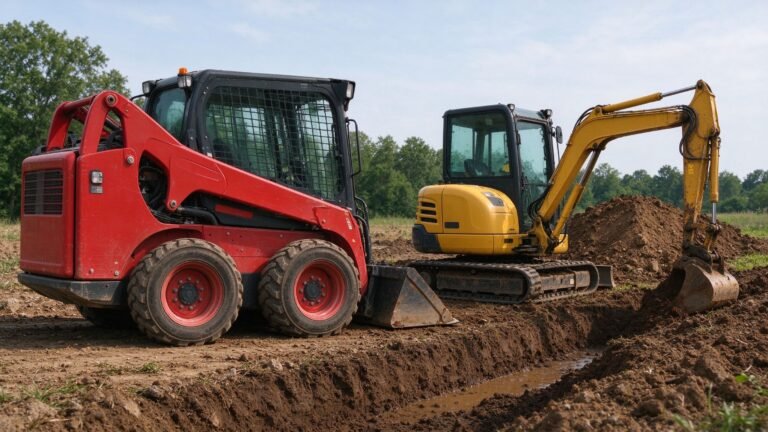
Neither machine digs like a backhoe. If you are weighing skid steer vs wheel loader for digging work, expect both to handle shallow cleanup rather than deep trenching.
At Shandong Xinfa Machinery Co., Ltd., we manufacture compact skid steer loaders for buyers who value access and attachment versatility, from the narrow X360 to the heavier R750. If your work is tight, mixed-task, and trailer-based, a Xinfa skid steer loader is the more flexible purchase. Compare current models at Xinfa skid steer loader.