Skid Steer for Agriculture: Complete Farm Guide
Skid Steer for Agriculture: Complete Farm Guide
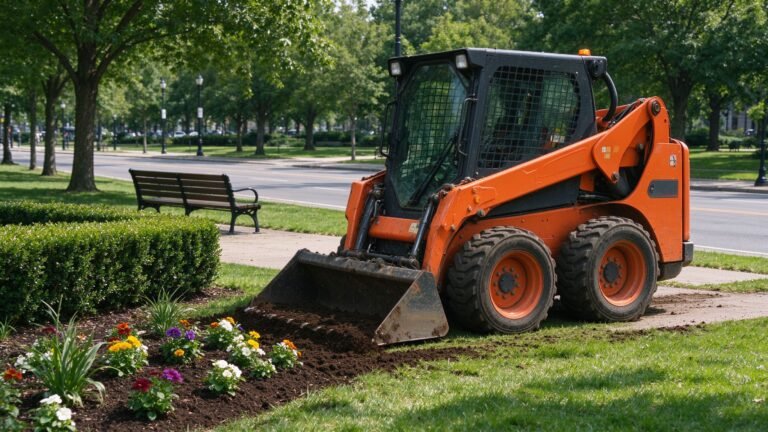
A skid steer for agriculture replaces the old tractor-and-loader combination. Choosing a skid steer for agriculture means matching width, lift, and power to your barn chores. on small and mid-sized farms. It is narrow enough to drive through barn doors, light enough not to rut wet pastures, and swaps attachments to feed animals, move hay, clean pens, and repair fences. Here is how farmers use a skid steer for agriculture day to day. A well-equipped skid steer for agriculture replaces a half-dozen hand tools on the small farm.
Why Farms Choose Compact Skid Steers
The Case for Compact
The USDA farming resources emphasize labor-saving equipment on small and mid-sized operations. Agricultural work is sporadic and physical: 20 minutes of feeding, an hour of mucking out, an afternoon of fence repair, and an evening of hay movement. A full-size tractor sits idle between jobs. A compact skid steer does all of it without leaving the yard, and an electric version runs quietly indoors without fumes near animals. The skid steer’s ability to turn in its own length matters in tight barn aisles and corrals. Machines under 1 m wide — like the 980 mm Xinfa X360 — slip through gates that stop a tractor.
Daily Farm Tasks
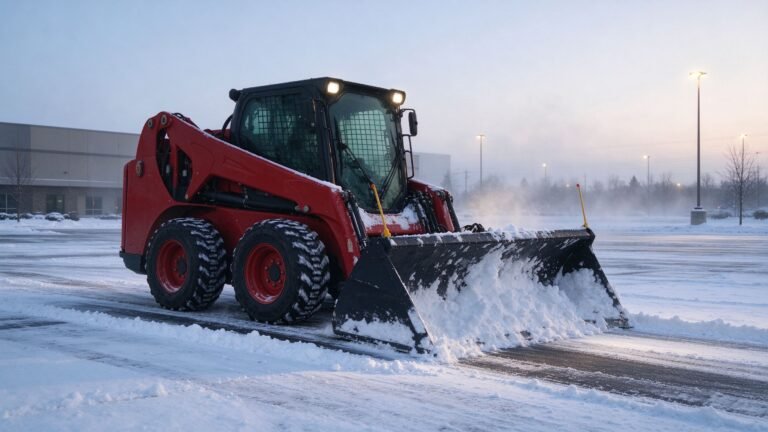
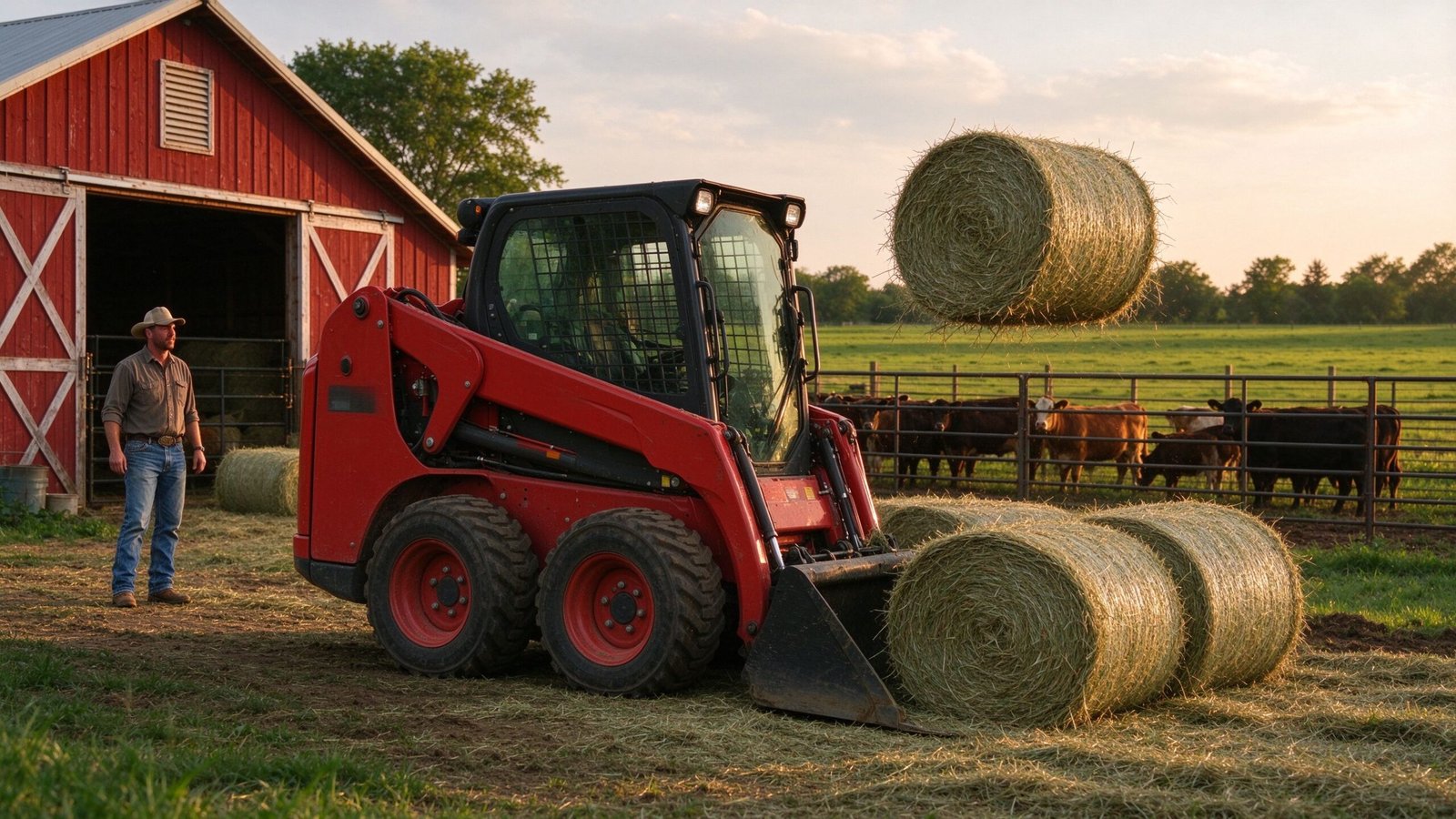
Livestock feeding: a bucket or silage grapple moves hay, grain, and silage; bale spears carry round bales to feeders; forks haul bagged feed. Electric compact skids are ideal here because no exhaust near animals and no engine noise spooks cattle. Manure and bedding cleanup: a general-purpose or 4-in-1 bucket scrapes pens, alleyways, and stalls; a barn broom sweeps residue. Because the machine is light, it does not damage concrete floors. Hay and bale handling: round bales, square bales, and straw stacks move fast with a bale spear or grapple attachment. Fence and property repair: an auger drills post holes; a grapple pulls old posts and brush. Road and lot maintenance: a box blade smooths farm lanes and spreads gravel; a bucket moves snow around barnyards in winter — see snow removal.
Attachments, Sizing and Electric Advantage
Top Farm Attachments
| Attachment | Farm Use |
|---|---|
| General-purpose / 4-in-1 bucket | Feed, manure, gravel, cleanup |
| Bale spear | Round and square hay bales |
| Pallet forks | Bagged feed, supplies, mineral tubs |
| Grapple | Brush, logs, broken pallets, fencing |
| Auger | Fence posts, tree planting |
| Tiller / power rake | Garden plots, food plots, seedbeds |
| Broom | Barn alley and lot sweeping |
Start with the attachments guide if you are building your farm kit.
Choosing the Right Size
Farmers rarely need the largest machine. Width, weight, and lift matter more: the X360 (300 kg ROC, 900 kg weight, 980 mm wide) fits through barn and gate doors and has an electric option for indoor use; the X390 (200 kg ROC) is the lightest, easiest-to-transport option for small acreages; the X460 and R490 (300 / 250 kg ROC, 8 kW electric or 15–19.2 kW diesel) handle heavier bales and gravel; the R750 (400 kg ROC, 0.15 m³ bucket) suits larger-scale farms. Compare classes in skid steer sizes.
Electric: A Natural Farm Fit
A skid steer for agriculture shines on short, repetitive chores. Farms often have 220V power at the barn, and many jobs are short bursts — feeding, cleanup, and light chores. That matches the duty cycle of a battery powered skid steer loader perfectly. Overnight charging in the barn means a full pack every morning. No diesel fumes near calves, no engine noise stressing livestock, and no diesel tank on a remote farm. See the full picture in electric skid steer benefits.
Operating Tips on the Farm
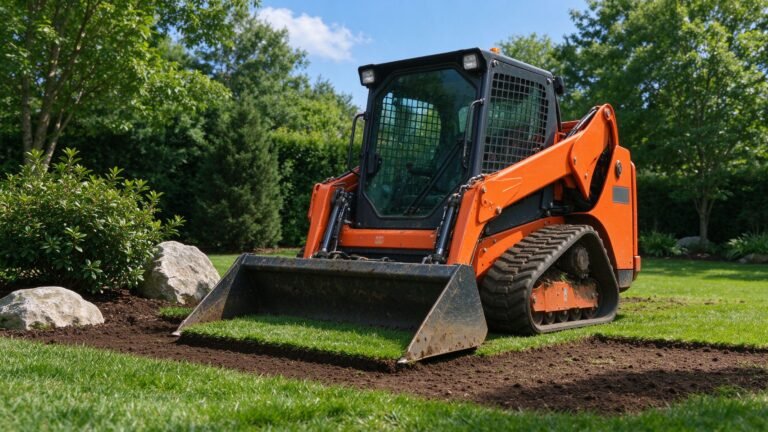
Watch for wet ground — wheeled skids rut soft pastures, so use the lightest machine possible or consider tracked models for muddy seasons (compare in skid steer vs compact track loader). Secure loads before traveling; a bale speared halfway out the forks can roll off on a bump. Grease after muddy days because mud and manure attack pivot pins — follow our maintenance checklist.
Is a Skid Steer Better Than a Tractor for Small Farms?
For barn work, feeding, and cleanup, yes — a compact skid steer is more maneuverable indoors and swaps attachments fast. For field tillage, mowing, or pulling implements, a tractor still wins. Many small farms run both: a tractor for field work and a compact skid steer for daily chores.
How Wide Is a Skid Steer That Fits Through a Barn Door?
Standard barn doors are around 1 m wide. The Xinfa X360 at 980 mm fits through, while most 1.5 m-wide compact machines do not. Measure your door openings before buying.
What Size Skid Steer for Agriculture Works Best?
Most livestock and hobby farms choose a 200–350 kg ROC compact machine. It is light enough not to damage pasture, narrow enough for barn doors, and powerful enough for feeding, cleanup, and fence work. Larger row-crop operations may step up to a 400 kg ROC machine for bigger loads.
Can a Skid Steer for Agriculture Replace a Front-End Loader Tractor?
For daily barn and feeding chores, yes. A skid steer for agriculture is more maneuverable indoors and swaps attachments fast. For field tillage, planting, or pulling heavy implements, keep a tractor. Many farms run both machines complementarily.
Your Farm Deserves a Xinfa Skid Steer
Shandong Xinfa Machinery Co., Ltd. builds compact skid steers sized for small farms and family operations. A skid steer for agriculture pays for itself in saved labor within a season. The X360, X390, X460, R480, R490, and R750 span 200–400 kg ROC, with 72V electric powertrains that run quietly in barns and diesel options for all-day field work. Every machine carries CE, EPA, EURO5 and ISO certification. Explore farm-ready specs and factory-direct pricing at Xinfa, or read the buying guide to budget your first machine. A Xinfa skid steer loader turns a week of farm chores into a few good days of work.