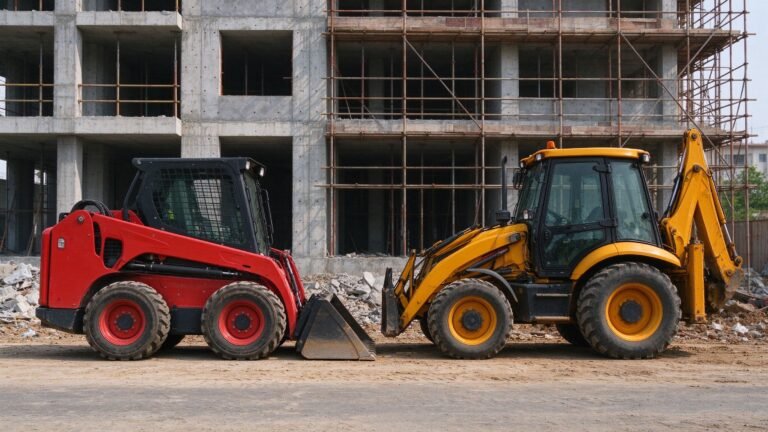
Skid Steer vs Mini Excavator: Practical Showdown Guide
Skid Steer vs Mini Excavator: The Practical Showdown for Buyers
When a contractor starts their first compact rig, the usual debate is skid steer vs mini excavator. Both fit on a small trailer, both work in backyards, and both pay for themselves fast. But they are mirror opposites in what they are good at: one lifts and carries, the other digs and reaches. This comparison helps you choose the machine that matches how you actually earn money.
What Each Machine Is Built For
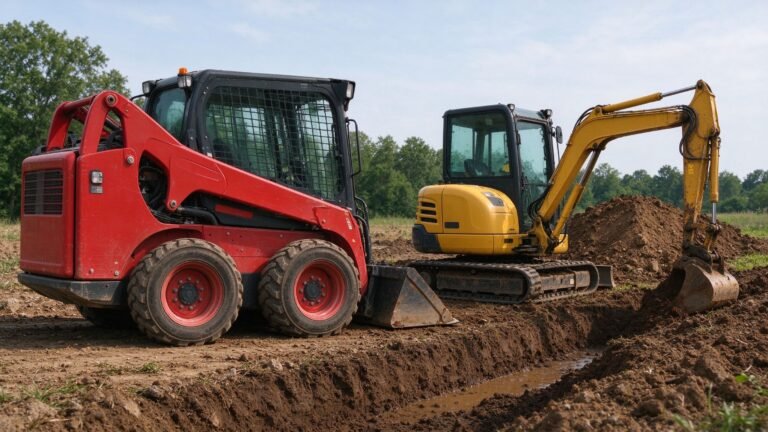
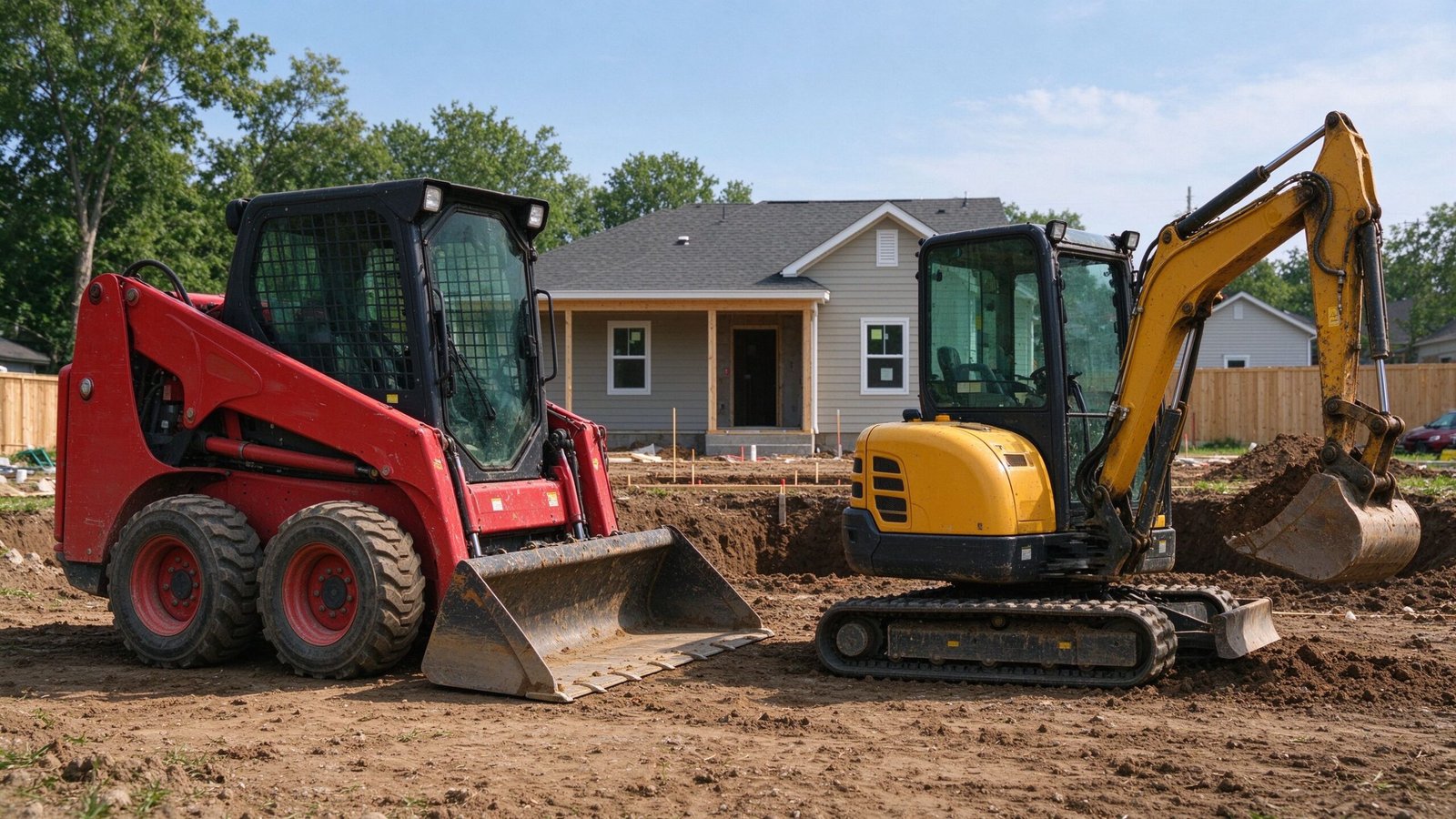
A skid steer is a lifting and carrying platform. It pushes piles, lifts pallets, grades, sweeps, and breaks concrete — but it digs only shallowly with a front bucket, because its boom reaches forward and dumps low. A mini excavator is a digging platform. It trenches, pits, and grades in tight spaces, but it cannot lift a pallet or stack material the way a skid steer can.
Think of it this way: if your job is dominated by moving dirt and material horizontally, lean skid steer. If it is dominated by removing dirt vertically — foundations, utility trenches, basements — lean excavator. For the broader family of comparisons, our skid steer vs excavator article takes the topic beyond the compact class.
Digging Depth vs Lift Capacity
This is the cleanest numbers game. A 1.5 to 2 ton mini excavator trenches down to roughly 2.5 to 3 meters, well below frost line and past utility depth. A skid steer’s front bucket, even with the right geometry, digs only a shallow scrape. If your revenue comes from trenching for fences, plumbing, or drainage, the mini excavator earns the day.
Flip it around when it comes to lifting. A skid steer like the Xinfa X360 carries a rated operating capacity of 300 kg, and bigger units lift far more. A mini excavator picks up surprisingly little relative to its size, because its boom is built for digging torque, not stable load carrying. Pallets, sod rolls, and material handling favor the skid steer. Our ROC explainer gives the safety math behind those lift numbers.
Attachments: Where Skid Steers Pull Ahead
This is the skid steer’s home turf. The quick-coupler front end accepts buckets, forks, augers, breakers, grapples, brooms, trenchers, and tillers. One chassis becomes a dozen machines across the year. Mini excavators also swap attachments — hammers, thumbs, augers, and tilt buckets are common — but the ecosystem is narrower and the couplers cost more.
If you run a mixed contractor business that does landscaping, cleanup, and material handling, the skid steer’s attachment range usually wins. Browse the options in our complete attachments guide. Demolition crews, by contrast, often lean on the excavator side; see our demolition article for how breakers and grapples stack up.
Transport, Access, and Ground Pressure
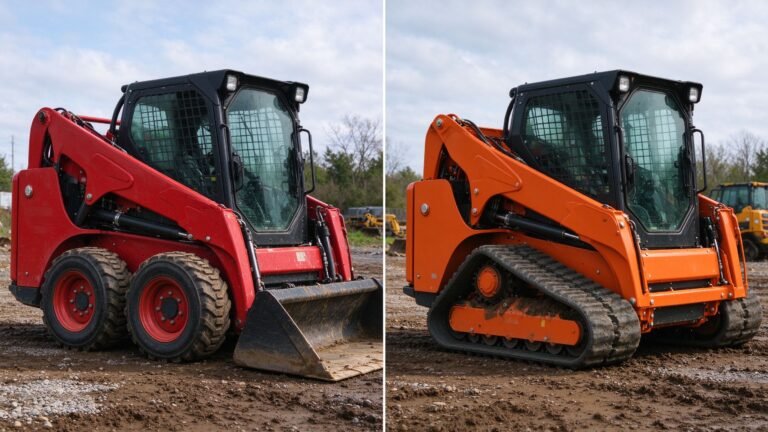
Both machines trailer easily on a 3,500 kg class trailer. The skid steer is shorter and lower, so it fits tighter gates and garages. The mini excavator tracks spread its weight, which protects lawns and soft ground that a wheeled skid steer would rut. On finished sod or wet spring soil, tracks are the kinder footprint; on pavement, wheels are faster and cheaper to run.
Which One Earns More Per Hour?
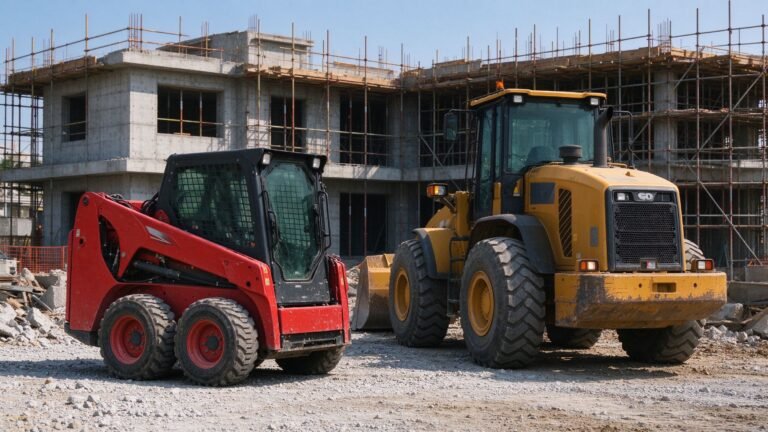
There is no universal winner. Trenching and foundation work bills premium rates that only an excavator can fulfill. Material handling, cleanup, and attachment-swapping generalist work bills a steadier, broader range of jobs that only a skid steer can cover. Many growing contractors buy one of each, sharing a trailer between them. If you are choosing a first machine, our 8-step buying guide and the overall skid steer buying guide walk through the decision framework.
Quick Decision Table
- Pick a skid steer if you mostly load, grade, sweep, move pallets, and swap attachments across many small jobs.
- Pick a mini excavator if you mostly trench, dig footings, and work around foundations.
- Buy both once your schedule shows you turning work away from either side.
Skid Steer vs Mini Excavator: Marketing Your Mixed Fleet
The skid steer vs mini excavator decision is not just about the machine; it is about what jobs you can advertise. A fleet with only a mini excavator can dig foundations and trenches but struggles to load trucks, move pallets, or sweep a yard. A fleet with only a skid steer can clean and grade but cannot dig below a shallow scrape. The contractors who win the most bids are the ones who can list both services on the same truck, because they solve the customer’s whole problem rather than one step of it.
Think about your trailer. Both machines fit a single 3,500 kg class trailer, so one pickup and one trailer can deliver either tool to the job. That flexibility lets a solo operator quote landscaping, drainage, and small excavation work out of the same driveway. For broader compact-equipment market trends, the Associated Equipment Manufacturers tracks demand across both machine types. If your business plan leans toward one service more than the other, buy that machine first; once the calendar is full, add the second to capture the work you are currently turning away.
Resale and Repair: The Long View
One more factor separates the two machines. Skid steers share a huge, liquid resale market and a mountain of generic attachments, so selling or upgrading later is easy. Mini excavators also hold value well, but their attachments and repairs are more specialized, which makes them less flexible if your business pivots. If you want a tool that can adapt as your client list changes, the skid steer’s open ecosystem is a quiet advantage over five years of ownership.
Frequently Asked Questions
Which makes more money, a skid steer vs mini excavator?
The skid steer vs mini excavator answer depends on your local work. The skid steer vs mini excavator choice favors digging revenue when trenching is common, and favors lifting revenue when material handling dominates. Most solo operators weigh skid steer vs mini excavator, then buy one of each within two years.
Can a skid steer vs mini excavator fit a backyard?
Both fit tight sites, but the skid steer vs mini excavator comparison tilts on footprint. The skid steer turns in its own length, while the mini excavator swings a rear counterweight. On finished lawns, the mini excavator’s tracks mark up less.
Is a skid steer vs mini excavator better for rentals?
The skid steer vs mini excavator question is common for rental fleets. The skid steer’s attachment breadth usually rents to a wider crowd, while the mini excavator pulls premium digging jobs.
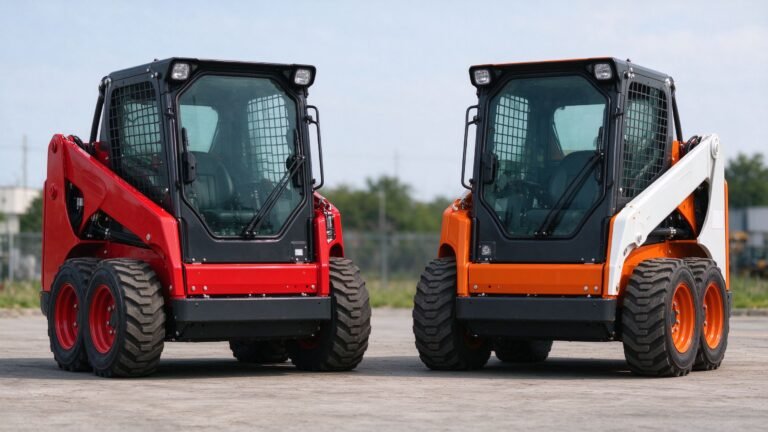
At Shandong Xinfa Machinery Co., Ltd., we build compact skid steer loaders designed for the attachment-driven, mixed-job contractor. The Xinfa X360, X460, and R-series platforms give you the lift and quick-coupler versatility to take on the jobs a mini excavator cannot. See the current lineup at Xinfa skid steer loader and ask our export team about compact machines built for global contractors.