Zero Emission Skid Steer Loader: Complete Indoor Guide
Zero Emission Skid Steer Loader: The Complete Indoor & Urban Guide
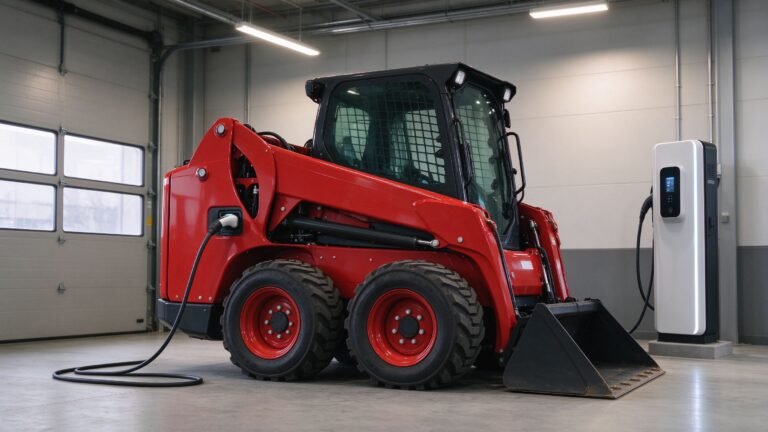
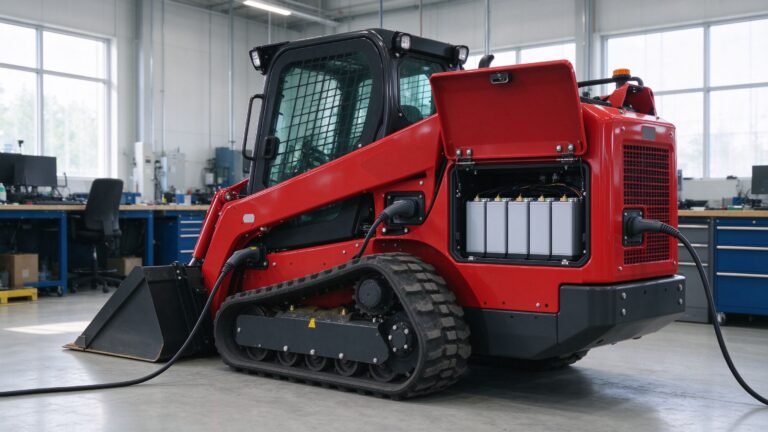
A zero emission skid steer loader is a compact loader that runs on battery electric power instead of a diesel engine. Because it produces no exhaust at all, crews can use it inside occupied buildings, in tight urban courtyards, and on basement and renovation sites where fumes would otherwise stop work. This guide explains where these machines earn their keep, how they compare with diesel units, and what to look for before you buy.
The market for battery-electric compact loaders has grown quickly because site rules have tightened. City councils, general contractors, and property managers increasingly write exhaust restrictions into tender documents. That shift turns a “nice to have” electric loader into a commercial necessity for crews who want to bid on indoor and downtown projects.
Why a Zero Emission Skid Steer Loader Matters
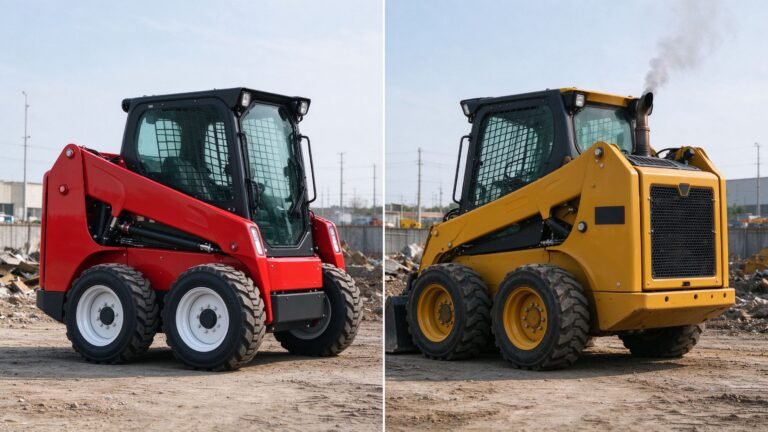
Diesel skid steers are powerful, but their exhaust changes where they can work. In a sealed basement, a tunnel, or a shopping mall renovation, running a diesel machine without heavy ventilation creates real safety risks and can violate site rules. Emissions standards are tightening in many cities, and regulators such as the U.S. EPA continue to tighten rules on diesel exhaust near people. Operators must wear respirators, neighbors complain about soot, and urban contractors often lose bids on projects that demand clean equipment.
A zero-exhaust battery loader removes that problem entirely. With no tailpipe, it can work alongside painters, electricians, and inspectors without fouling the air. That is the core reason contractors in city centers and renovation work keep moving toward electric compact loaders. If you want the broader technology picture first, start with our overview of the electric skid steer loader category.
The Indoor Work That Changed the Market
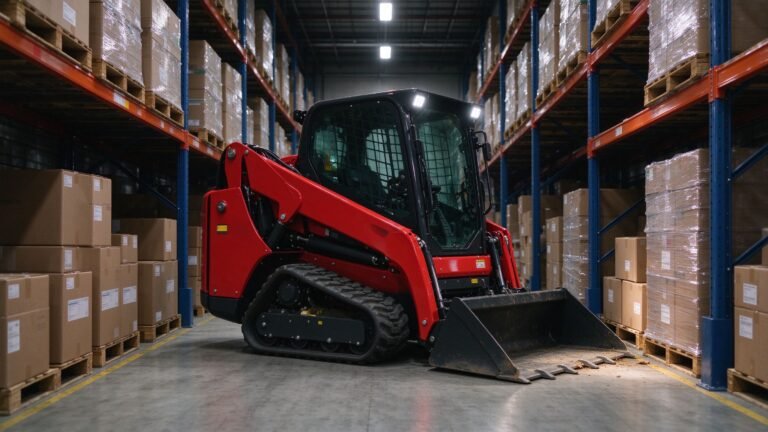
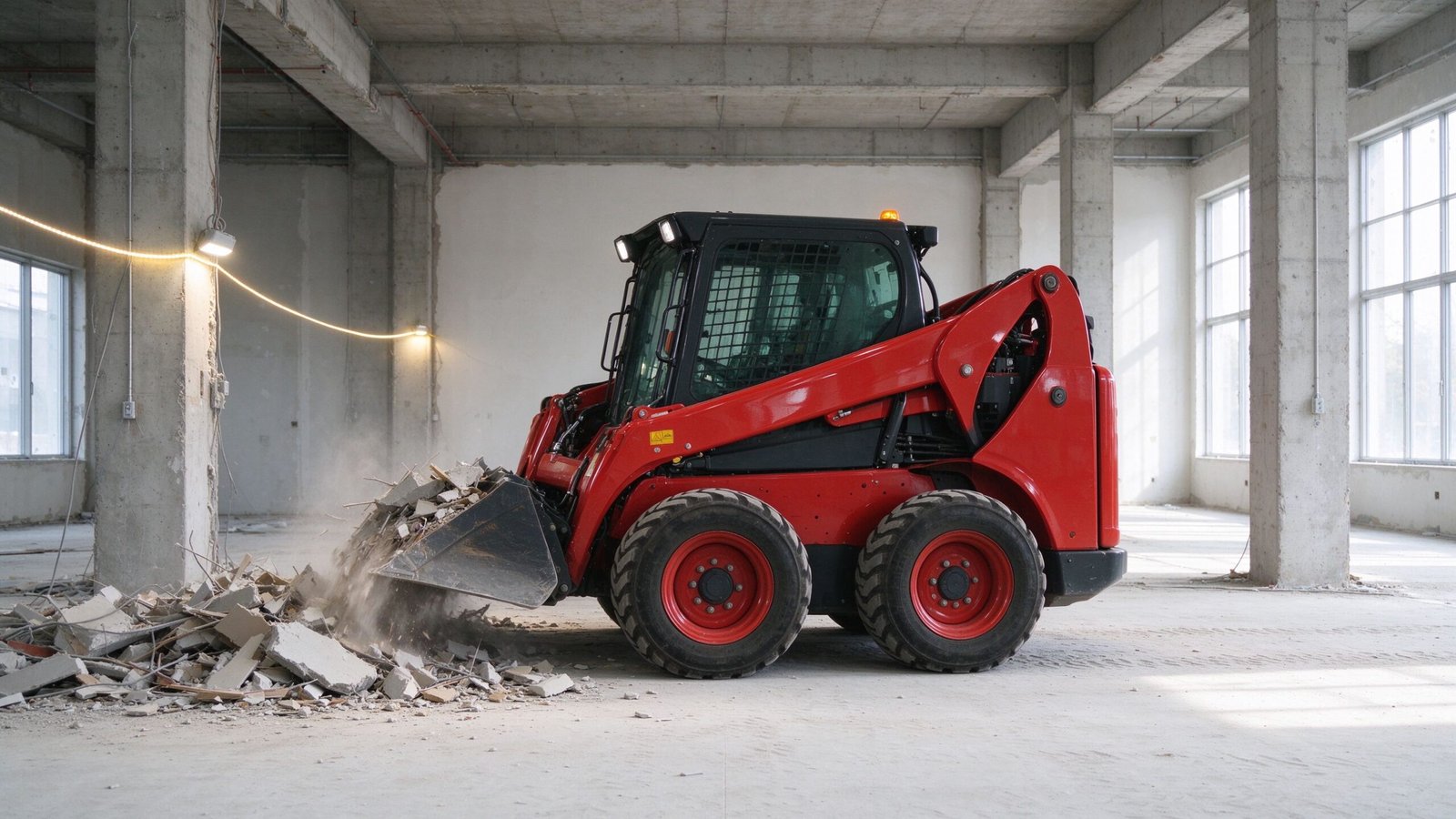
The fastest growth has come from indoor demolition and fit-out work. Removing interior walls, carrying out concrete chunks, and grading basement floors used to require hand tools or expensive exhaust ducting. Today, a small battery loader does the same lifting in hours, with the crew breathing normal air. For the smallest access doors and elevator shafts, an electric mini skid steer loader often fits where a person barely can.
Where These Machines Work Best
Not every job needs zero exhaust, but several types of work depend on it:
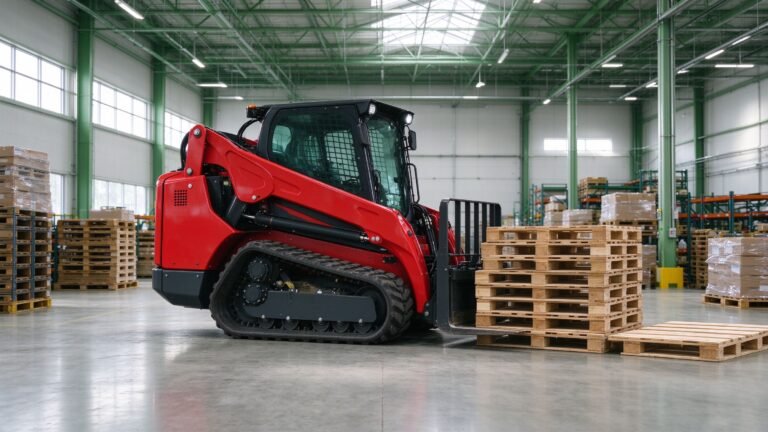
- Interior demolition in malls, offices, and warehouses
- Basement and garage finishing with no outside ventilation
- Hospital and school renovations that stay partially occupied
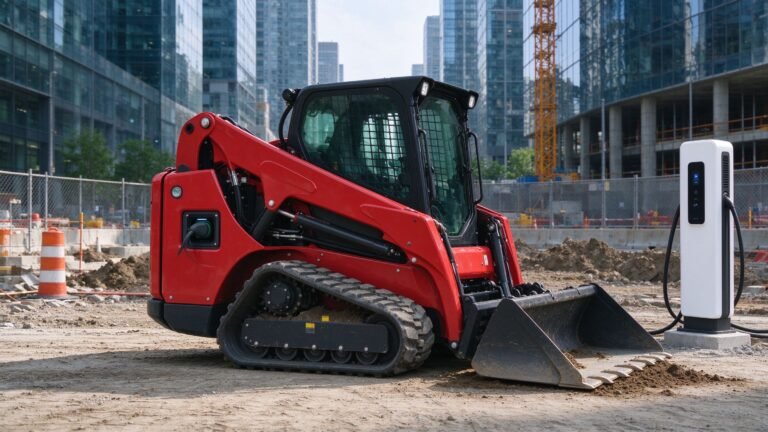
- Urban courtyard and rooftop jobs where diesel fumes drift into windows
- Tunnel and below-grade utility work
- Food processing and agricultural buildings where dust and exhaust must stay controlled
On these sites, the quiet operation is almost as valuable as the zero exhaust. Electric motors are far quieter than diesel engines, so crews can start earlier, work near residential buildings, and hold conversations without shouting. Read more about that shift in our breakdown of the key benefits of electric skid steer loaders.
How Electric Power Delivers Real Work
Buyers often ask whether a battery machine can actually lift and push like a diesel one. The honest answer depends on the model. Electric motors deliver full torque immediately from zero rpm, which feels strong at the wheels, but battery capacity limits how long the machine can run at full load.
Take the Xinfa X360. In its electric version it uses a 72V 125Ah battery pack and a 6kW drive motor, with a rated operating capacity of 300 kg and a 0.12 m3 bucket. The larger X460 steps up to a 72V 200Ah pack and an 8kW motor while still carrying 300 kg. These are not quarry machines; they are compact workhorses built for light material handling, cleanup, and attachment work in confined spaces. For a fuller look at battery sizing and runtime, see our guide to battery powered skid steer loaders.
Matching Runtime to Your Shift
Practical buyers plan around a work cycle rather than a single number. A machine that runs two to three hours on a charge is often enough for indoor teams, because operators pause to sort debris, swap attachments, or wait on inspectors. If your day is longer, budget for a larger pack or opportunity charging during breaks. We cover the cost side in our compact electric loader cost analysis, which breaks down purchase price versus fuel savings.
Zero Emission vs Diesel: When to Choose Which
A zero emission skid steer loader is not automatically the better tool for every job. If you spend long days grading open sites, running heavy breakers, or working far from power, a diesel machine still wins on runtime and raw hydraulic flow. Choose electric when the site rules, the neighbors, or the indoor environment make exhaust unacceptable. Choose diesel when continuous heavy production and remote locations dominate your week.
For a direct side-by-side, our electric vs diesel skid steer comparison walks through fuel cost, maintenance, and resale considerations.
Buying Checklist
Before you order, confirm these points:
- Door and gate widths the machine must pass through
- Realistic rated operating capacity for your heaviest attachment
- Battery voltage and amp-hour rating matched to your shift length
- Whether the charger runs on standard 220V power you already have
- Certifications such as CE, EPA, or EURO 5 where your market requires them
- Backed parts and support from the factory or importer
Frequently Asked Questions
What is a zero emission skid steer loader?
A zero emission skid steer loader is a compact loader powered by a battery electric motor rather than a diesel engine. Because it has no tailpipe, a zero emission skid steer loader can operate indoors, in basements, and in occupied urban buildings without exhausting fumes into the workspace.
How long does a zero emission skid steer loader run on a charge?
Runtime depends on the battery pack and the job. On compact models, a zero emission skid steer loader typically runs two to four hours of mixed work on a charge, which is enough for most indoor demolition, cleanup, and renovation shifts. Larger packs extend that window, and opportunity charging during breaks keeps the machine working through longer days.
Is a zero emission skid steer loader worth the cost?
If your work happens indoors, in city centers, or near residents, a zero emission skid steer loader usually pays back through cleaner bids, quieter neighborhoods, and lower daily energy costs. For open-site heavy production, a diesel machine may still be the better fit. Match the choice to where you actually work.
At Shandong Xinfa Machinery Co., Ltd., we build compact electric and diesel skid steer loaders for export, including the X360 skid steer loader and the roomier X460. If indoor cleanup, urban renovation, or quiet confined work is part of your plan, a Xinfa zero emission skid steer loader may be the cleanest way to get it done. Visit Xinfa skid steer loader to compare current models and talk directly with the factory.