Skid Steer Tracks vs Wheels: Which Undercarriage Is Right for You?

Skid Steer Tracks vs Wheels: Start With the Undercarriage Decision
When you compare a skid steer tracks vs wheels, you are really comparing two different machines for two different worlds of work. A wheeled skid steer runs fast and cheap on hard, dry ground. A tracked skid steer loader floats over mud, snow and soft soil without digging itself into a hole. Neither is “better” overall — each wins where the other struggles. This guide walks through traction, ground pressure, speed, running cost, resale value and gives you a simple checklist so you can buy the undercarriage that fits your jobs.
Tracked vs Wheeled Skid Steer: The Basics in One Table
| Feature | Wheeled skid steer | Tracked skid steer (CTL) |
|---|---|---|
| Best surface | Asphalt, concrete, packed gravel | Mud, sand, snow, soft or wet soil |
| Traction and flotation | Moderate on soft ground | Excellent; low ground pressure |
| Travel speed | Higher (up to ~12 mph) | Lower (roughly 8-10 mph) |
| Initial purchase price | Lower | Typically $10,000-20,000 more |
| Maintenance | Simple; tires are easy to swap | Undercarriage wear; tracks cost more |
| Surface damage | Ruts and scuffs on turf | Minimal rutting on turf |
| Ride comfort | Harsher on rough ground | Smoother, less vibration |
Both machines share the same quick attach plate, so a tracked and a wheeled unit from the same brand accept the same buckets and attachments. The difference is entirely in the undercarriage — which is why the skid steer tracks vs wheels question decides your productivity on day one.
Where Tracks Win: Mud, Snow and Soft Ground
A tracked skid steer loader spreads its weight over a much larger footprint, so ground pressure drops dramatically. On soft soil, spring ground, or after rain, a wheeled machine sinks and loses traction while the tracked unit keeps moving and keeps working. Contractors doing grading, land clearing, snow removal, forestry and wetland work routinely choose tracks for this reason. Rubber tracks also deliver a smoother ride, which reduces operator fatigue and helps precision grading.
Tracked machines shine when the surface itself is the enemy — think mud season on a residential lot or a snow bank that would stop a wheeled skid steer cold. If your year includes weeks of wet or snowy conditions, a tracked skid steer is often the difference between getting paid and waiting for the ground to dry.
Where Wheels Win: Speed, Cost and Hard Surfaces
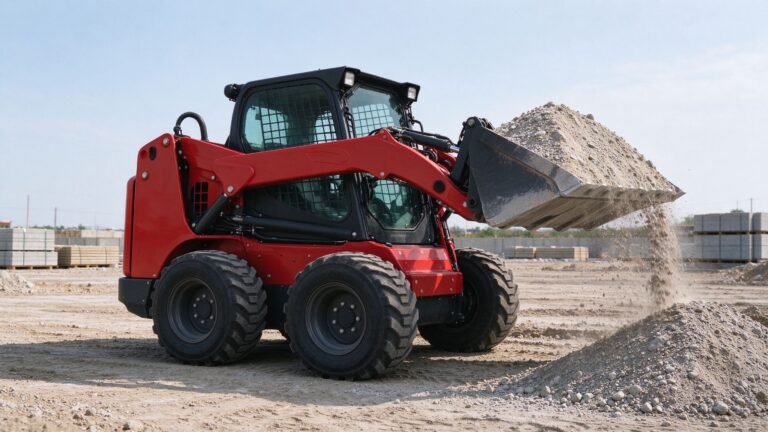
Put the same bucket on a wheeled skid steer and it will be faster across a hard jobsite, cheaper to buy and cheaper to run. On asphalt, concrete and packed gravel, wheels deliver plenty of traction with lower rolling resistance, which saves fuel and time on every cycle. Tires are simple: a flat tire is fixed at any shop in minutes, while track damage can stop a machine for a day or more.
Wheeled skid steers also travel better between sites. With over-the-road speeds and lighter weight, many owners load, drive and reposition more easily, and resale demand for wheeled machines stays strong in markets dominated by hard-surface work. For general construction, material handling, paved-site cleanup and landscaping on firm ground, a wheeled unit is usually the smarter use of capital.
Over-the-Tire Tracks: The Compromise Between Tracks and Wheels
If you already own a wheeled skid steer but need more flotation for a few jobs a year, over-the-tire tracks are a proven middle path. These rubber tracks clamp around your existing tires, boost traction in mud and snow, and protect turf better than bare tires — without buying a second machine. The trade-off is speed and ride quality, and you still carry the wheeled machine’s drivetrain limits. Many buyers treat this as a stopgap while they decide whether the skid steer tracks vs wheels question points to a full tracked upgrade.
Cost of Ownership: Tracks vs Wheels Over Five Years
| Cost factor | Wheeled | Tracked |
|---|---|---|
| Initial price delta | Baseline | +$10,000 to $20,000 |
| Tire / track life | Tires: 2,000+ hrs common | Tracks: often 1,500-2,500 hrs |
| Replacement cost | Set of tires: $1,500-4,000 | Set of tracks: $3,000-6,000 |
| Daily maintenance | Minimal | Check tension, clean undercarriage |
| Fuel on hard surfaces | Lower | Higher rolling resistance |
| Resale | Deep used market | Premium when in demand regionally |
Annualize those numbers and the picture gets clear: tracks cost more to buy and more per hour to run, but they let you work conditions that would idle a wheeled machine. For a business that loses revenue when the ground is wet, tracks can pay for themselves in one muddy season. For a shop that mostly works paved lots, wheels stay the lower-cost choice.
How to Choose: A Quick Checklist for Buyers
Answer these five questions before you spend money on either undercarriage:
- What percentage of your work is on soft, wet, snowy or unfinished ground? Above roughly 25-30%, tracks deserve serious consideration.
- Do you need to protect finished turf, driveways or landscapes? Tracks (or over-the-tire tracks) minimize damage.
- How fast do you need to travel between jobsites? Wheeled units are quicker and easier to load.
- What is your total cost budget, including tires or tracks, over five years? Track the full ownership cost, not the sticker price.
- What does the used market in your region favor? If buyers there run tracks, resale will reward tracks.
There is no wrong answer in the skid steer tracks vs wheels debate — only a wrong match for your ground conditions. Run the skid steer tracks vs wheels checklist once more with your real job mix in front of you. Match the undercarriage to the surface you actually work, and the machine will earn its keep.
Tracked or Wheeled: Xinfa Has the Skid Steer Loader for Your Job
At Shandong Xinfa Machinery, we build and export wheeled skid steer loaders sized for real jobsite conditions, with the lift capacity, breakout force and quick attach compatibility contractors need. If you are weighing skid steer tracks vs wheels for your next purchase — or just want to talk through the skid steer tracks vs wheels trade-offs with a factory engineer — our team can help you match a machine to your terrain, budget and attachment lineup. Explore the R750 skid steer loader and the R390 skid steer loader, read our complete skid steer buying guide or our guide on how to choose a skid steer loader, and contact us for a quote built around your work. Xinfa — reliable machinery, direct factory pricing, worldwide delivery.
Related reading on skid steer ownership
Dig deeper into the machines that run these undercarriages: skid steer vs compact track loader, how much a skid steer weighs, skid steer maintenance schedule and how to transport a skid steer loader. For buyers comparing operator stations, see enclosed cab vs open ROPS.
Sources used for pricing and life-cycle data: Ritchie Bros. on tracks vs wheels, Made-in-China buyer guide and Tag Equipment tire vs track guide.