How to Inspect a Used Skid Steer Loader: 25-Point Checklist Before You Buy (2026)
Learning how to inspect a used skid steer loader is the difference between a great deal and a money pit. A used skid steer can save you tens of thousands of dollars compared with new, but only if you check the machine the right way. Many buyers focus on cosmetics and skip the structural, hydraulic and drivetrain checks that determine whether the machine has 5,000 more hours in it — or needs a $4,000 repair in month one. This 25-point used skid steer inspection checklist, written from a manufacturer’s perspective, walks you through every check before you hand over a deposit.
Before You Inspect: Paperwork and Machine History
A used skid steer loader inspection starts before you ever open the cab door. Ask the seller for the serial number (PIN), hour meter reading and full service records. Cross-check the hour reading against wear on the pedals, seat and quick attach coupler — a machine with 2,000 hours should not look like it has 8,000. Ask who serviced it and whether the skid steer maintenance schedule was followed. Machines with verifiable histories and under 2,000–2,500 hours hold their value far better. For a broader view of what to weigh when choosing between new and used, read our new vs used skid steer loader guide.
1–7. Frame, Tires and Structural Checks
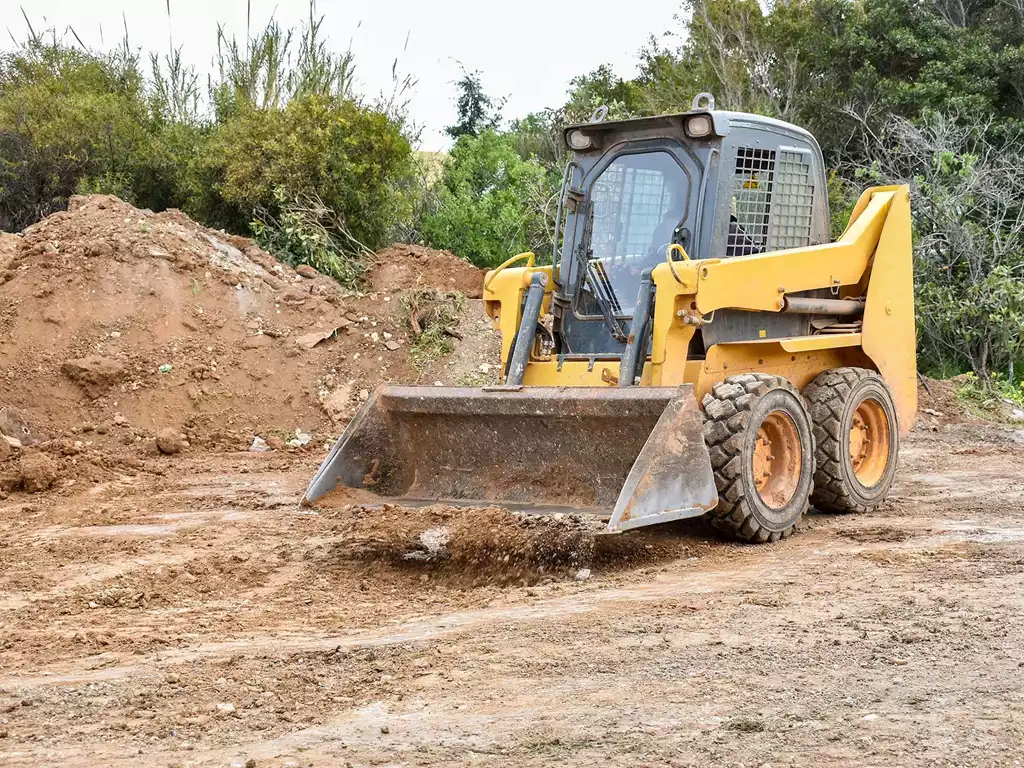
Park the machine on level ground and walk around it slowly. This part of the used skid steer inspection catches collision damage and past abuse:
- Check the frame and lift arms for weld repairs, cracks and bent metal — repainted welds often hide crash damage.
- Inspect tires (or tracks on compact track loaders): tread depth, sidewall cuts, mismatched sizes and uneven wear that signals axle or alignment problems.
- Open the rear door and look for a bent or repaired axle housing.
- Test the quick attach coupler: pins must move freely, lock positively and show no slop. See our skid steer quick attach guide for how the system should behave.
- Check pins and bushings in the lift arms and tilt linkage — excessive play here means hours of downtime later.
- Look at the bucket or attachment included: worn cutting edges and cracks tell you how hard the machine worked.
- Check the ROPS cab: cracked glass, bent doors and a damaged seat belt are red flags for rollover damage.
8–13. Engine and Fluid Inspection
The engine is where most of a used skid steer loader inspection budget belongs. Start it cold if possible:
- Listen for hard starting, knocking or irregular idle — these point to worn bearings or fuel system issues.
- Watch the exhaust: blue smoke means burning oil, white smoke can mean coolant ingress, black smoke means a clogged air filter or overfueling.
- Check engine oil level and condition on the dipstick: milky oil is a blown head gasket; gritty oil means poor maintenance.
- Check hydraulic oil level and smell it: burnt smell or dark color means the hydraulic system was overheated.
- Inspect coolant for contamination and check the radiator fins for debris and damage.
- Look under the machine for oil, coolant or fuel drips while it idles — small drips can become big bills.
Fluid condition is also your best guide to how well the previous owner followed the skid steer hydraulic system care routines.
14–19. Hydraulic System and Controls Test
The hydraulic system powers everything on a skid steer, so the most important part of how to inspect a used skid steer loader is exercising every function:
- Cycle lift and tilt through the full range several times — movement must be smooth, with no jerking or drooping.
- Test auxiliary hydraulic flow with an attachment connected (or at minimum confirm the couplers hold pressure).
- Watch for leaks at cylinder seals, hoses and fittings while the system is under load.
- Check the drive chains (or drive motors on CTL models) for noise, slack and debris.
- Test the parking brake and any safety interlocks — they must engage positively.
- Operate the joysticks/pedals through all functions; sticky or dead controls mean worn linkages or valves.
20–25. Operational Test Drive and Final Checks
Never buy without driving the machine. A proper used skid steer inspection ends with a live test:
- Drive forward and reverse in both ranges; listen for chain/sprocket or final-drive noise.
- Do a tight turning circle in both directions — a skid steer must pivot cleanly with both wheels driving.
- Lift a full load (or rated load test) and hold it: any drift or stall points to hydraulic wear.
- Check gauges and warning lights during operation, including the temperature gauge under load.
- Inspect wear items that cost you later: tires, pins, bushings, filters, belts and the cutting edge.
- Verify all documentation: owner’s manual, service records and, for import machines, a clean title and export paperwork.
If the seller refuses a cold start, a full hydraulic test or a test drive, walk away — that refusal is the biggest red flag of all.
Red Flags That Should End the Deal
- Repainted frame with fresh welds over suspicious areas.
- Hour meter and physical wear obviously out of sync.
- Milky oil in either engine or hydraulic system.
- Hydraulic functions that droop, jerk or stall under load.
- No service records and no willingness to let you test drive.
- Unknown import history without clean export documentation.
Used vs Factory-Direct New: What Makes Sense
Even a perfect used skid steer inspection cannot guarantee the hidden history of a machine you didn’t own. Many buyers now compare a used unit against a factory-direct new machine at a comparable total cost — especially compact models. Shandong Xinfa Machinery builds the R390, R480, R490 and R750 skid steer loaders factory-direct, with full documentation, warranty support and no hidden hours. If you are considering used machines around 2,000+ hours, the price difference versus a new Xinfa R480 skid steer loader or the compact R390 may be smaller than you expect. Two independent references worth reading before any purchase: Machinery.org’s new or used skid steer guide and Wagner’s used skid steer inspection advice.

FAQ: How to Inspect a Used Skid Steer Loader
What should I check on a used skid steer loader?
Work through the 25-point used skid steer inspection: machine history and hours, frame and welds, tires or tracks, engine and fluids, full hydraulic function tests, a live test drive and all documentation.
How many hours is too many for a used skid steer?
With verifiable maintenance, well-serviced skid steers routinely pass 8,000–10,000 hours. As a rule of thumb, prefer machines under 2,000–2,500 hours unless the price strongly compensates for higher hours.
Can I test the hydraulic system myself?
Yes. Cycle lift and tilt fully, connect an attachment to check auxiliary flow, hold a load to test for drift and watch for leaks under pressure. If you cannot test, do not buy.
Is a factory-direct new skid steer better than a used one?
Not always — it depends on budget and hours needed. But when the used machine is near 2,000+ hours, compare its total cost against a new factory-direct loader like the Xinfa R480 or R390, which comes with warranty, documentation and zero hidden history.
Knowing how to inspect a used skid steer loader protects your money — and knowing the alternatives helps you spend it wisely. Contact Xinfa today for a factory-direct quote on R-series skid steer loaders.