How Does a Skid Steer Loader Work? Essential Guide
How Does a Skid Steer Loader Work? Essential Guide
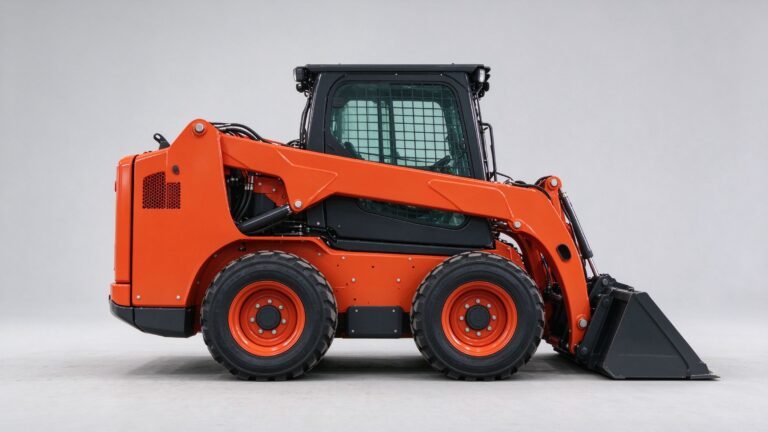
A skid steer looks simple from the outside, but the way it moves and lifts is cleverly engineered. If you have ever wondered how does a skid steer loader work without a steering wheel or front axle, the answer comes down to three systems working together: differential steering, hydraulics, and lift arms. This guide walks through each one in plain language.
The Steering Trick: Skidding Instead of Turning
Unlike a car, a skid steer has no steering wheel that turns the front wheels. The wheels on each side are fixed straight ahead. To move forward, both sides spin at the same speed. To turn left, the operator slows or stops the left wheels while keeping the right wheels spinning. The machine pivots around the slower side, and the tires effectively skid across the ground — hence the name “skid steer.”
On most modern machines, two joysticks control the drive. The left joystick moves the left wheels; the right joystick moves the right wheels. Push both forward and you go straight. Push one forward and the other back, and the machine spins on the spot. That zero-radius turn is what makes a skid steer so useful in confined yards, barns, and urban job sites.
The Power Source: Engine or Electric Motor
Conventional skid steers use a diesel engine mounted low in the rear to keep the center of gravity stable. The engine drives a hydraulic pump. In electric models, a lithium-ion battery powers an electric motor that drives the same pump. Either way, the mechanical output you feel at the wheels and attachment is almost always hydraulic, not direct mechanical drive.
For example, the Xinfa X360 is offered with a 6 kW 72V 125Ah electric powertrain alongside 7.5–9.9 kW diesel options, while the larger R750 pairs an 8 kW 72V 200Ah electric pack with 18.4 kW-class diesel engines. The steering and lift logic stays identical; only the energy source changes. If you are weighing the trade-offs, our overview of the electric skid steer loader category covers battery and torque details.
The Hydraulic System: Where the Real Work Happens
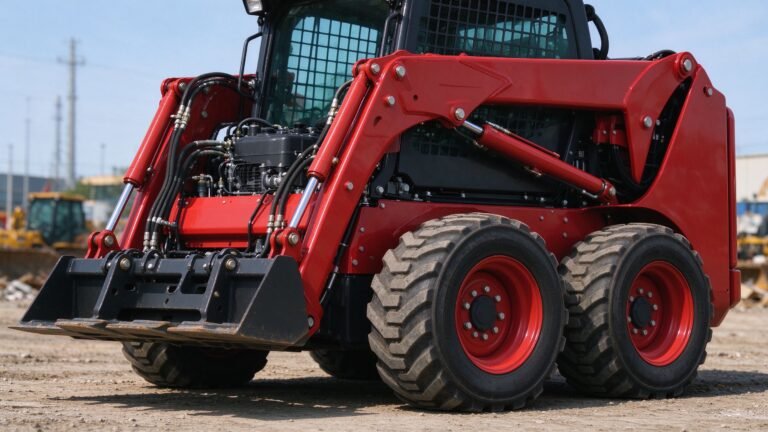
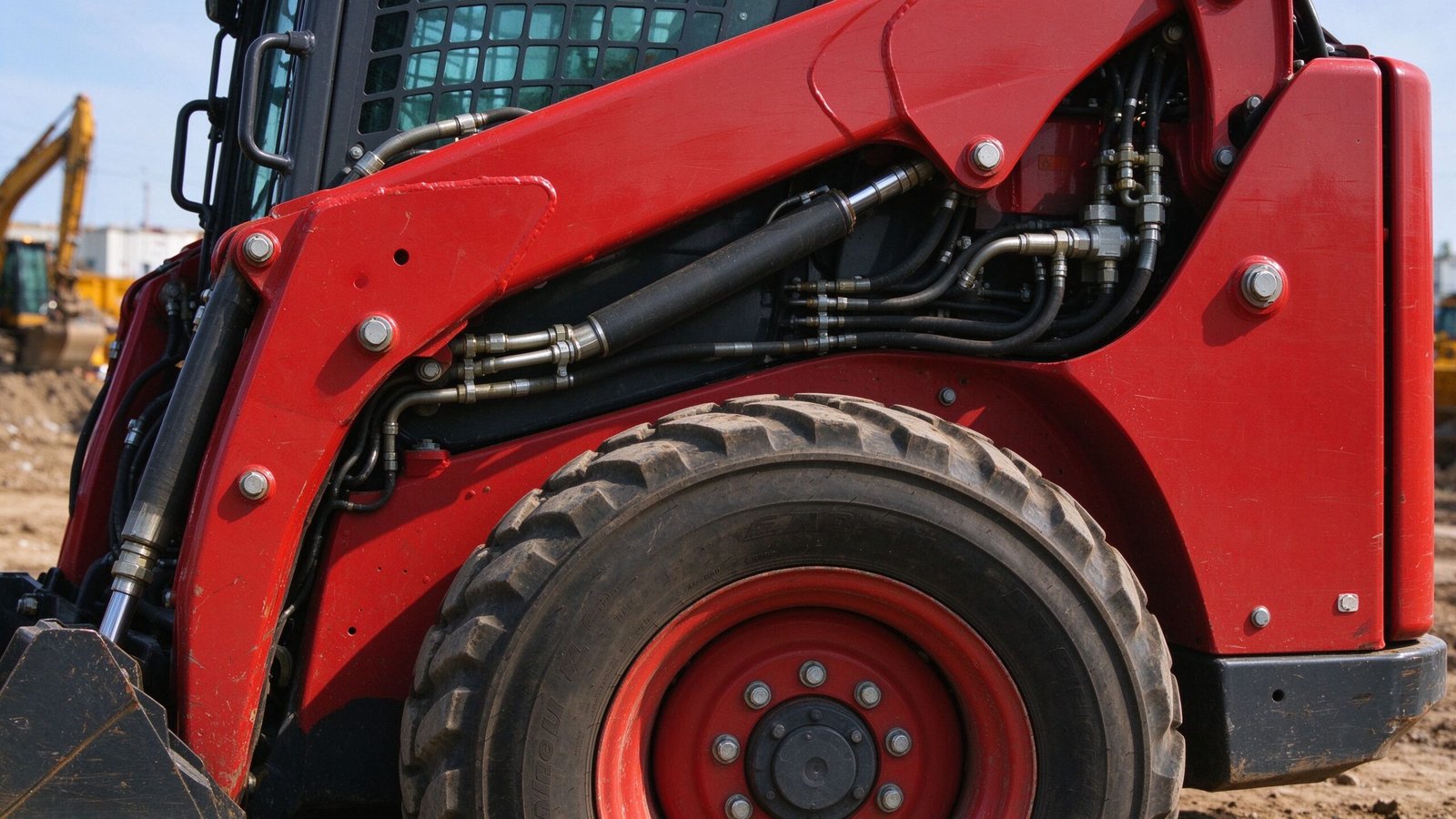
So, what actually lifts the bucket? The answer is hydraulic fluid under pressure. The pump pushes oil through control valves to hydraulic rams. Two sets of rams do most of the visible work:
Lift Cylinders
These thick vertical rams raise and lower the two lift arms. Extending them lifts the attachment; retracting them lowers it.
Bucket Cylinders
Smaller rams curl the bucket or attachment backward (to dig and hold) and forward (to dump). On quick-attach machines, the same hydraulic lines often feed auxiliary power to the attachment.
Auxiliary Hydraulics
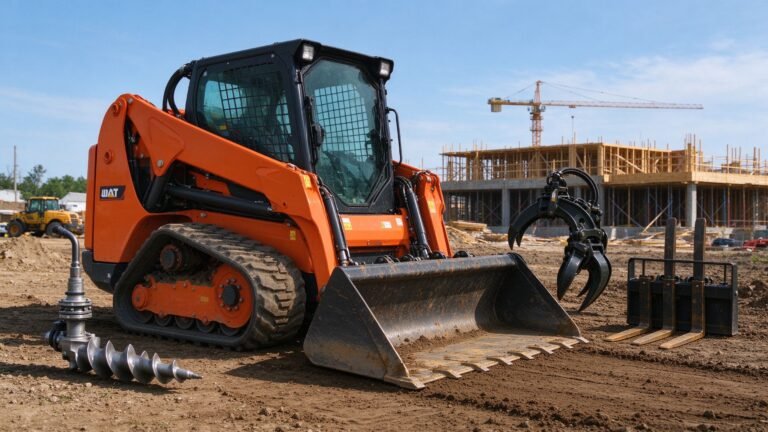
A set of quick-connect couplers on the arm sends pressurized oil to driven attachments such as augers, breakers, sweepers, and snow blowers. The operator controls flow from the cab with a foot pedal or auxiliary switch. Matching attachment flow requirements to your machine’s auxiliary output is critical — see the attachments guide for how that works.
The Lift Path: Radial vs. Vertical
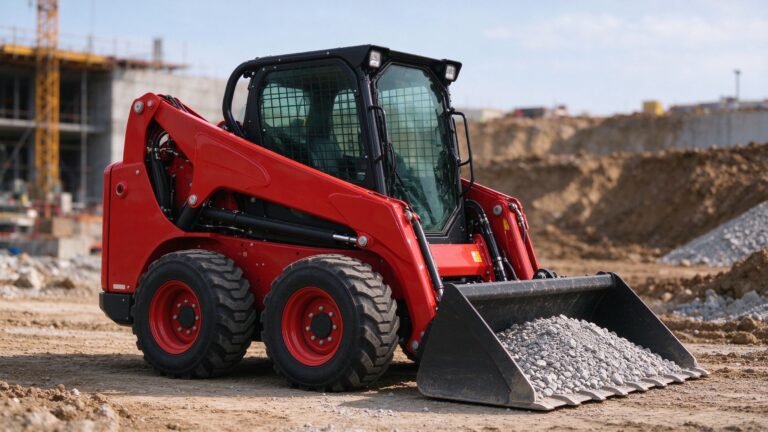
Not all lift arms move the same way. Radial-lift arms swing forward in an arc as they rise, which gives good visibility and a compact package. Vertical-lift arms rise nearly straight up and then reach outward, giving more height and better load retention at full lift. Vertical lift tends to suit truck loading, while radial lift suits grading and digging in tight spaces.
The Quick Coupler: The Multipplier Effect
The quick-attach plate is a flat steel face with locking wedges. When the operator engages the coupler, wedges slide into slots on the attachment. Hydraulic couplers (if equipped) connect the auxiliary lines automatically. Changing from a bucket to pallet forks usually takes under five minutes. This one feature is why a single skid steer can replace a small fleet of dedicated tools — from post-hole digging with an auger attachment to debris handling with a grapple.
Steering Feel and Operator Skill
Because both sides are independently controlled, a new operator often finds the controls twitchy at first. Light touches on the joysticks produce smooth arcs; aggressive pushes make the machine lurch. With practice, operators learn to feather the drives for precise grading and smooth pivoting. The same architecture that makes the machine so agile also means tire scrub is normal — that is why tire care matters, and why many owners choose heavy-duty or solid tires for abrasive sites.
One common beginner habit is overcorrecting: when the machine drifts off line, new operators shove the joystick the other way, producing a zigzag path. Smooth inputs and small corrections give a straighter finish and less tire wear. Once that muscle memory clicks, most operators find the machine surprisingly intuitive.
Putting It Together: A Typical Work Cycle
Here is how it all combines in a single pass. The operator curls the bucket down, drives forward into a pile, lifts slightly, backs away, pivots with the joysticks to aim at a truck bed, raises the arms, and curls the bucket forward to dump. Then it repeats. The whole cycle takes seconds, and the machine never needs a three-point turn.
Keep the Hydraulics Healthy
Because nearly every function depends on hydraulic pressure, fluid and filter care is the single most important maintenance habit. Check fluid levels daily, watch for leaks at the couplers, and change filters on schedule. For a full routine, read our skid steer maintenance tips checklist. If you want to understand the steering and drive components in more depth, the skid steer loader parts guide walks through each subsystem.
Frequently Asked Questions
How does a skid steer loader steer without a steering wheel?
This is the question people ask most. How does a skid steer loader change direction? It varies the speed of the wheels on each side. To understand how a skid steer loader turns, think of the left joystick as the left wheels and the right joystick as the right wheels.
How does a skid steer loader lift so much on a small frame?
How does a skid steer loader lift heavy buckets from such a compact chassis? Hydraulic rams multiply the pump force through the lift arms. Once you see how a skid steer loader uses hydraulic pressure instead of gears, the whole machine makes sense.
So, how does a skid steer loader work in one sentence?
To the question how does a skid steer loader work, the short answer is: differential steering plus hydraulic rams. Whenever someone asks how does a skid steer loader work indoors, the electric version answers with zero exhaust. So how does a skid steer loader work on a slope? Slowly, with the load kept low. The short answer to how does a skid steer loader work day to day is: pump, rams, and skidding wheels.
Any explanation of how does a skid steer loader work ends with seat time. Before your first job, re-read how does a skid steer loader work in the operator manual.
Now you can explain how does a skid steer loader work to any new operator.
Is it hard to learn how a skid steer loader operates?
Most operators are comfortable within a day. For safe operating practices, review OSHA powered equipment guidance before your first solo run.
Ask any operator how does a skid steer loader work, and they will point to the two joysticks and the hydraulic rams.
See It in Action with Xinfa
Now that you know how a skid steer loader works, you can judge machines by the things that actually matter: hydraulic flow, lift path, powertrain, and build quality. Shandong Xinfa Machinery Co., Ltd. designs and builds compact wheeled and electric skid steers with exactly this hydraulic-and-lift architecture, and exports them factory-direct to contractors, landscapers, and farms worldwide. If you are ready to compare models, the skid steer loader buying guide walks you through the next step. Browse the full range of Xinfa skid steer loaders at xinfaloader.com and talk directly with the factory team about your jobs.