How to Operate a Skid Steer: Practical Beginner’s Guide
How to Operate a Skid Steer: Practical Beginner’s Guide
Learning how to operate a skid steer takes an afternoon of supervised practice, not a career. The controls are logical, the visibility is excellent, and the machine’s small footprint makes mistakes survivable — but only if you learn the routine correctly. This beginner’s guide walks through how to operate a skid steer safely: learning how to operate a skid steer well starts with the walkaround, not the controls. pre-start checks, controls, basic maneuvers, and the most common beginner mistakes.
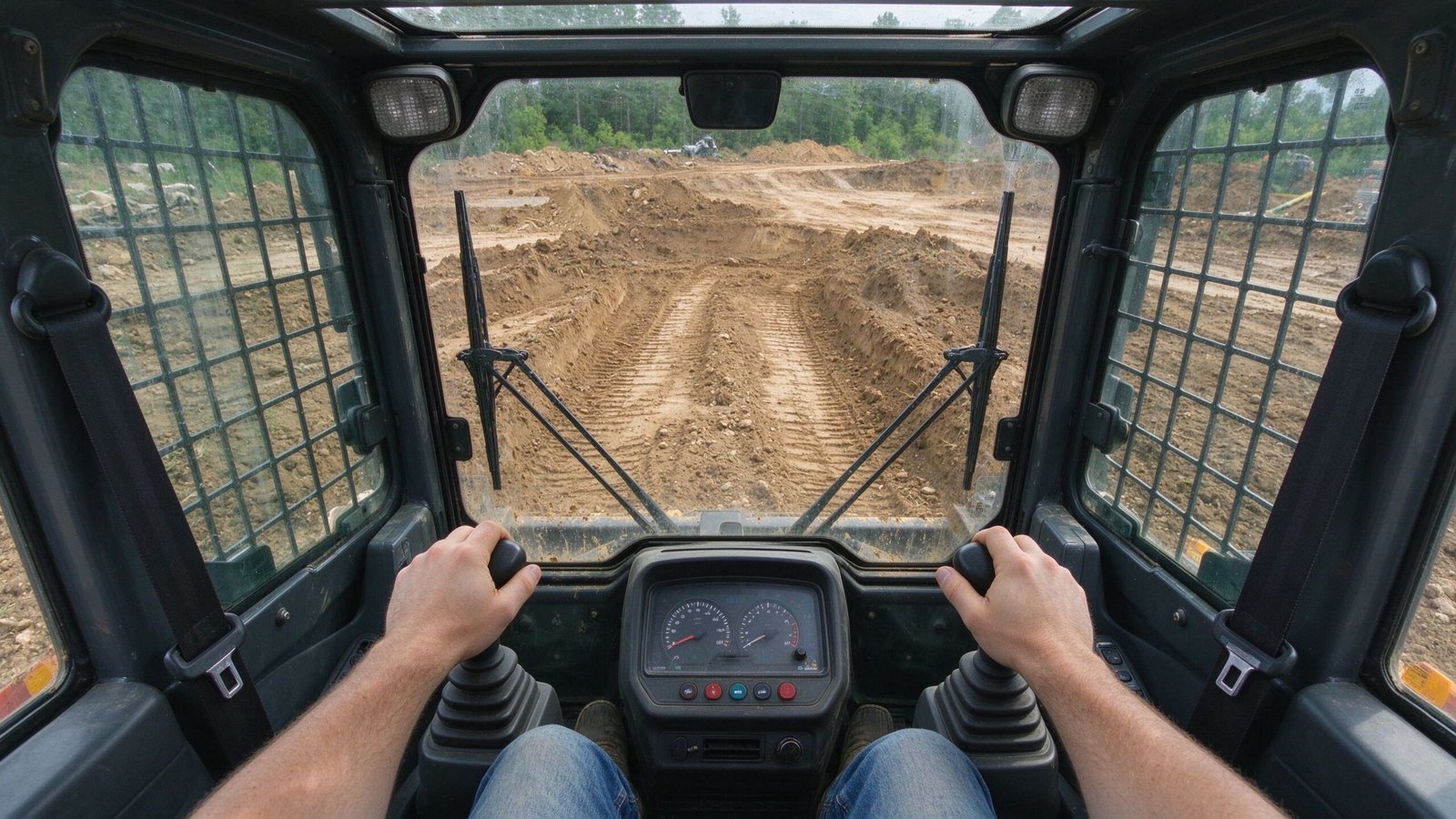
Before You Start: Walkaround and Controls
The Pre-Use Walkaround
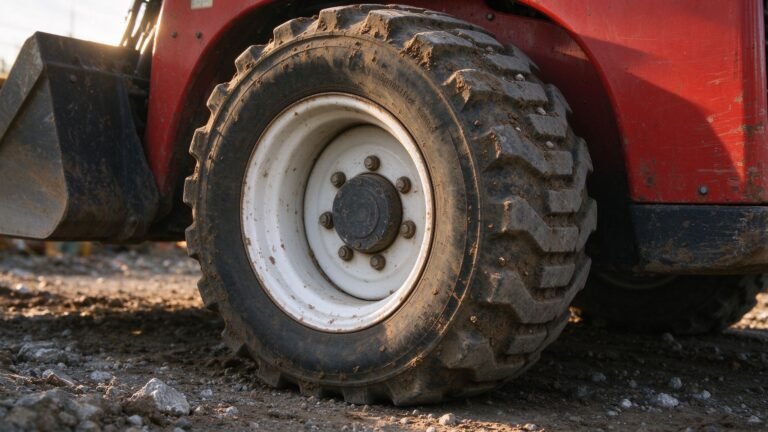
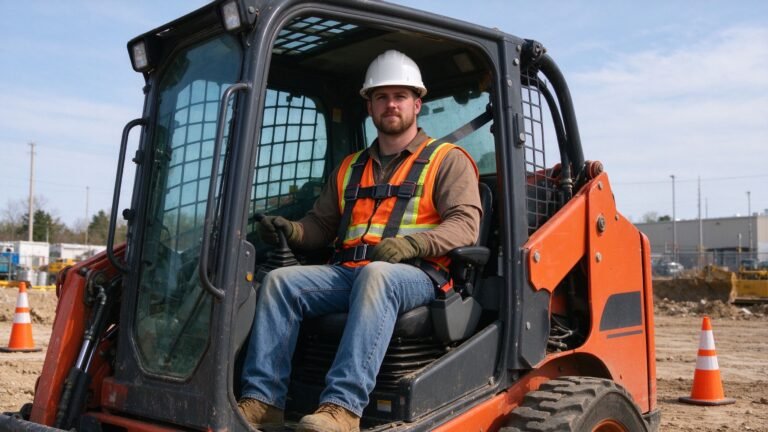
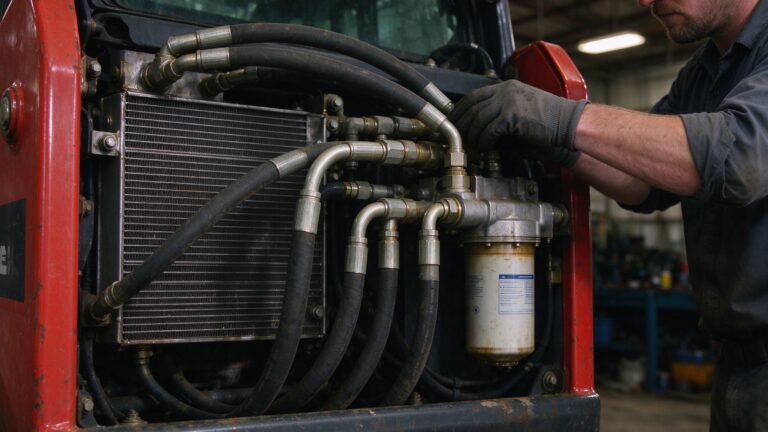
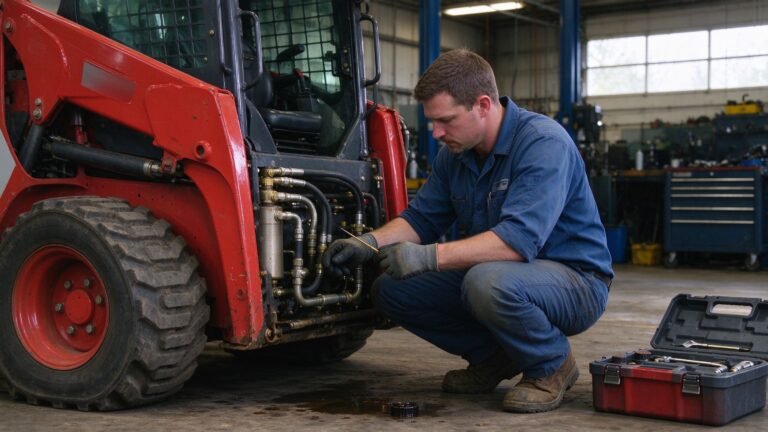
Never climb in without walking around the machine first. The OSHA skid-steer loader safety page and NIOSH publish operator safety guidance every beginner should review. Spend 2 minutes checking tires (pressure, cuts, embedded debris — see tire care guide), looking under the chassis for wet hydraulic oil or coolant, confirming the bucket and coupler pins are fully engaged, inspecting ROPS glass and seatbelt, and scouting the ground below for people, overhead wires, and soft spots. A full checklist lives in our maintenance tips article. Use the handholds and steps to climb in — never jump off the machine. Once seated, buckle the seatbelt, lower the seat bar, adjust mirrors, and set the joystick pattern selector to the setting you know (usually ISO). If the seat bar is up, the machine will not move — this is intentional, do not bypass it.
Understanding the Controls
Most modern skid steers use two joysticks. In the standard ISO pattern, the left joystick handles drive and steering: push forward to drive ahead, pull back to reverse, push left to turn left, push right to turn right. The skid steer turns by skidding its wheels sideways — there is no steering wheel. The right joystick handles lift arms and bucket: pull back to raise arms, push forward to lower, tilt left or right to roll the bucket (dump or curl). Auxiliary (AUX) controls on top of the joystick run powered attachments like augers and breakers.
Your First Maneuvers and Common Mistakes
First Drills: Driving, Digging and Loading
Start by driving in a straight line: push the left joystick gently forward and correct drift with tiny left/right nudges, not big swings. Practice turning in place by pushing the left joystick left — the right wheels drive forward, left wheels slow, and the machine pivots. Raise and lower the arms slowly; always lower them before traveling. To dig, approach a pile at a slow roll, lower the bucket to the ground, curl it, push into the pile, lift, back up, and dump. To load a truck: approach straight, fill the bucket, lift just high enough to clear the pile, back up, turn toward the truck, raise to bed height, roll forward, dump, back out, and lower arms before driving away.
The Most Common Beginner Mistakes
Driving with the bucket raised shifts the center of gravity and risks tipping forward — carry loads 15–30 cm off the ground. Turning on a slope is dangerous; drive straight up and down slopes, never across. Forgetting the seat bar defeats the safety interlock. Overloading the bucket means the machine tips forward when you lift — respect the Rated Operating Capacity. Reversing without spotters ignores the major blind spot behind the machine — sound the horn before backing. Bypassing safety locks by wedging the seat bar or taping the seat switch can be fatal. For a complete list, read skid steer safety tips.
Practice Drills to Build Confidence
Run a figure-8 around two cones to train steering precision. Practice placing the bucket inside a painted square without touching the lines. Start and stop without lurching. Swap attachments until it takes under a minute. Every operator learning how to operate a skid steer should treat this guide as a starting point, not a certification — commercial operators should complete hands-on training with an experienced instructor and follow the operator’s manual. Electric models like the Xinfa X360, X460, R490, and R750 share the same controls as diesel machines; the only difference is a start button replaces the ignition.
Do I Need a License to Operate a Skid Steer?
On private farm or residential property, no special license is usually required. On commercial construction sites, most countries require formal operator training and certification. Always check local regulations and carry your training card on site.
How Do I Stop the Machine Safely?
Lower the bucket to the ground, put the arms in a neutral position, engage the parking brake, shut off the engine, and raise the seat bar only after the machine has stopped. Never dismount with the engine running and the bucket raised.
How Long Does It Take to Learn How to Operate a Skid Steer?
Most beginners can run basic digging and loading within a day of supervised practice. Proficiency with attachments, grading, and tight-space work takes a few weeks of regular use. The controls are intuitive, but safety habits take longer to build.
What Is the First Thing I Should Practice?
Learning how to operate a skid steer is mostly about building safe habits, not memorizing levers. Spend the first hour just driving in a figure-8 and stopping smoothly, with no bucket load. Once steering feels automatic, add bucket work. Rushing into digging before you control the machine is how beginners tip loads.
Learn on a Well-Balanced Xinfa Machine
A forgiving, stable machine makes learning how to operate a skid steer far easier. Once you know how to operate a skid steer safely, the rest of the job is just attachments and practice. Shandong Xinfa Machinery Co., Ltd. builds compact skid steers with balanced weight distribution, intuitive ISO controls, and certified ROPS cabins — the X360, X390, X460, R480, R490, and R750. Electric 72V models start with the push of a button and run quietly, so new operators can focus on the controls without engine noise. All machines carry CE, EPA, EURO5 and ISO certification. Explore the lineup at Xinfa, and review the buying guide when you are ready to purchase. A Xinfa skid steer loader is a friendly first machine — and a productive long-term one.