Skid Steer Bucket Types: Expert Buying Guide
Skid Steer Bucket Types: The Expert Buying and Matching Guide
Your skid steer is only as productive as the bucket on its front. Different skid steer bucket types are engineered for different materials: loose soil, sharp rock, fluffy mulch, wet concrete, or packed snow. Running the wrong one wastes fuel, spills material, and wears steel prematurely. This guide walks through the common bucket styles and helps you choose the right one before you bite into the pile.
The Most Common Skid Steer Bucket Types
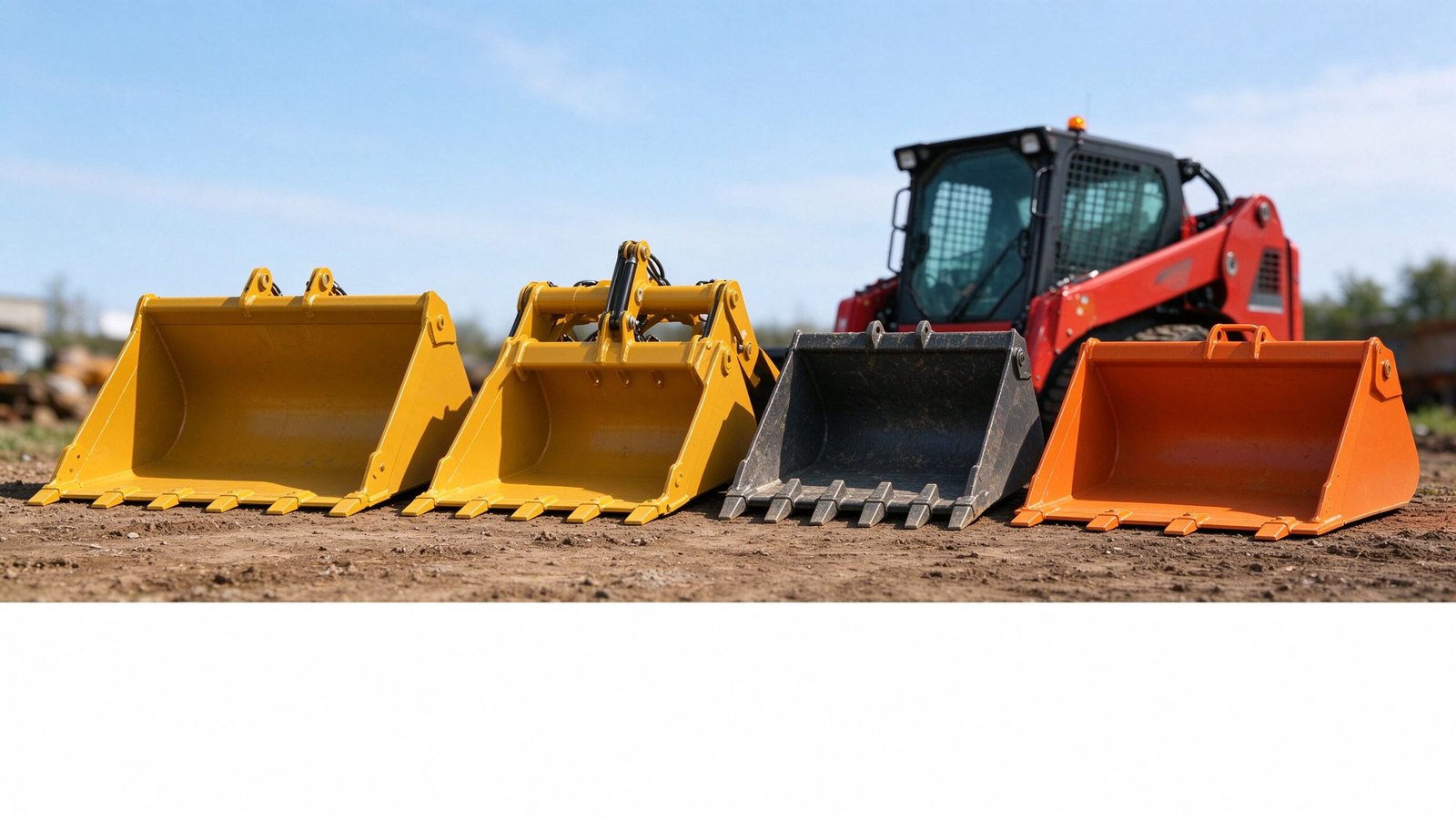
Bucket design starts with the job. Here are the styles most contractors own, in rough order of popularity.
General-Purpose (GP) Bucket
The standard GP bucket is the one your machine ships with. It has a moderate depth, a single cutting edge, and modest side cutters. It handles sand, gravel, topsoil, and demolition rubble well. It is not optimized for any one material, but it is the most versatile default. If you only ever buy one bucket, this is it.
4-in-1 (Multipurpose) Bucket
The 4-in-1 bucket opens at the bottom like a clam shell, which turns it into a bucket, a clamshell, a dozer blade, and a grapple. You can spread material precisely, grip irregular loads, and push grade without swapping tools. It costs more and weighs more, but for crews that do not want to change attachments constantly, it is the most cost-effective upgrade you can buy.
Rock and Heavy-Duty Buckets
Rock buckets use thicker steel, reinforced side plates, and bolted or welded teeth to resist impact from blasted stone, oversize gravel, and demolition rubble. The extra weight cuts your usable capacity a little, but the bucket survives years where a GP bucket would puncture. For a full tour of front-end tools, see our skid steer attachments guide, and for industry-wide bucket and attachment standards the Associated Equipment Manufacturers is a useful reference.
Mulch and Light-Material Buckets
Mulch buckets are taller and wider with less depth, because fluffy organic matter is light but voluminous. Moving bark mulch, wood chips, snow, or topsoil in a shallow GP bucket means endless trips. A light-material bucket lets you carry a full wheelbarrow of mulch in one pass. These pair naturally with landscaping work.
Snow and V-Plow Buckets
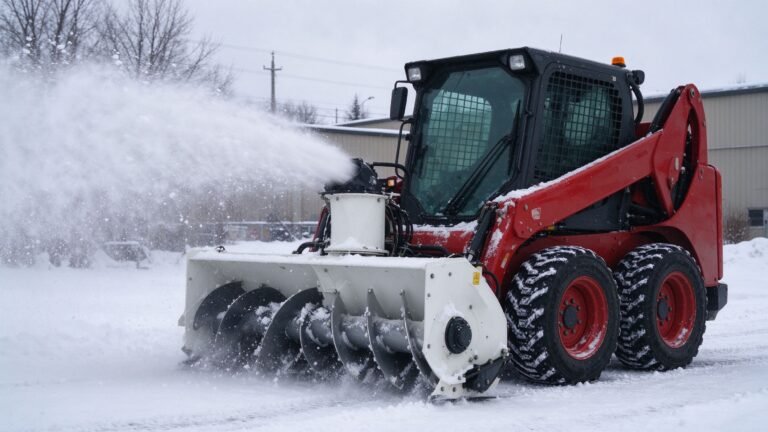
For winter, wide straight snow pushers and angle plows move far more volume than a digging bucket. If snow clearing is part of your income, our snow blower attachment guide and the broader snow removal article cover the winter business in depth.
How Bucket Volume Relates to Your Loader
Buckets are rated by heaped capacity, not just by how long they look. Match the bucket size to your machine’s rated operating capacity. On a compact Xinfa X360, the factory bucket is about 0.12 m3, which keeps the 300 kg rated load balanced in normal soil. Oversizing the bucket to “carry more” actually drops your safe lifting capacity, because the bucket itself weighs more and tips the scales before the material does.
If ROC is unclear, our explainer on rated operating capacity walks through the 50% tipping-load rule. And for a quick reminder of everything the machine can do, the 15+ skid steer loader uses list shows how buckets fit into the bigger picture.
Quick Decision Guide
When you stand in front of the bucket rack, ask three questions:
- What am I moving most? Soil and gravel point to GP; rock points to HD; mulch and chips point to light-material.
- Do I need to grip or spread? If yes, look hard at a 4-in-1.
- Does my machine have the capacity? Stay within ROC so the bucket never becomes a tip-over hazard.
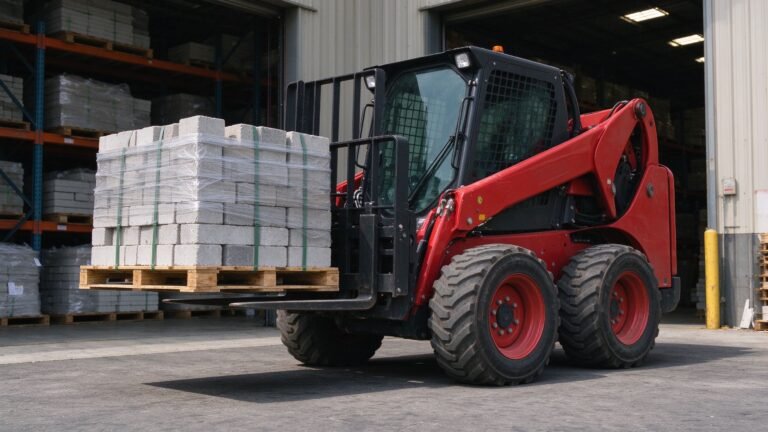
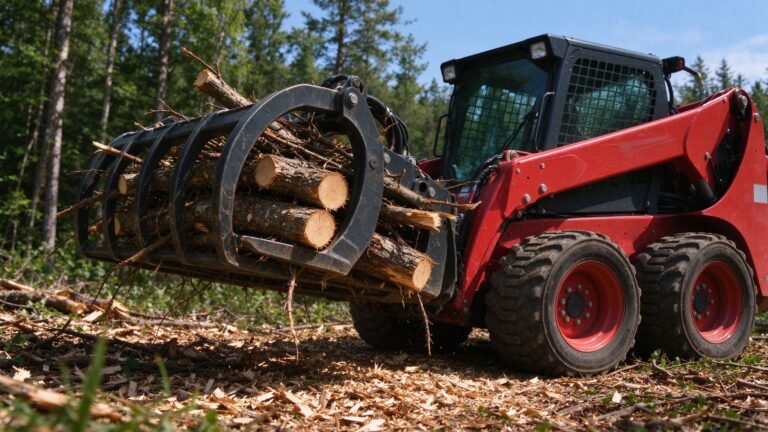
Beyond buckets, many contractors add forks for pallets or grapples for debris. We cover those in our pieces on skid steer pallet forks and grapple attachments when you are ready to expand.
Looking After Your Buckets
Swap the cutting edge before it wears into a knife. Touch up paint on exposed steel to slow rust. Park buckets indoors when possible, and grease the pivot pins on 4-in-1 units on schedule. A sharp edge cuts cleaner, spills less, and saves fuel every hour.
Bucket Material and Build Quality
Two buckets that look identical from a distance can wear at very different rates. Light-gauge steel dents on the first rock and bends on the first impact, while reinforced plates and box-section sides hold their shape for years. When you compare skid steer bucket types side by side, ask about steel grade, the thickness of the cutting edge, and whether the side cutters are replaceable. Those details matter far more than the brand sticker on the back.
Also think about how the bucket connects to the machine. A universal quick-coupler lets you swap between a GP bucket, a 4-in-1, and forks in under a minute. If your buckets use different coupler designs, you lose the whole versatility advantage that made the skid steer worthwhile. We cover the coupler system and the full attachment ecosystem in the skid steer attachments guide.
Storing and Organizing Your Bucket Rack
A final practical point: buckets are bulky, and a disorganized rack wastes time every morning. Hang them on labeled wall brackets or stand them on a paved pad where each one is visible. Keep the cutting edges up off wet ground so they do not rust, and hose off mud before the steel dries. A bucket that is ready to go at 7 a.m. is a bucket that earns its keep; one buried under a pile of hoses is just clutter.
Frequently Asked Questions
What are the main skid steer bucket types?
The main skid steer bucket types are general-purpose, 4-in-1 multipurpose, rock and heavy-duty, light-material mulch, and snow pushers. Most owners start with a general-purpose bucket and add other skid steer bucket types as their workload diversifies.
Which skid steer bucket types fit a compact machine?
Compact loaders like the Xinfa X360 work best with matched skid steer bucket types around 0.12 m3, because oversized buckets drop safe lifting capacity. When choosing among skid steer bucket types, always match heaped volume to your machine’s rated operating capacity rather than picking the widest bucket on the rack.
Can one bucket replace all skid steer bucket types?
A 4-in-1 bucket comes closest to replacing multiple skid steer bucket types, because it scoops, clamshells, grades, and grips. But for rock or fluffy mulch, dedicated skid steer bucket types still move material faster and last longer than a compromise tool.
At Shandong Xinfa Machinery Co., Ltd., we ship compact skid steer loaders with matched buckets and support buyers with a range of compatible attachments. Whether you choose an X360 for tight residential work or a larger R-series machine for heavier yards, a Xinfa skid steer loader gives you the quick-coupler to swap buckets all day. Visit Xinfa skid steer loader to configure the right package for your work.