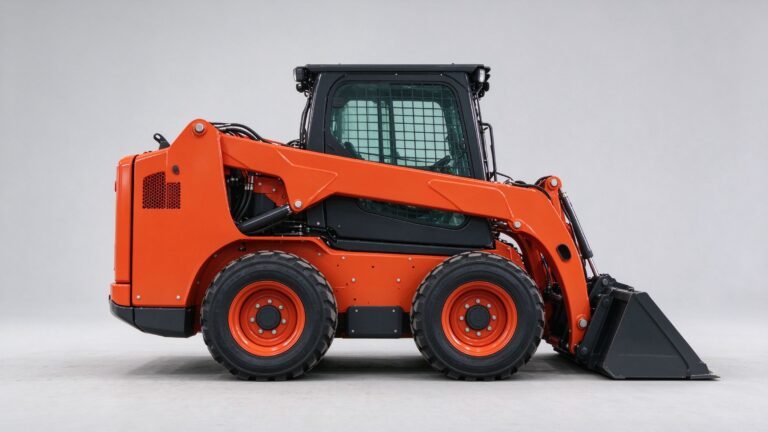
Definitive Skid Steer Loader History: 1957–2026
Definitive Skid Steer Loader History: 1957–2026
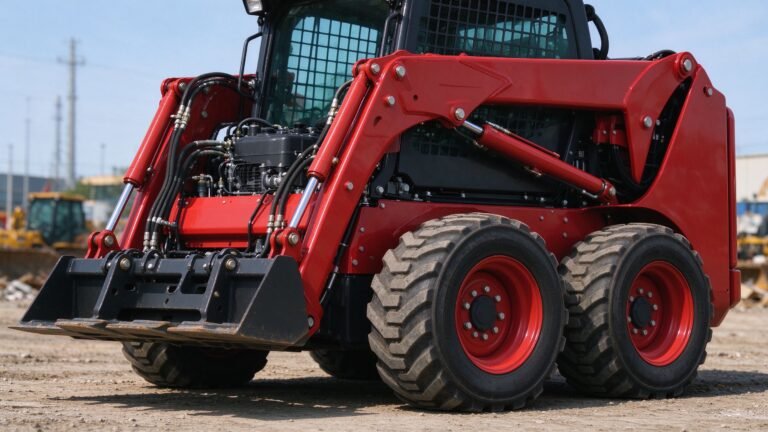
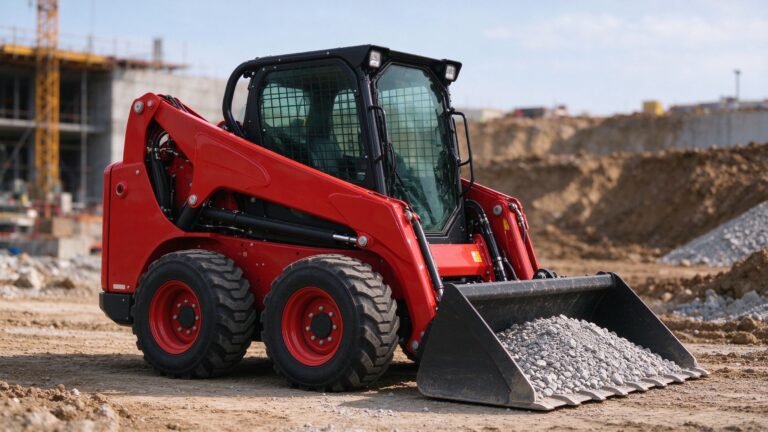
The skid steer loader history reads like a classic farmer’s-fix-turned-industry: a machine born in a 1950s Ohio barn to clean out turkey houses, then evolved into the most versatile compact loader on earth. Today’s electric, CE-certified, attachment-ready designs trace a direct line back to that first three-wheeled prototype. Tracing the skid steer loader history helps buyers understand why modern machines look the way they do.
From Farm Prototype to Global Machine
1957: The Three-Wheeled Prototype
The story begins in 1957, when brothers Cyril and Louis Keller wanted a better way to clean turkey barns on their father’s farm in Minnesota. They built a small, self-propelled loader with two drive wheels up front and a caster wheel at the back. The operator walked behind it. That machine, called the Keller Loader, could turn within its own length — the original “skid steer.” Melroe Manufacturing Company licensed the design, refined it, and launched the M60 in 1960. Melroe later branded the line “Bobcat,” which is still the most recognized name in compact loaders. This is the starting point of every skid steer loader history textbook.
1960s–70s: Four Wheels, Cab and Diesel
Early Kellers had no cab, no rollover protection, and modest gasoline engines. Through the 1960s and 1970s, the design matured: four-wheel drive replaced the caster wheel for better traction, enclosed operator cabs and ROPS cages became standard, and diesel engines offered more torque and longer life than gasoline. By the late 1970s, skid steers had moved off the farm and onto construction sites, warehouses, and landscaping yards. Buyers started treating them as tool carriers, not just loaders. If you want to understand the full picture, read our overview of what a skid steer loader is.
The Attachment Era and Electrification
1980s–90s: The Attachment Revolution
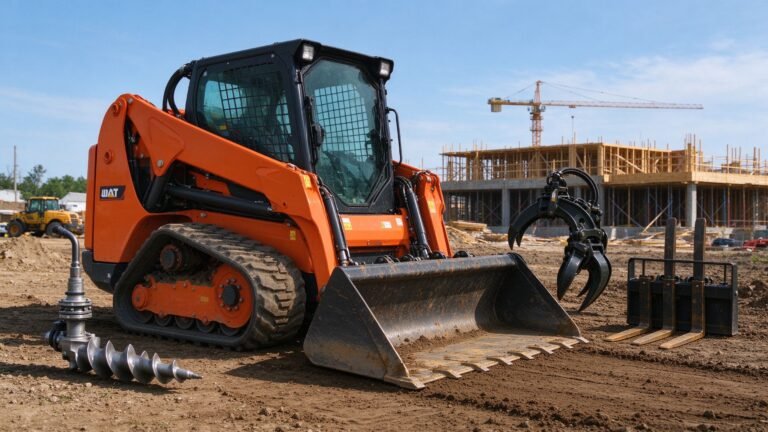
The 1980s were the decade the skid steer stopped being a bucket machine and became a platform. Manufacturers standardized the universal quick-attach plate, so one machine could run buckets, augers, breakers, brooms, trenchers, and grapples. Hydraulic auxiliary circuits became expected, not optional. This is also when size classes split: a “mini” or compact class emerged for tight sites and indoor work, while full-size machines grew to 70+ horsepower. Today’s size spectrum is explained in our skid steer loader sizes guide.
2000s: Tracks, Electronics and China’s Rise
In the 2000s, two shifts reshaped the industry. Rubber-track undercarriages were added to the skid-steer platform, creating the compact track loader (CTL). Better flotation on mud, snow, and turf made CTLs popular in northern climates. Buyers now compare wheeled skid steers against tracked alternatives — see skid steer vs compact track loader. At the same time, Chinese manufacturers began producing compact loaders for export, offering factory-direct pricing and modern designs. Trade groups like the Association of Equipment Manufacturers track how these global shifts reshape compact-equipment demand. Today, factories like Shandong Xinfa Machinery Co., Ltd. ship CE/EPA/EURO5-certified machines to dealers and contractors worldwide. The China skid steer manufacturer article explains how buyers evaluate these suppliers.
2010s: Emissions Rules and Hydraulic Refinement
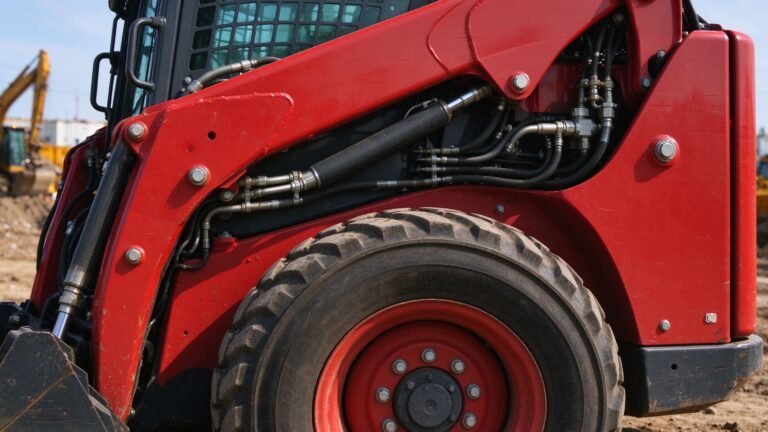
Tier 4 and Stage V emissions regulations pushed diesel engines toward common-rail injection, diesel particulate filters, and turbocharging. Horsepower and hydraulic flow climbed, while cabin comfort — air conditioning, pressurized cabs, joystick controls — became competitive differentiators. ROC (rated operating capacity) became the number buyers compared first; learn what it means in our ROC guide.
2020s: The Electric Era
The latest chapter of skid steer loader history is electrification. Battery-electric compact loaders eliminate fuel cost, exhaust, and noise, opening indoor demolition, basement work, and urban jobs where diesel is banned. Xinfa’s electric options — such as the 6 kW (72V 125Ah) X360 and 8 kW (72V 200Ah) X460 / R490 — reflect this shift. For the full breakdown, read about battery powered skid steer loaders and the benefits of electric skid steers.
What Comes Next?
Looking ahead, the industry is trending toward telematics, smaller batteries with faster charging, and more specialized attachments. The core idea, though, has not changed since 1957: a compact, highly maneuverable machine that can do the work of several larger tools. If you want to see how the original Keller Loader evolved into today’s global workhorse, start with our skid steer loader uses guide. The skid steer loader history arc — farm to factory to electric — is far from finished, and every new chapter of skid steer loader history builds on that same simple, useful idea.
Who Invented the Skid Steer?
Cyril and Louis Keller built the first three-wheeled skid steer in 1957 to clean turkey barns in Minnesota. Melroe Manufacturing (later Bobcat) licensed and commercialized the design. The Keller brothers are credited in every skid steer loader history. That 1957 barn-built prototype is the first chapter of skid steer loader history.
When Did Electric Skid Steers Appear?
The latest chapter of skid steer loader history is the shift to batteries. Battery-electric compact loaders entered the market in the early 2020s, driven by battery cost reductions and urban emissions rules. Today, factories like Xinfa offer 72V electric options across their compact range.
How Has the Skid Steer Changed Since the 1950s?
The core idea — a compact, self-propelled loader that turns in its own length — has not changed. What changed is power (from 10 hp gasoline to 18 kW diesel or 72V electric), comfort (from open station to enclosed ROPS cabs), and versatility (from a single bucket to 50+ attachments). The skid steer loader history is one of refinement, not reinvention.
What Is the Future of the Skid Steer?
Electrification and telematics are the next chapters. Battery electric machines like Xinfa’s X360 and R750 already replace diesel for indoor and urban work, while connected dashboards let fleet managers track hours and service intervals remotely.
Built on Seven Decades of Progress — Xinfa
Xinfa (Shandong Xinfa Machinery Co., Ltd.) carries that farm-to-global story forward by engineering compact, electric and diesel skid steers for export, backed by CE, EPA, EURO5 and ISO certifications. Whether you need a narrow 980 mm X360 for doorways or a 400 kg R750 for heavier work, you can explore the lineup at Xinfa. If you want factory-direct pricing, read about buying factory direct skid steer loaders. Every Xinfa skid steer loader ships ready to work, supported by export-grade parts and documentation.