Skid Steer Pallet Forks: Essential Buying Guide
Skid Steer Pallet Forks: The Essential Buying Guide
Skid steer pallet forks turn a compact loader into a forklift-class material handler. Warehouses, lumber yards, farms, and construction sites all use them to move pallets, blocks, bags, and bundled goods. This guide covers how to choose skid steer pallet forks, match capacity, and operate them safely, so your first attachment earns its cost back fast.
Why Pallet Forks Belong on Every Loader
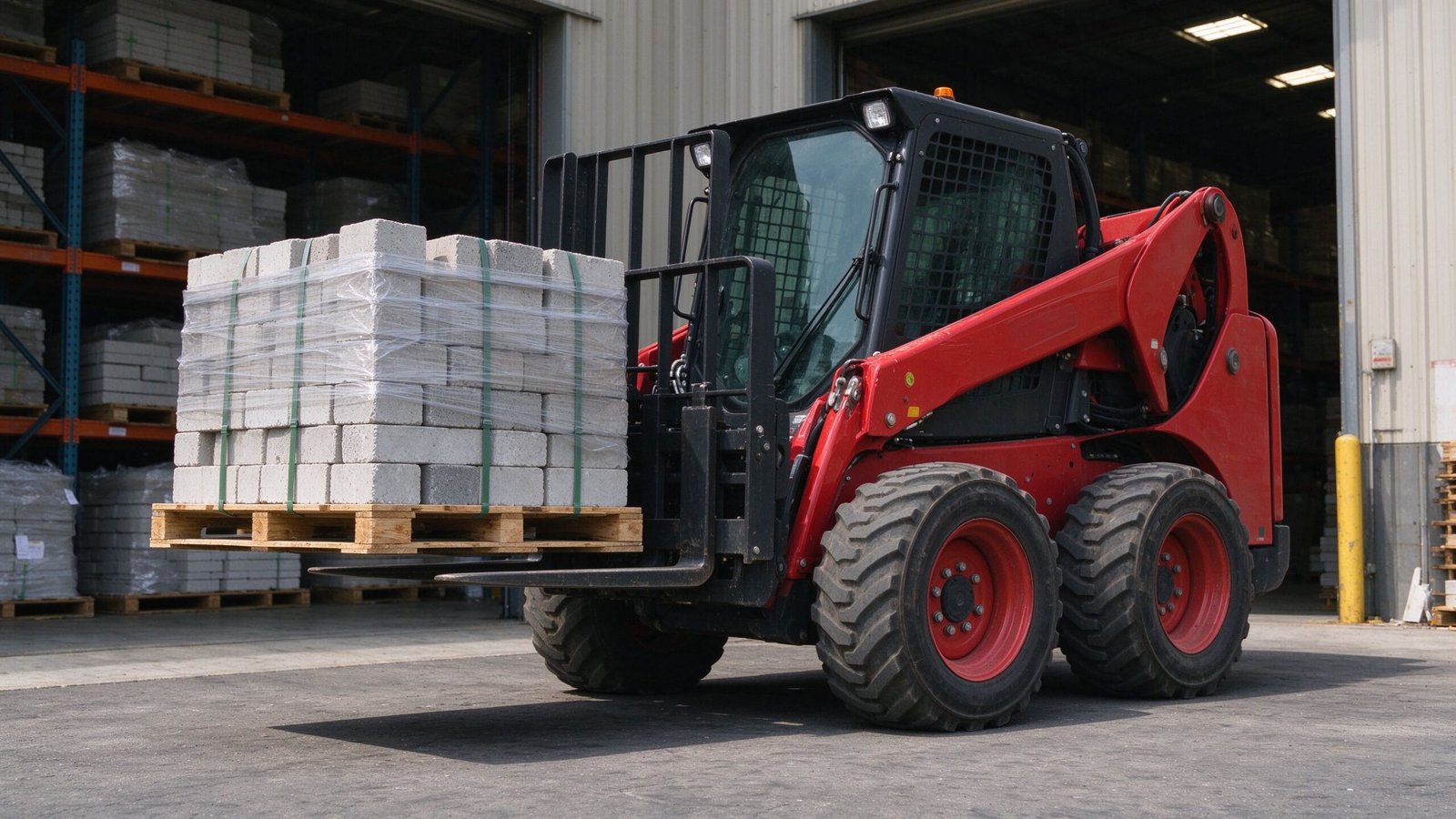
Of all the tools you can mount, skid steer pallet forks are among the most used. They replace manual pallet jack work, lift loads off the ground, and let one operator place materials exactly where they are needed. With a quick-attach coupler, switching from bucket to forks takes minutes.
Material handling is one of the most profitable tasks a small machine crew performs. Read more in skid steer for material handling. Whether you unload trucks, stage blocks on a slab, or move hay bales on a farm, forks cut hours off every job.
Choosing Skid Steer Pallet Forks That Match Your Loads
The first rule of choosing skid steer pallet forks: the forks’ rated capacity must match your loader’s rated operating capacity, with margin. If your compact loader lifts 400 kg safely, do not fit forks rated at 1,000 kg and assume you can now lift 1,000 kg. The machine, not the attachment, sets the real limit.
Check your loader’s rated operating capacity first. Xinfa compact models range from 200 kg rated load on the X390 up to 400 kg on the R750. Size your forks to that number, not the other way around. Learn the spec in our rated operating capacity skid steer guide.
Fork Length and Frame Types
Fork length. Standard forks run roughly 900 to 1,200 mm. Longer forks reach deeper loads but reduce stability at the tips. Choose the shortest length that safely carries your pallet depth, because extra length just adds leverage you do not want.
Frame type. Heavy-duty walk-through frames and walk-behind frames are common. Some frames accept side shift so you can fine-position the load without moving the whole machine. For uneven loads, consider a fork frame with a backrest to keep the pallet from sliding.
Pairing Forks With the Right Loader Size
Pallet work rewards stable, maneuverable machines. Compact loaders fit warehouse aisles and yard gates where full-size forklifts cannot go. The narrow Xinfa X360 at 980 mm wide is built for tight spaces, while the R750 with 400 kg rated load handles heavier pallet moves.
Compare size classes in our guide to skid steer loader sizes before you pair a machine to a fork frame.
Safe Operation With Pallet Forks
Treat skid steer pallet forks like any lifting attachment. Keep loads low when traveling, tilt the forks back slightly to cradle the pallet, and never carry a load higher than necessary. Watch overhead obstacles and never exceed the machine’s rated capacity.
Spread forks to support the pallet evenly, and never carry suspended workers on the forks. Watch how the load sits: an off-center pallet shifts the center of gravity and can tip the machine. For the full safety framework every operator should know, read skid steer safety tips.
When to Add Grapples or Other Tools
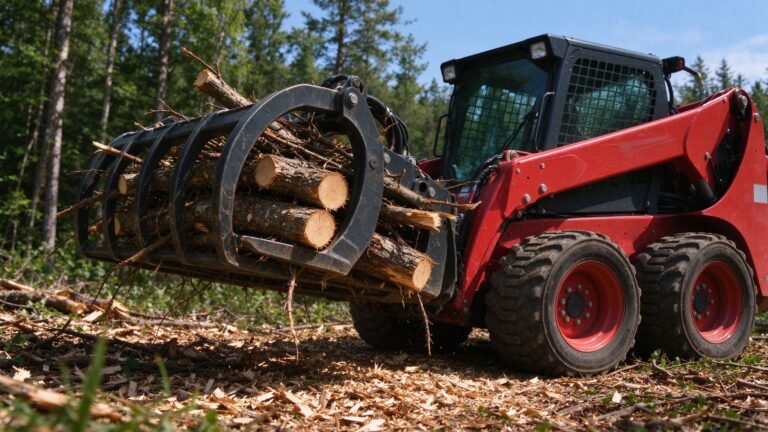
Forks handle orderly pallets, but loose material needs a different tool. Once forks are proven, many owners add a grapple for logs, rocks, and scrap, then a broom for final cleanup. Building the attachment set over a season is cheaper than buying everything at once, and it lets each tool prove its value before the next purchase.
Buying Forks the Smart Way
Buy forks built from solid steel, with securely welded forks and a coupler that matches your loader. Ask the manufacturer for the rated capacity stamped on the frame, and avoid thin, imported cheap frames that flex under load. Worn or bent forks bend further under weight, so inspect them for straightness before every use.
For farm and yard work, forks also move bales, bags, and bundled material that a bucket spills. For warehouses, they let one machine unload trucks without a separate forklift. Match fork spacing to your most common pallet size, and keep a backrest for loads that want to slide off the frame.
Inspect forks monthly for cracks and bending. A bent fork carries less safely than its rating suggests, and cracks can suddenly fail under load. Replace worn tips rather than welding them, because welded repairs alter the heat treatment and the rated capacity.
Use the forks for what they do best: orderly, flat-bottomed loads. For loose stone, scrap, or awkward timber, switch to a grapple or bucket rather than trying to balance it on forks. Matching the tool to the load keeps both the machine and the operator safe.
Start with a solid middle-duty frame. It covers most pallet jobs without paying for an extreme-rated frame you will never stress. Add side shift only if you spend long days fine-placing loads in tight aisles, where it saves real time and reduces the chance of bumping shelving. Before the first job, test the forks empty against the pallet you move most often, and confirm the frame sits level so the load does not drift to one side on the lift.
Frequently Asked Questions on Skid Steer Pallet Forks
How much load can skid steer pallet forks safely carry? No more than your loader’s rated operating capacity, because safe-lifting practice means the frame is only as strong as the machine on which it rides. Treat skid steer pallet forks as a tool that transfers, not raises, the rated limit.
Do skid steer pallet forks work on wooden pallets in a warehouse? Yes, that is their core job; keep bystanders clear of the load path, as covered in OSHA materials-handling guidance, and never exceed the rated load the skid steer pallet forks are built for.
Ready to spec a machine and fork package? Visit Xinfa to match a compact loader to your pallet loads. Every Xinfa skid steer loader ships factory-direct with universal quick-attach compatibility and CE, EPA, EURO 5, and ISO certification, so your new skid steer pallet forks mount up and earn money from day one.